
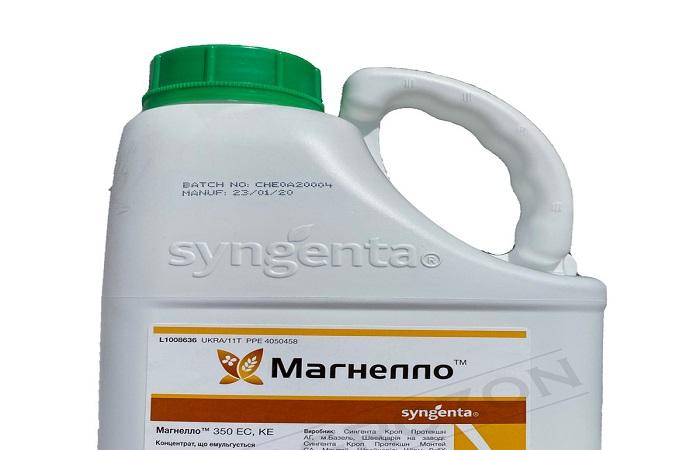
To ensure effective protection of grain crops, it is recommended to use multi-component products. Magnello is a complex fungicide used for the protection and treatment of crops, as well as for preventative purposes. The product is non-phytotoxic and comes in easy-to-use packaging.
What is included in the composition and dosage form
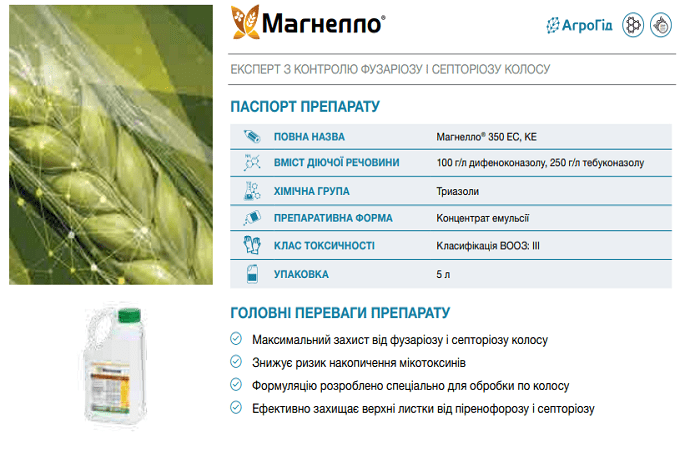
The fungicide is available as a concentrated emulsion. The active ingredients are:
- Difenoconazole (100 g/l) has therapeutic and protective properties. It is active against cereal diseases (common smut, loose smut, and brown rust). It is also used prophylactically to protect seed from mold.
- Tebuconazole (250 g/l) is effective in controlling all types of cereal rust.
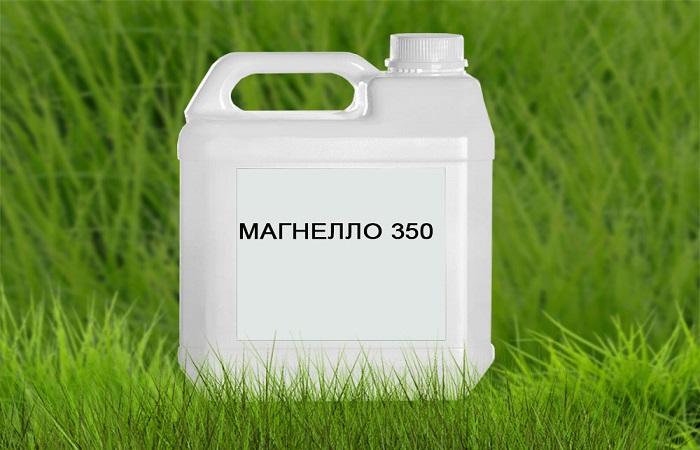
The concentrated emulsion is packaged in 5-liter plastic canisters and is diluted with water to prepare a working solution in the required proportions.
Mechanism of action
The active ingredients of the preparation inhibit ergosterol biosynthesis in the cells of phytopathogens. When applied to seeds, the development and growth of pathogens causing root rot, mold, and smut fungi is suppressed. When sprayed on cereal crops, the suspension solution quickly penetrates the plants and is distributed throughout the stems, leaves, ears, and root system.
Purpose
Magnello fungicide is primarily used in wheat and barley cultivation to treat or prevent foliar and ear diseases. Treatment protects ears from fusarium wilt. Spraying crops prevents the occurrence and spread of late diseases that damage foliage (rust, septoria).
It is used as a preventative measure to treat grain against smut fungi and mold. This has been shown to reduce mycotoxin levels in the seed.
Calculation of consumption
The fungicide working solution is effective against various diseases of spring wheat and barley. When diluting the suspension, it is recommended to follow the manufacturer's recommendations.
| Plant species | List of diseases | Consumption rate, l/hectare | Features of application |
| Spring barley | spotting (dark brown, striped, netted), dwarf rust, fusarium head blight | 0.75-1 | during the period of formation of ears, the beginning of flowering |
| Winter wheat | rust (brown, yellow, linear), septoria of ears and leaves, fusarium of ears, pyrenophorosis | 1 | during the period of formation of ears, the beginning of flowering |
Rules of application
The fungicide has a long protective period. However, it is best to apply the product to crops in dry weather, at temperatures between 10 and 25°C. The manufacturer recommends spraying crops at least twice. When applying the fungicide to cereals, there is no need to worry about potential harm to other crops, as the product is only active against pathogens.
Precautionary measures
The suspension's active ingredients are classified as hazard class 2 for humans and class 3 for bees and beneficial insects. Therefore, personal protective equipment must be worn when preparing the working solution and treating plants. A respirator, safety goggles, protective clothing, gloves, and rubber boots are required.
How and how long can it be stored?
Store the fungicide in a designated, dry, ventilated area. Do not store the product in the same room with food or animal feed. The suspension has a shelf life of up to 3 years. Storage temperature: 0 to +30°C.

Substitutes
To treat and protect cereal crops, you can also use other preparations – fungicides containing difenoconazole or tebuconazole.
- Dividend Supreme is an effective ingredient due to its high concentration of difenoconazole and its long-lasting protective action. It is used to protect wheat from diseases and pests.
- The two-component fungicide "Maxim Plus" is recommended for late sowing. Spraying winter wheat protects seeds and crops from root rot.
- Benefis is a fungicidal seed treatment. This three-component emulsion prevents the development and spread of root rot and offers a prolonged protective effect.
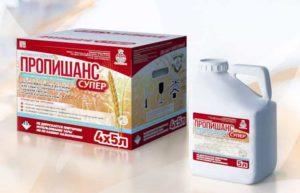
Protecting grain crops from diseases during the second half of the growing season is always crucial. In challenging climates, it's crucial to properly use fungicides to help protect plants from disease and maintain yields.
Related posts:
 Instructions for use and composition of the fungicide Triagro, dosage and analogues
 Instructions for using Falcon fungicide for treating grapes
 Instructions for use and composition of the fungicide Fitosporin-M, application rates
 The best eggplant varieties for growing in a polycarbonate greenhouse: planting and care
 Types of garden fungicides and descriptions of the top 24 best, instructions for use
 Instructions for use of the fungicide Topaz for plants, composition and analogues
 How to control carrot flies with medications and folk remedies
 Instructions for use and composition of the fungicide Raek, application rates and analogues