
- Composition, existing forms of release and purpose
- Mechanism of action
- Advantages and disadvantages
- Calculation of consumption for different plants
- Rules for preparing the working mixture
- Instructions for use
- Tomato
- Cucumber
- Ware potatoes
- Onion
- Precautions for handling
- Phytotoxicity
- Possible compatibility
- Storage rules
- Similar means
In an attempt to protect crops from fungal diseases, gardeners and farmers are increasingly opting for two-component chemicals, which have different effects on pathogens and are therefore more effective. The fungicide "Orvego" was developed by German specialists for the treatment and prevention of diseases such as late blight, downy mildew, and mildew.
Composition, existing forms of release and purpose
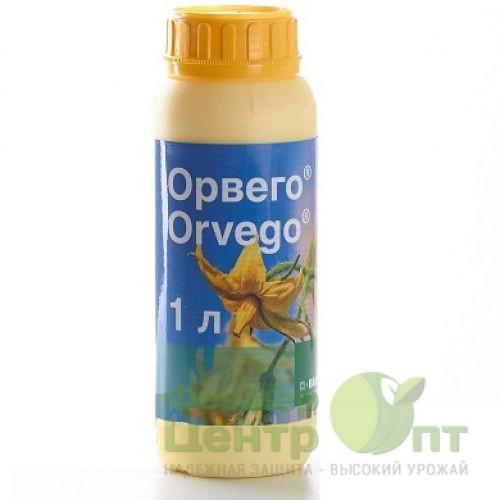
Orvego contains two active ingredients, each with a different effect on pathogenic microorganisms, which accounts for its effectiveness. The first active ingredient is amethoctradine, with 300 grams per liter. The second ingredient is dimethomorph, with a concentration of 225 grams per liter. German manufacturer BASF produces the fungicide as a suspension concentrate. The chemical is packaged in 1-liter plastic bottles.
The instructions for use indicate that the fungicide, which has contact and systemic action, is intended for the treatment and prevention of fungal diseases of vegetable crops and grapes.
Mechanism of action
The product's mechanism of action against pathogenic microorganisms is based on the interaction of two components. The antispore-forming effect of dimethomorph alters the morphogenesis of the pathogen's cell walls. Within 1-2 hours of spraying, the fungus begins to disrupt its vital functions, and it dies.
Advantages and disadvantages
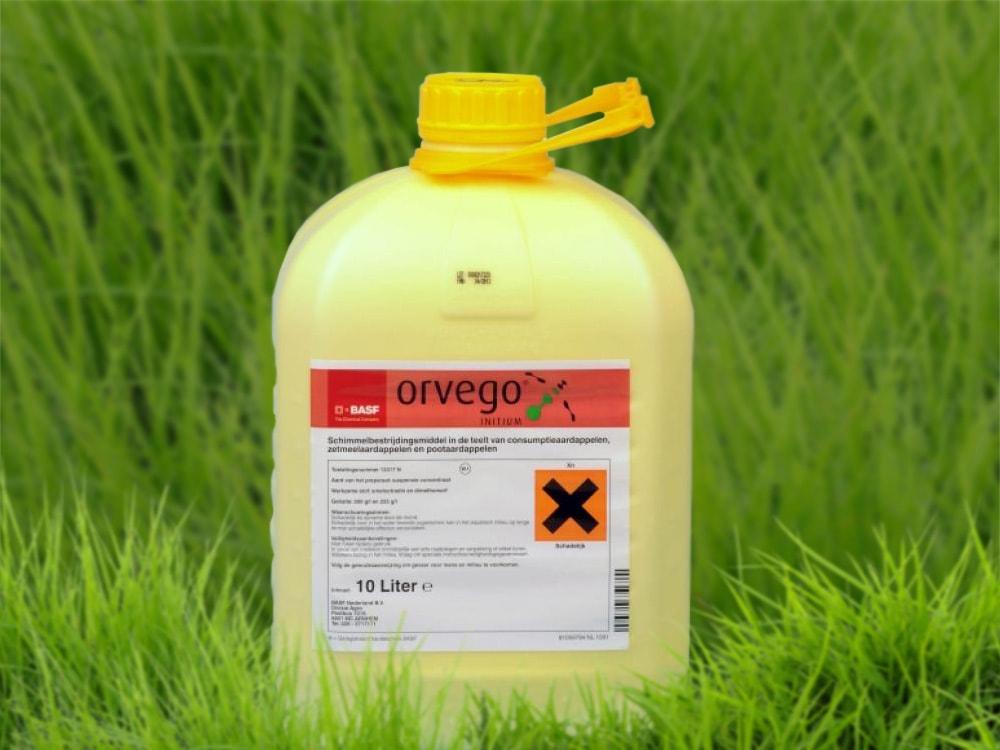
By using a systemic contact fungicide in their beds and fields, gardeners have noticed clear benefits from the product.
The disadvantages of the product include the need to conduct a chemical compatibility test before using it in tank mixtures.
Calculation of consumption for different plants
The manufacturer's instructions for use specify application rates for different types of plants. These parameters should be taken into account to avoid harming crops.
The fungicide consumption is indicated in the table:
| Sprayed crop | Diseases | Chemical norm | Frequency of treatments per season |
| Potato | Late blight and alternaria | From 800 ml to 1 liter per hectare of plantings | No more than three times |
| Grape | Mildew | From 700 ml to 1 liter per hectare of plantation | No more than 3 times |
| Cucumbers and onions | Peronosporosis | From 800 ml to 1 liter | No more than 3 times |
| Tomatoes | Late blight | From 800 ml to 1 liter | No more than 3 times |
Rules for preparing the working mixture
The working solution is prepared before spraying to ensure the active ingredients remain effective. The required amount of the product is added to a 10-liter bucket of water and mixed thoroughly. The solution is then poured into a sprayer tank half-filled with water, and the agitator is turned on.
When the preparation is completely dissolved, add liquid to the full volume and mix thoroughly again.
Instructions for use
After preparing the working solution, begin spraying the crops.
Tomato
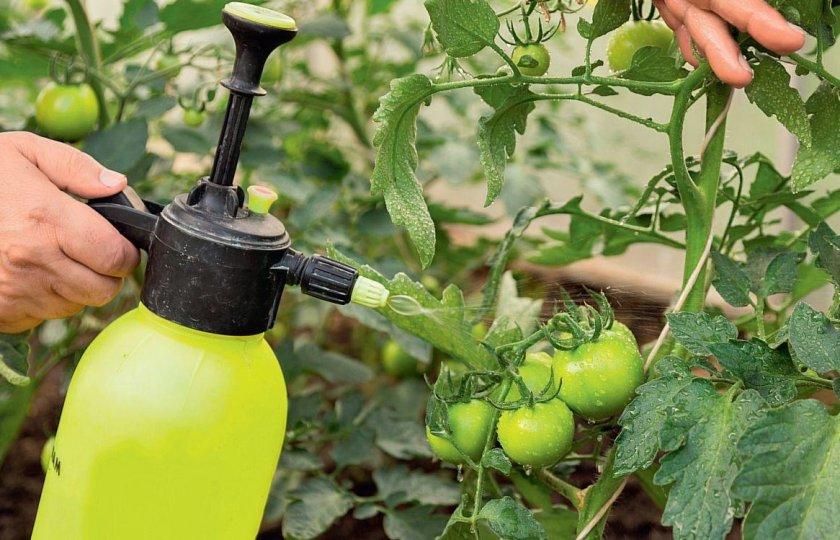
The first treatment of tomato plants is carried out at the budding stage. If necessary, repeat sprayings are carried out after 10-14 days.
Cucumber
Cucumber beds are sprayed when the first signs of disease appear. Three treatments per season are acceptable, with the last one no later than three weeks before harvest.
Ware potatoes
Potato fields are treated at the stage of row closure, and repeated after 14 days.
Onion
Spraying of onion beds is carried out throughout the entire growing season, the main thing is that at least 2 weeks remain before harvest.
Precautions for handling
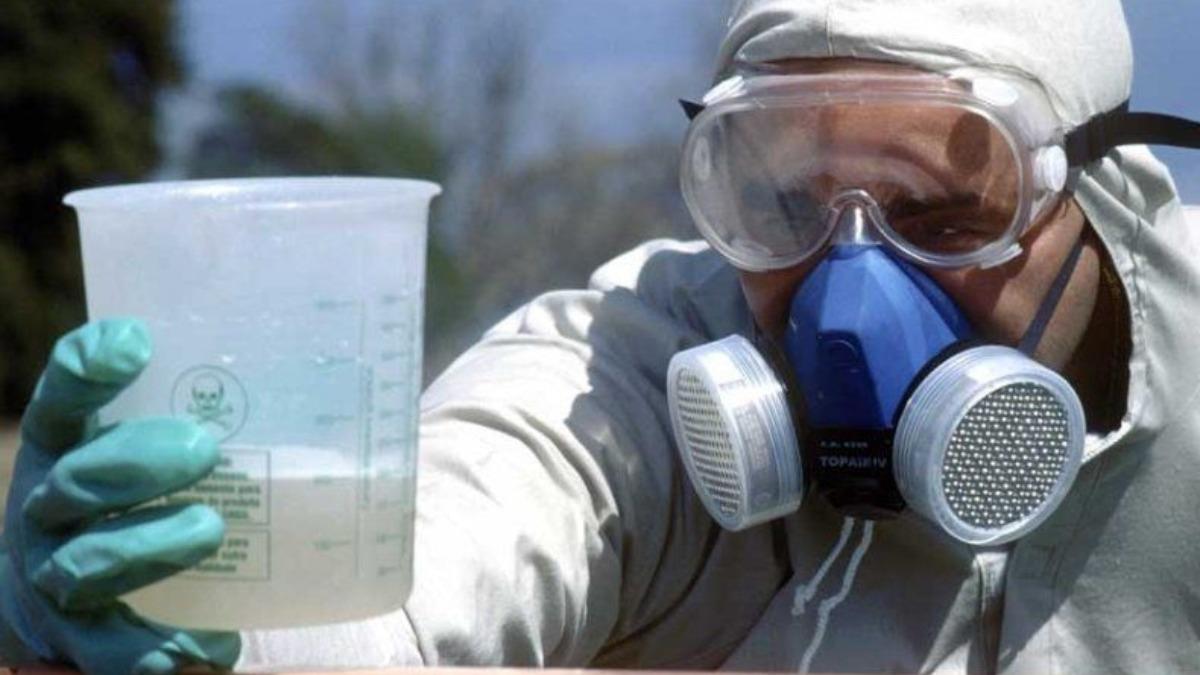
When working with chemicals, be sure to wear protective suits and gloves. A respirator should also be worn to prevent inhalation of fungicide vapors.

Phytotoxicity
When the instructions for the fungicide are followed, no cases of phytotoxicity have been identified.
Possible compatibility
The fungicide is permitted to be used in tank mixtures with other plant protection products, but a compatibility test is conducted beforehand.
Storage rules
The drug is stored in a utility room at a temperature not exceeding 30 degrees.
Similar means
There is no complete analogue of this fungicide in terms of composition. If necessary, it can be replaced with any chemical with a similar effect, such as "Oxychom."
Related posts:
 Instructions for using Falcon fungicide for treating grapes
 Instructions for use and composition of the fungicide Fitosporin-M, application rates
 Instructions for use of the fungicide Topaz for plants, composition and analogues
 Instructions for use and composition of the fungicide Teldor, application rates
 Composition and instructions for use of the fungicide Kumulus, application rates and analogues
 Instructions for use and composition of the fungicide Optimo, application rates and analogues
 Instructions for use and composition of the fungicide Raek, application rates and analogues
 Instructions for use and composition of Propi Plus, dosage of the fungicide and its analogues