
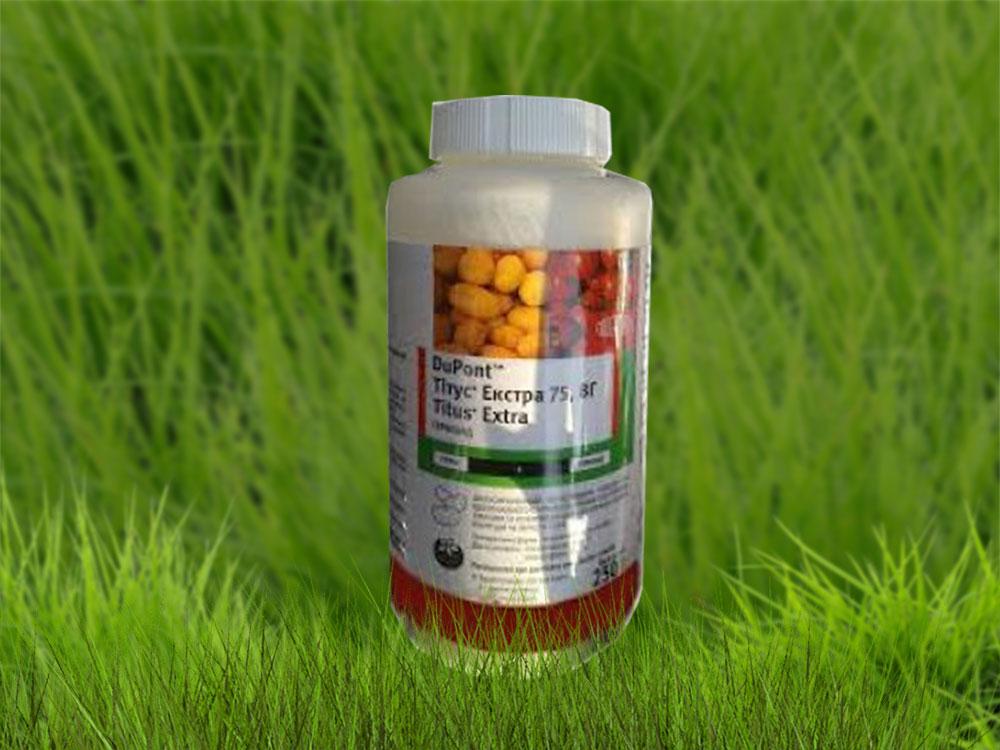
Weeds are a major problem for farmers growing crops for sale. They choke out crops and deprive them of the nutrients they need to thrive. While weeds can be controlled manually in small garden plots, larger fields require chemical treatments. Titus herbicide is an effective post-emergence weed control product.
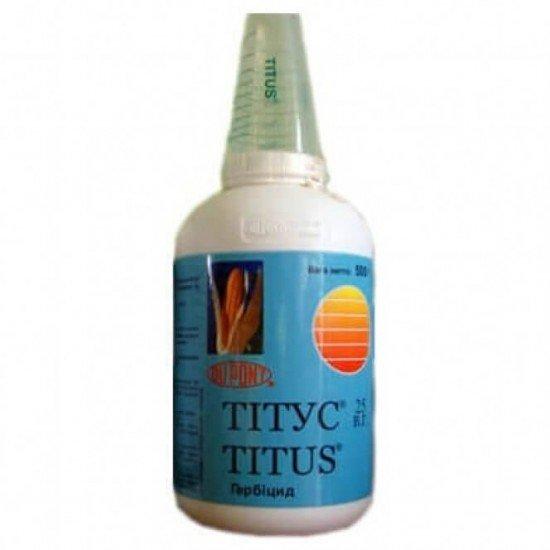
Composition and existing forms of release
The main active ingredient of this herbicide is a sulfonylurea called rimsulfuron. One kilogram of Titus contains 250 grams of the active ingredient. The herbicide is formulated as water-soluble granules. Titus is packaged in 500-gram doses, making it convenient for use even by small plot owners.
The drug "Titus Plus", in addition to rimsulfuron, contains an additional component - dimethylamine salt.
Advantages of the product
Farmers who have already used the herbicide on their fields have highlighted several key advantages of the chemical.
Mechanism of action
The herbicide "Titus" is used to control weeds in potato, tomato, and corn fields. This selective systemic herbicide effectively controls perennial and annual broadleaf weeds, as well as grasses.
Immediately after application, weeds stop growing. Within five days, signs of complete weed death appear, such as chlorosis and shoot tip dieback. Within 10 days, the herbicide completely decomposes in the soil and is environmentally friendly, while providing long-lasting protection.
Calculation of consumption
To achieve the desired result after treatment, it is necessary to correctly calculate the dosage rate of the preparation.
On tomatoes
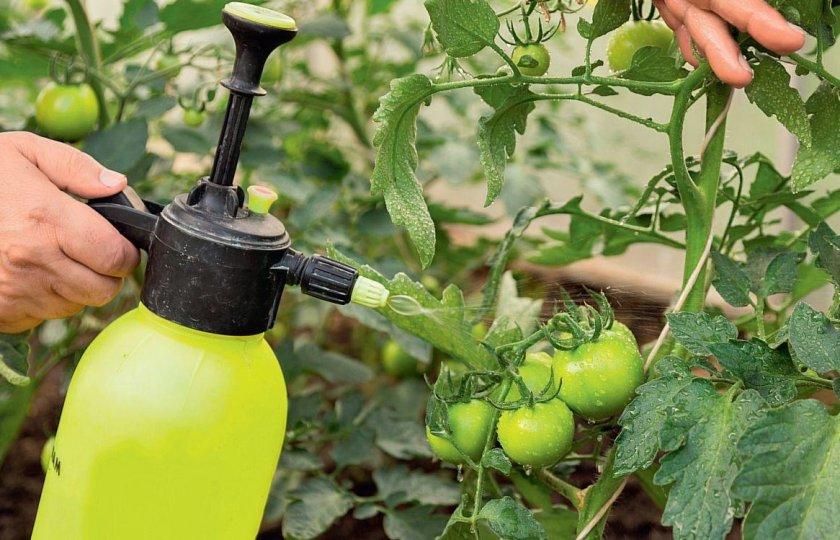
For seeded and transplanted tomatoes, apply 50 grams of herbicide per hectare, adding 300 ml of Trend 90 surfactant (0.1%). If the infestation is severe, repeat the application with the same amount.
On potatoes
To treat one hectare of potato field, 40 to 50 grams of the product is required. For severe weed infestations, this rate is increased to 60 grams.
On corn
For a single application, use 40 to 50 grams of the product per hectare of corn field. For a double application, use 30 grams the first time and 20 grams the second time.

How to prepare a working mixture
Pour one-third of the sprayer's total volume of purified water into the tank, then add the required amount of product and surfactant. Mix thoroughly until the granules are completely dissolved, then add the remaining water. Turn the mixer back on and ensure a uniform mixture.
Instructions for use
Treatments are carried out in dry weather. It is important that the air temperature the night before spraying does not drop below 5°C. After finishing the treatment, do not loosen the row spacing for 14 days.
Safety precautions
When working with herbicides, it is essential to adhere to safety regulations. These include the following:
- The presence of protective clothing to prevent the drug from coming into contact with the skin.
- Use of a respirator to protect the respiratory tract.
- Mandatory shower after completion of work.
- Smoking and eating are prohibited while working with fungicide.
If a chemical accidentally comes into contact with mucous membranes or skin, rinse with clean running water and seek medical attention for first aid.
Storage rules and shelf life
When stored properly, the herbicide has a shelf life of two years from the date of manufacture. Store the chemical away from direct sunlight. The maximum storage temperature is 28 degrees Celsius.
Similar means
The selective herbicide "Titus" can be replaced with preparations such as "Tivitus", "Rim" or "Maitus".
Related posts:
 Description of the best pepper varieties for greenhouses and open ground in 2025
 The best grape varieties for growing in the Urals, planting and care rules in summer
 Simple step-by-step recipes for making lingonberry jam for the winter
 TOP 11 Best Recipes for Canned Radishes for Winter and Storage
 Which tomato varieties are best for open ground?
 What varieties of tomatoes are best to plant in a polycarbonate greenhouse?
 The best eggplant varieties for growing in a polycarbonate greenhouse: planting and care
 Description of 30 grape varieties for Siberia, planting and care for beginners