
Gardeners know several ways to grow ginger at home. This pungent, spicy root contains many beneficial components, which is why it's increasingly being grown indoors and in garden beds. Growing ginger indoors is possible not only in spring and summer, but also in winter. Numerous secrets and tips will help you easily answer the question of how to grow ginger at home.
Pot and soil
To grow ginger indoors, choose fertile, loose soil with a neutral pH. You can purchase a ready-made all-purpose soil designed for vegetables, or mix garden soil with humus and sand yourself. For disinfection, water the selected soil with a solution of Fitosporin.
Before planting, decide on the purpose of the plant. Ginger flowers beautifully, so many people plant it for decorative purposes. In this case, choose a narrow and deep pot. This will prevent the roots from spreading, while allowing the foliage to develop vigorously.
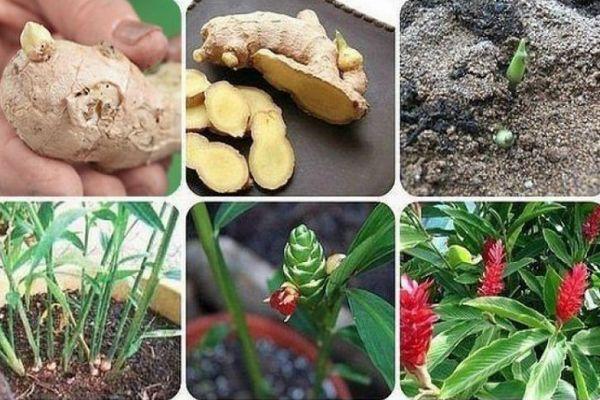
Flowering begins 2-3 years after cultivation and lasts several months. Shoots grow from the rhizome, reaching a height of 45 cm. The inflorescence forms a spike with small, beautiful flowers of varying shades (from light pink to deep purple).
The pot for growing the herb for harvesting shouldn't be too deep. It's best to choose a pot with a wide top, as the roots tend to spread out to the sides. Poke holes in the bottom of the pot. Before adding the prepared soil, lay down a drainage layer at least 4 cm thick.
There are two ways to grow ginger. Propagation is by seed or rhizome. The first method is difficult, so few people use it.
The leaves of a mature plant can stretch up to 75 cm. The oblong leaves have a pleasant herbaceous or lemony aroma.
How to grow ginger from root
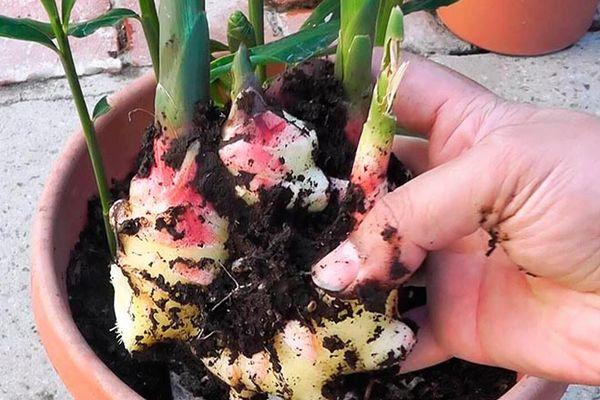
Before starting planting, select a suitable, healthy ginger rhizome with a smooth surface and dense structure, without damage, with a large number of eyes (buds).
You can grow any variety of ginger from root at home in any season. However, it's best to plant the spice in early spring, around the beginning of March, when shoots will appear sooner.
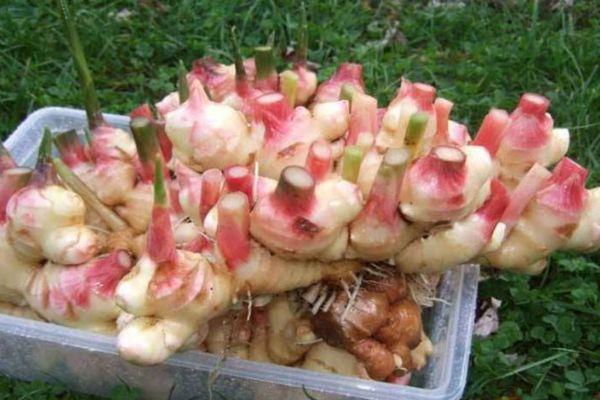
All varieties of ginger vary in color (light green, brown, orange), rhizome shape, and aroma. The flesh can be light green, brown, or orange-yellow. The roots can be elongated or rounded. The aroma is predominantly lemony, but can also have herbaceous notes. Almost all varieties have a tangy rhizome.
Preparation
Signs of good ginger for planting include: a shiny, smooth surface, free of wrinkles, rot, or other damage. The root should not be overdried or frostbitten.
When planting in a pot, it is necessary to use planting material that has undergone preliminary preparation:
- A root tuber with a large number of buds (eyes) is suitable.
- To start all the vital processes in the buds and get early sprouts, the root is soaked in warm water (65 degrees) for 4.5 hours.
- After soaking, the root is divided into individual pieces. It's important to ensure that each piece has an eye.
- A weak solution of potassium permanganate is used as a disinfectant.
- The cut areas are treated with ash or pharmaceutical charcoal.
Preparatory measures help accelerate plant growth, reduce the risk of disease and prevent pest attacks.
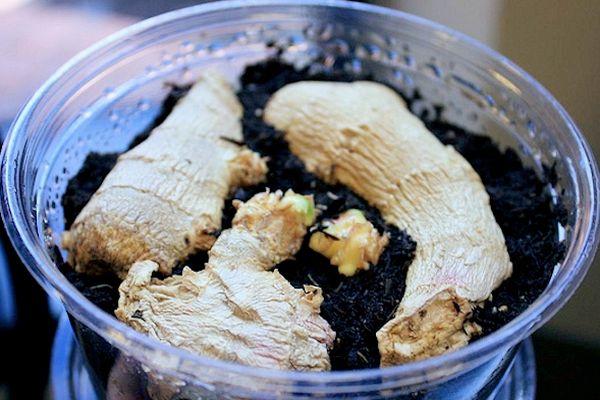
How to plant ginger root
To plant ginger at home, you need to prepare a container, special soil, select a good root and process it.
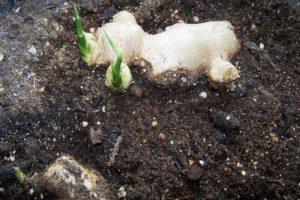
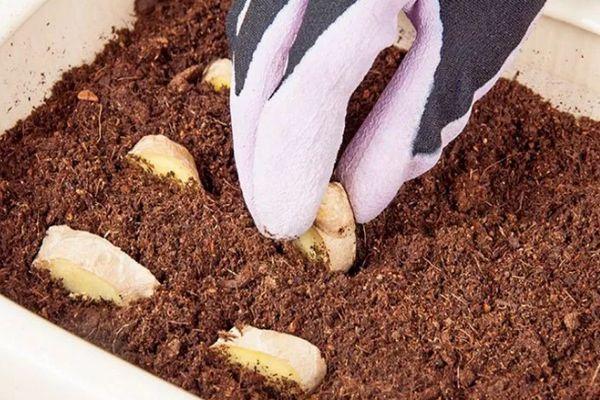
The seedlings are planted at a depth of 20 mm. It's important to ensure that the buds are facing upward. The root is then covered with a thin layer of soil and watered with warm, settled water. The container is moved to a warm location out of direct sunlight. The room temperature is maintained at 25 degrees Celsius.
AdviceIf the room is dry and hot, cover the container with plastic film. This will create greenhouse-like conditions and speed up germination.
If all care recommendations are followed, the first shoots will appear after 30 days.
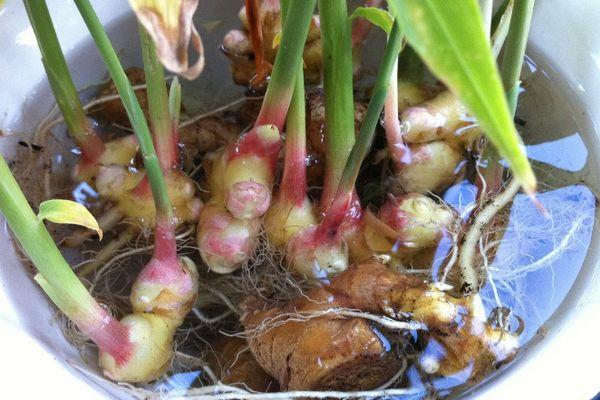
Caring for ginger at home
There's nothing complicated about caring for ginger. Simply maintain a certain temperature, organize a watering schedule, and apply complex fertilizers on time.
Temperature
Maintaining a certain temperature and humidity is essential for caring for ginger at home. Failure to meet these requirements will result in slow growth or even death of the plant.

The container with the planted rhizome should be kept in a warm room, protected from drafts and sudden temperature changes. Temperatures should be maintained at different levels in winter and summer:
- In summer, the optimal temperature for ginger growth is considered to be between 23 and 26 degrees Celsius, but the plant can tolerate even hotter temperatures. It's important to protect the plant from sudden temperature fluctuations.
- During the winter months, the room temperature should be between 18 and 21 degrees Celsius. Winter slows down the growth process, which favors future rhizome development.
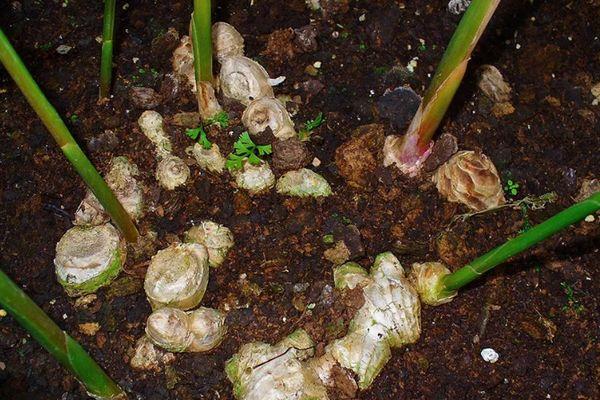
Humidity levels should be high, so regularly mist the leaves with water. During heating season, it's a good idea to place a container of water near the seedlings.
Lighting
When growing ginger, consider its light requirements. The plant thrives in partial shade. Therefore, the container is placed on a windowsill where sunlight reaches only half the day. The east and west sides of a building are considered ideal for growing ginger. Be sure to protect the plantings from drafts.
Watering
The specifics of growing plants in an apartment include proper watering:
- Water regularly. Ginger prefers moist soil, but avoid overwatering.
- After each watering, loosen the soil. This will prevent crust formation and allow oxygen and nutrients to reach the roots without obstruction.
- It is recommended to spray growing ginger with water daily using a spray bottle.
- In autumn, watering is reduced. This promotes greater rhizome growth and nutrient accumulation.
The plant should be watered with warm (+22 degrees), settled or filtered water.
Fertilizer
In limited space, nutrients quickly run out, so when growing ginger on a windowsill, regular fertilizing is necessary. It's best to apply mineral fertilizer every 12 days along with watering.
To increase green mass, nitrogen must be applied at the beginning of the growing season. Phosphorus and potassium fertilizers are best for root formation. They are applied mid-season.
Mullein is often used as a fertilizer. To prepare a solution, it is dissolved in water in a ratio of 1:9. Mullein can be replaced with chicken manure or nettle infusion.
Fertilizing is done simultaneously with watering. To ensure that all nutrients are distributed evenly and reach the rhizomes without obstruction, the soil is loosened after applying fertilizer.
Pests and diseases
Due to the specific smell and taste of the roots and leaves, almost all varieties of ginger are characterized by high resistance to many diseases and pests.
If the air in the room is dry and the watering schedule is disrupted, there's a high risk of spider mites. These small insects feed on plant sap. White spots may be found on the underside of the leaves. The leaves will begin to turn yellow and become spotted.
Therefore, it is important in the container, where does ginger grow?Place a drainage layer of small pebbles or expanded clay. Spray the above-ground portion of the plant daily with warm water.
High humidity and overwatering increase the risk of rot. Watering should be moderate, and avoid stagnant water.
Harvesting
In late September, the plant's leaves begin to turn yellow and dry out, and watering is stopped. Once most of the leaves have dried, harvesting begins. How to harvest properly?
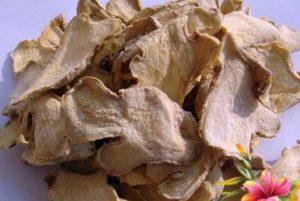
It's best to remove the root tuber by hand to avoid damaging the surface. The dug-up root is cleaned of any dirt, the lateral roots are trimmed, and it's laid out to dry in a sunny spot. The finished product, grown indoors, is cut into slices and then dried or frozen.
A good ginger harvest is distinguished not only by its size but also by its beneficial properties. Ginger contains many valuable elements. Ginger drinks help relieve cold symptoms.
Regular consumption of ginger helps normalize the nervous system, boost immunity, and improve the condition of skin and hair. Ginger is included in many weight loss recipes.
Related posts:
 How to grow ginger in the open ground at your dacha, planting and care
 The beneficial properties and harm of ginger for human health, medicinal use of the root
 How to use ginger for weight loss at home
 How to properly freeze ginger at home in the freezer for the winter and is it possible
 How and where to properly keep ginger root fresh at home
 The beneficial and medicinal properties of ginger for men, possible harm and contraindications
 The benefits and harms of ginger for the female body, medicinal properties and contraindications
 What ginger looks like and where it grows in Russia, description of species and cultivation