
- Compatibility of peppers with cucumbers
- What varieties of peppers are suitable for growing together?
- Pros and cons of neighboring
- Are there any common diseases?
- Growing methods in one greenhouse
- Planting patterns for crops
- Are partitions and zoning necessary?
- The nuances of caring for plants in greenhouse conditions
- How to plant peppers and cucumbers outdoors
- Planting methods
- Do the care requirements match?
- Secrets of a vegetable grower
To grow a rich harvest in the garden, it is necessary not only to follow basic agricultural practices, but also to know which crops are compatible, in particular, Can I plant hot peppers next to cucumber bushes?If mistakes are made, the plants will develop poorly and often become sick.
Compatibility of peppers with cucumbers
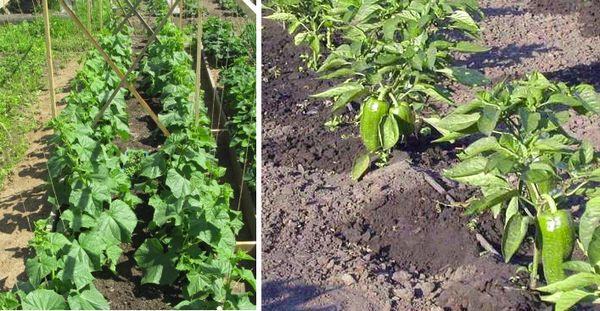
To achieve the desired result—a bountiful harvest—it's important to know which vegetables hot peppers pair well with. Since hot peppers are a nightshade crop, planting them near nightshades (tomatoes, eggplants, bell peppers, and others) is not recommended. Cucumbers, however, are members of the gourd family and are known for their warmth- and moisture-loving nature. These characteristics are also shared by hot peppers.
Growing this herb in a greenhouse is also effective. The key is to adhere to the following conditions:
- Maintain a distance of at least 1.5 meters between hot peppers and cucumbers. This will prevent the hot peppers from being shaded by the large cucumber leaves.
- Ventilate frequently; it is better to plant hot peppers closer to the greenhouse doors.
When grown in a greenhouse, it's important to note that hot peppers don't require much organic fertilizer, which isn't the case with cucumbers. If there's too much fertilizer in the soil, the pepper will only grow foliage, and the ripening period will be extended.
It is optimal to grow hot peppers and cucumbers separately from each other, as this will significantly increase the productivity of these two crops.
What varieties of peppers are suitable for growing together?
Among the most suitable varieties of hot peppers, experienced gardeners highlight:
- Aleksinsky is a mid-season variety, with a ripening period of 145 days. Yields 3-4 kilograms per square meter. It is highly resistant to major diseases.
- Astrakhansky 147 is noted for its early maturity, with fruit ripening in 122 days. The plant has a reasonable degree of disease resistance. The yield per square meter is 2.8 kilograms.
- Vizier, a mid-early ripening variety, has a high degree of disease resistance. The variety yields almost 3 kilograms per square meter.
- A miracle of the Moscow region. This early-ripening crop produces hot peppers that mature in 125 days. The plant is fairly drought-resistant and resistant to major diseases. The yield per square meter is approximately 3.9 kilograms.
Pros and cons of neighboring
The following are some of the positive aspects of joint cultivation of crops such as hot peppers and cucumbers:
- lack of cross-pollination;
- no common diseases;
- high yields of both crops;
- General requirements for microclimate and care.
But, despite the whole list of advantages of joint planting, this tandem also has its disadvantages:
- aphid infestation of cucumbers and hot peppers;
- If mistakes are made when choosing a location, the growth and development of the spice crop may be delayed.
Are there any common diseases?
Cucumbers and hot peppers don't share any common diseases, making them suitable for planting next to each other. The only protection needed is from tiny aphids, which suck the life out of plants and spread rapidly, invading new areas every day. Control measures must be taken as soon as possible.
Growing methods in one greenhouse
The most favorable conditions for growing hot peppers will be provided by a greenhouse, where there is sufficient warmth and moisture.
Planting patterns for crops
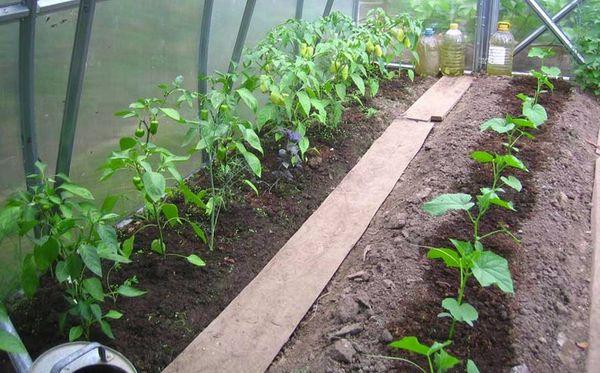
When grown in a greenhouse, pepper seedlings should be spaced 25-30 centimeters apart within a row. A staggered planting pattern is also suitable, but this will increase the planting material consumption per unit area by 30%.
Are partitions and zoning necessary?
Using polyethylene partitions in a greenhouse where hot peppers and cucumbers are grown together minimizes the risk of fungal infections in the spice crop. Zoning protects the hot pepper plants from excessive humidity, which is detrimental to their growth. Regular ventilation of the greenhouse is also recommended.
The nuances of caring for plants in greenhouse conditions
Irrigation must be properly organized to avoid harming either the herbs or the cucumbers. Avoid overwatering; watering should be frequent but moderate. Fertilizer mixes are straightforward—they prefer similar nutrient compositions: phosphorus, potassium, and nitrogen. In addition, to ensure that the planted plants are comfortable, it is necessary to control the temperature in the greenhouse.
How to plant peppers and cucumbers outdoors
By adhering to proper agricultural practices and crop rotation, it is possible to increase not only the quality, but also the quantity of crops grown.
Planting methods
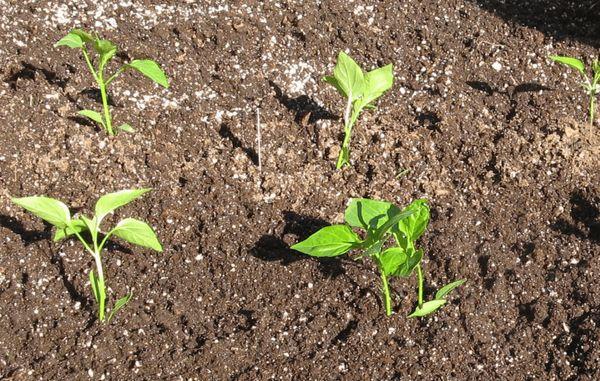
Plant seedlings can be planted either in even rows, with 40-60 centimeters between plants, or in a staggered pattern. Alternatively, two seedlings can be planted per hole, spaced 25 centimeters apart. This technique ensures more intensive pollination and also helps the plants support each other.
Do the care requirements match?
In general, caring for pepper plants and cucumber plants has much in common. Watering should be done in the morning or evening, in moderation, and avoiding stagnant soil moisture. In dry weather, watering should be done 2-3 times a week. After each watering, it is recommended to loosen the soil to prevent oxygen starvation of the roots.
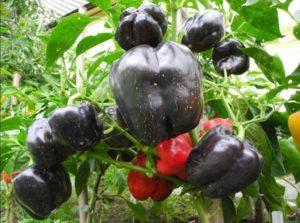
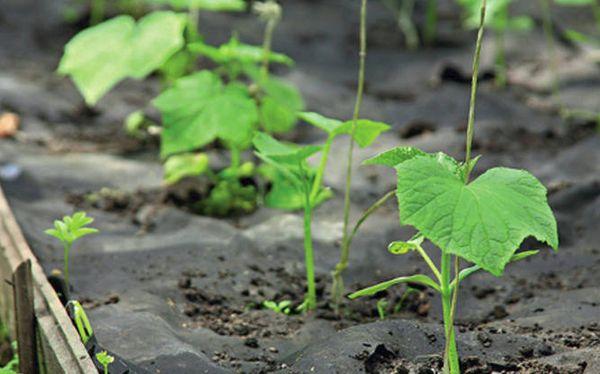
Fertilizing cucumbers begins three weeks after planting. Subsequently, feeding is done every two weeks using organic or mineral fertilizers. During the flowering stage, hot peppers are enriched with nitrogen, phosphorus, and magnesium. During the fruit set period, phosphorus-potassium fertilizers are used.
Secrets of a vegetable grower
To avoid skin irritation, handle hot pepper seeds with rubber or latex gloves. On large farms, wearing a protective mask during the flowering period and during harvesting is recommended to help prevent a severe autoimmune allergic reaction.
Related posts:
 What to plant next to hot peppers, beneficial and harmful neighbors, and crop rotation rules
 Description of the best varieties of ornamental peppers, growing and caring for them at home
 10 simple Armenian-style pickled hot pepper recipes for the winter
 How to grow peppers from seeds at home: choosing a variety, planting, and care
 Top 15 Recipes for Pickled Hot Peppers at Home
 16 simple recipes and methods for pickling hot peppers for the winter
 TOP 40 New Year's 2020 Meat Recipes Using Pork, Beef, Chicken, and Lamb
 Planting, growing, and caring for peppers in open ground in the Moscow region: the best varieties