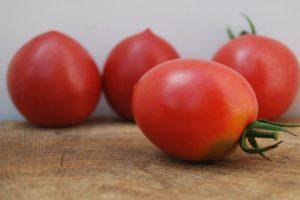
The small-fruited cherry tomato Ira is a real find for lovers of miniature vegetables. This early-ripening hybrid, tested for 18 years, is undemanding in terms of care and growing conditions.
General description of the plant
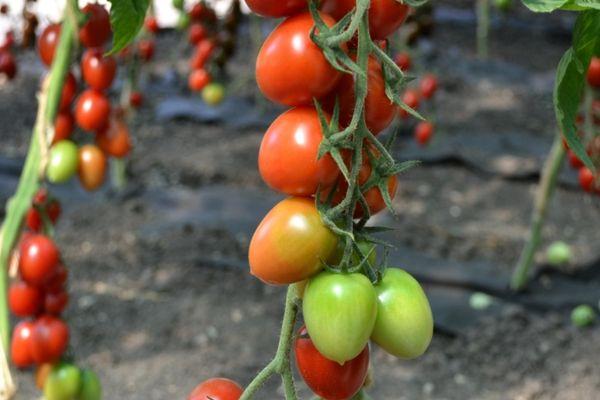
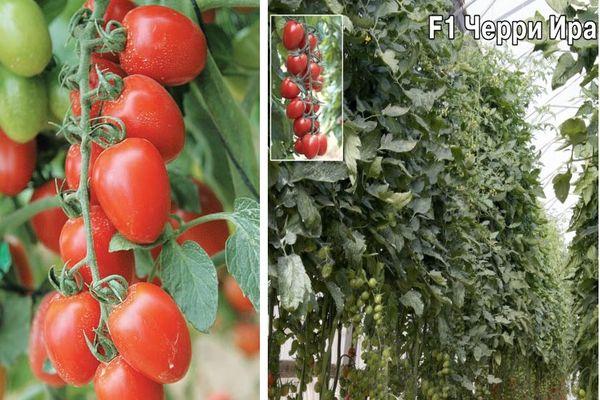
The bush's characteristics indicate an indeterminate stem development: greenhouse tomatoes grow without restriction and can reach a height of 3 meters. In open ground, vines should be pinched back approximately one month before the end of the season. Flowering and fruit set can continue until the first autumn frosts, but fruits that have not reached technical ripeness are unsuitable for harvesting. Therefore, stem growth is artificially restricted to allow the formed ovaries to fully mature. They can be harvested while still green.
The hybrid is resistant to verticillium wilt and fusarium, but is susceptible to late blight, especially in cold and rainy years. It is resistant to blossom-end rot and nematode blight. When grown outdoors, yields remain virtually unchanged, even in unfavorable years for tomatoes. Gardeners report that the flavor of the berries is affected, but the yield remains the same.
To increase the yield of a plantation, cherry tomatoes should be trained into 1-3 stems. The vine requires staking to a trellis and pinching throughout the season. The bush produces numerous shoots, so it is not recommended to let this process get out of control. Descriptions of the variety by those who have already grown it emphasize that without pinching, the tomato becomes a bundle of stems and practically does not bear fruit.
By planting 3-4 tomato plants per square meter, a gardener can expect an average yield of 14-15 kg per unit area. Planting too close together will only reduce yield. To save space in a greenhouse, tall tomato plants can be crowded with mini tomatoes like Monetka, Pinocchio, and others, or you can grow herbs.
In addition to the Ira cherry tomato, there are hybrid varieties called Irina and Irishka. These are early-ripening, low-growing tomatoes with large fruits. They differ from the Ira F1 variety both in the type of bush and in the appearance of the tomatoes.
Fruit characteristics
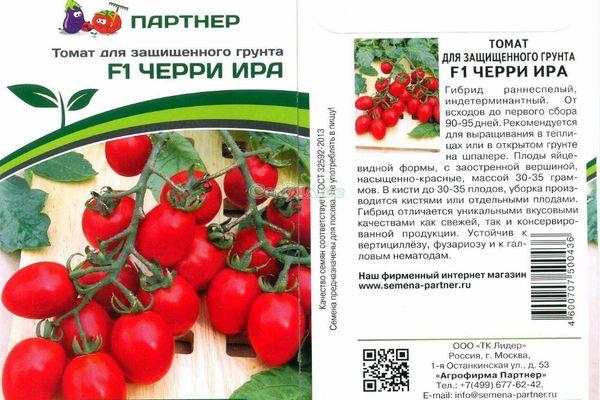
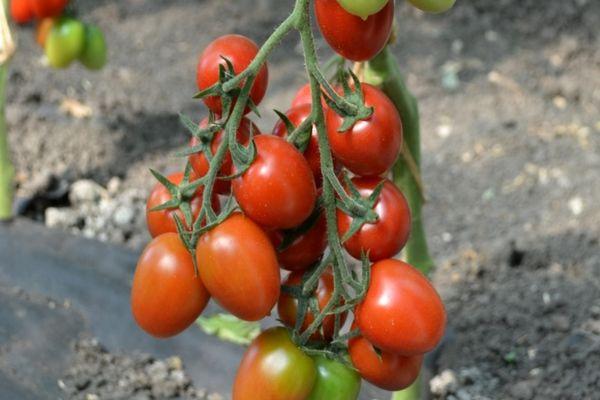
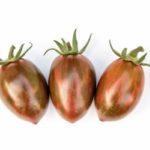
This early-ripening variety takes 90-95 days from sowing to the first harvest. Fruiting occurs in clusters, with branched, complex clusters, each producing up to 30 small, nearly uniformly sized tomatoes. The average fruit weight is no more than 40 g. Ira cherry tomatoes are elongated, ovoid, with a sharp protrusion at the apex.
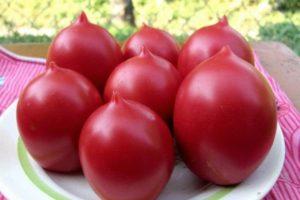
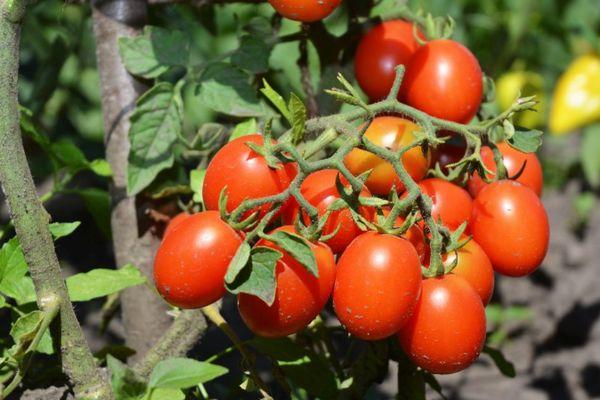
The skin is very dense; the fruits do not crack during ripening and filling, and they remain intact during canning. Ira F1 cherry tomatoes withstand transportation and long-term storage well when ripe. Their bright scarlet coloring and tassels are very decorative when ripe.
The flesh is well-colored, without any light spots. The consistency is firm and juicy, and the tomato contains two seed chambers with abundant juice and seeds. The flavor is rated highly: the berries are sweet, without a pronounced sourness, with a pleasant tomato aroma.
These fruits have a versatile use. They can be eaten fresh in a variety of salads and slicing dishes. These miniature tomatoes are perfect for a buffet table, garnishing canapés and appetizers, serving them on creative sandwiches, or garnishing cocktails. The bright, flavorful flesh can serve as the base for gazpacho or tomato soup, and can be added to any hot dish.
Mini tomatoes are also perfect for homemade preserves. Calibrated berries look stunning when paired with gherkins and baby vegetables. They retain their texture when pickled or salted in any way. If desired, they can be used to make tomato juice or paste with a classic flavor. Small tomatoes are easy to dry and freeze. Unripe berries can be used to make unusual and beautiful jams.
How to grow cherry tomatoes in your garden?
Growing cherry tomatoes is no different from caring for regular tomatoes. When choosing a time to sow, consider the early maturity of Ira tomatoes and plan for the planting period: two months before the expected transplant. You can buy ready-made soil or create a substrate from equal parts fertile soil, humus, and fine sand. For every 10 kg of mixture, add 2 tablespoons of ground eggshells or chalk.
Before sowing, the soil must be disinfected: heated to a high temperature in a microwave or oven, poured with boiling water, etc. A hot, dark pink solution of potassium permanganate produces good results. Thoroughly saturate the substrate, laid out in boxes, with the liquid. After it has cooled to room temperature, you can begin sowing.
A special feature of first-generation hybrids (F1) is that seeds must be purchased from the producer annually. Seeds taken from their own plants do not retain their parental qualities in the next generation. Tomato seeds should be placed directly on the surface of wet soil and covered with a 0.5 cm layer of dry sand or soil. Cover the container with glass or plastic film, leaving 2-3 openings for air circulation. Place the seeds in a very warm place with a temperature of at least 25°C. When seedlings appear, remove the plastic film.
Plants that have reached the 2-3 leaf stage (not cotyledons) should be repotted into individual pots. After repotting, ensure the top 1 cm of soil dries out and water the seedlings regularly. Fertilizing is not required.
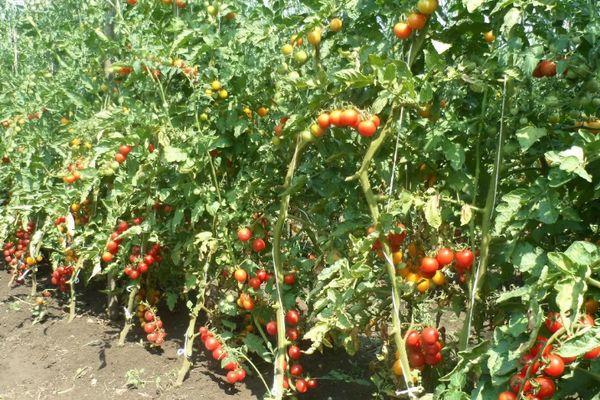
Seedlings of early-ripening varieties have a lot of vigor, so they often become stretched and appear frail. For ease of planting, use a horizontal method: the stems are placed in a trench about 20 cm deep, with 3-4 pairs of upper leaves remaining above the surface. There should be about 40 cm between the above-ground parts, and 70 cm between the rows.
Tomatoes are fed with nitrogen fertilizers (once, one week after planting). When one cluster forms, phosphorus-potassium fertilizers are applied. After two weeks, the same feeding is repeated.
Related posts:
 Growing cherry tomatoes in a greenhouse and open ground, when to plant seedlings
 Description of the best, sweetest, and most productive varieties of cherry tomatoes
 How to plant and grow cherry tomatoes from seeds on a windowsill at home in a pot
 8 recipes for quick-pickled cherry tomatoes with garlic and hot pepper, and storage instructions
 How to cook sun-dried sweet cherry tomatoes in the oven, microwave, and slow cooker
 Delicious recipes for pickled cherry tomatoes for the winter, finger-licking good, with and without sterilization
 How to prepare cherry tomatoes in their own juice for the winter using finger-licking recipes
 Description of Cherry Negro tomato cultivation and planting rules
Take a look Also