
The Fletcher F1 tomato belongs to the group of hybrid varieties. It is intended for planting outdoors. This tomato variety is included in the State Register of Russian Tomatoes. This tomato ripens relatively early. The shelf life of the fruits without special measures is approximately 20 days. This allows for long-distance transportation. This hybrid is used for salads, canning, juices, and tomato paste.
Some information about the plant and its fruits
The characteristics and description of the Fletcher variety are as follows:
- The first harvest can be obtained 65-70 days after planting the seedlings in the ground. Breeders recommend growing this tomato variety outdoors in southern regions of Russia, while in the central part of the country, Fletcher is best grown under plastic covers.
- The bushes grow to a height of 1.0–1.3 m. It should be noted that the plant quickly builds up green mass, so it is recommended to remove side shoots in a timely manner.
- The leaves of this tomato are dark shades of green. They are medium in size and have a standard shape.
- Each brush can produce 2-4 fruits.
- The plant is resistant to nematodes, verticillium wilt, and fusarium wilt.
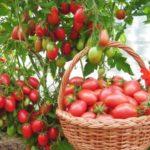
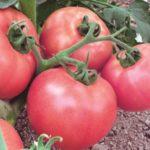
- The fruits of the described hybrid have the shape of a flattened ball, colored in dark shades of red.
- The fruit weighs between 150 and 190 grams and is covered with a firm skin. The inside of the fruit contains a sweet, juicy, and firm pulp. The inside of the tomato contains 6 to 8 seed chambers.

Feedback from farmers who have been planting Fletcher for several years shows that with the correct use of agricultural techniques, it is possible to obtain a yield of 2.8-3.2 kg/m².
To maximize the yield, gardeners who have planted this tomato in their gardens recommend using stakes to support the stems, as many grow the plant to 1.6–1.8 m. It's also recommended to remove old leaves from the bushes promptly to ensure adequate light reaches all plants.


To ensure 100% germination, seeds are germinated indoors and then transferred under plastic cover. Insufficient watering can cause the internal density of the tomato to increase. The harvest is usually done in two stages; for example, in Siberia, the first fruits of the Fletcher variety are harvested in July, and the rest in late August.

Growing technique
After the seeds have sprouted (they are treated with potassium permanganate before sowing to strengthen the immunity of the seedlings), the container with the sprouts is transferred to a room where the temperature is maintained at +24…+25 °C.
After the first loops form, the seedlings are moved to a bright location or illuminated with special lamps. It is recommended to maintain a 17-hour daylight period for the seedlings. Special root fertilizers are used to nourish the young seedlings.

When the seedlings develop 1-2 leaves, they are pricked out. After hardening off and airing, the seedlings are transferred to the ground. In the fall, natural organic matter, such as manure or peat, is shoveled into the area where Fletcher will be planted.
Before planting seedlings in the ground in spring, dig holes and add mineral fertilizers rich in potassium and phosphorus. To strengthen the seedlings, breeders recommend adding 1 tablespoon of calcium nitrate to each hole. After this, cover the hole with soil. Do not stir the contents.
Because the plant produces relatively heavy clusters, the stems need to be tied to sturdy supports. A bush is formed from 2-3 stems. The planting pattern for tomatoes is 0.6 x 0.6 m. Mulching the soil makes caring for the plant easier.
 To help plants take root better in the soil, it is recommended to spray them with a special stress-relieving preparation. Before flowering, apply nitrogen fertilizer to the soil. This will help strengthen the plant's immunity. Fletcher's rhizome is highly resistant not only to diseases but also to garden pests.
Related posts:
 Description of blight-resistant tomato varieties for open ground and greenhouses
 Description of the best tomato varieties for pickling and canning
 Description of the best Dutch tomato varieties for greenhouses and open ground
 Description of the best varieties of black tomatoes for open ground and greenhouses
 How to propagate and grow peas, cultivation technology, and care in open ground
 Description of the best tomato varieties for greenhouses in the Kirov region
 Characteristics and description of the Sprut tomato variety, yield and cultivation
 Description and characteristics of non-stepsoning tomato varieties for open ground and greenhouses
