
Russian-bred varieties are convenient for gardeners due to their ability to tolerate local conditions. Among them is the Nastenka tomato, an early-ripening variety adapted to greenhouse and open-field cultivation. It was included in the State Register of Breeding Achievements in 2012 and has already been tested in various regions of the country.
General characteristics of the plant
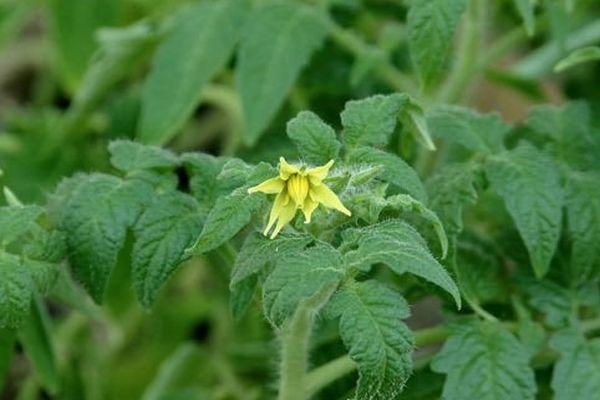
Nastenka tomato plants are determinate, standard-type plants capable of growing foliage throughout the summer. They reach a height of only 70 cm, and the weight of the fruit causes the stems to droop to the ground. Therefore, those who have planted Nastenka recommend tying the stems to a support structure. The plant does not require pinching, and produces few side shoots.
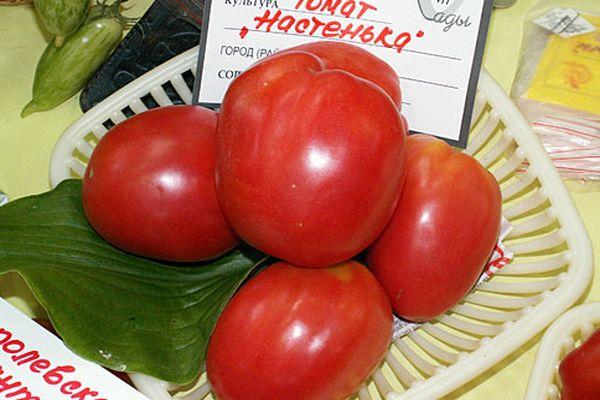
This variety should be distinguished from the F1 hybrids Nastena and F1 Anastasia. Despite the similarity of their names, Nastenka tomatoes are a cultivar and can be propagated from seeds collected by gardeners from their own bushes. The Nastenka tomato variety has a different fruit shape and color, and it yields higher yields.
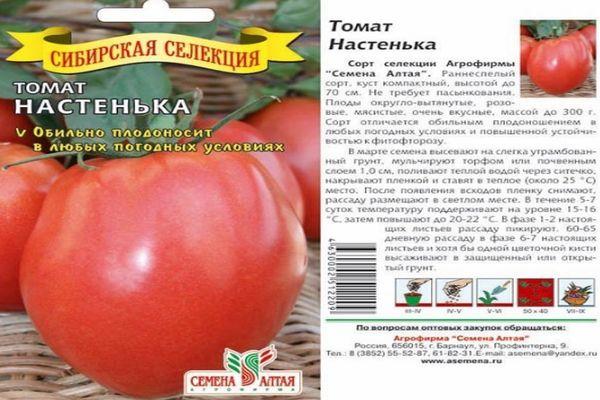
The variety's characteristics and description in the State Register indicate that the Nastenka tomato variety has an average yield of approximately 2-2.5 kg per plant. By planting four plants per square meter, a vegetable grower can obtain approximately 10 kg of marketable tomatoes per unit area. By using dense plantings and tying the plants to supports, a slight increase in yield can be achieved.
Tomatoes grown outdoors are susceptible to late blight. Prevention can be achieved by removing some of the leaves that are in contact with the soil. Fungicides are also used to reduce losses, applying them to the planting before the tomatoes begin to ripen. Resistance to other diseases is unknown.
Nastenka tomatoes tolerate all weather conditions well when grown outdoors. They don't reduce yield in cold and rainy years, and they withstand mid-summer cold snaps. The berries may develop an overly acidic flavor if grown in conditions of high humidity and insufficient sunlight.
Consumer properties of fruits
Nastenka is an early-ripening tomato variety; the first harvest can be expected 100-110 days after the seeds germinate. In cooler years in central Russia, ripening may be delayed until the second half of summer. In a greenhouse, tomatoes can be harvested as early as early July.
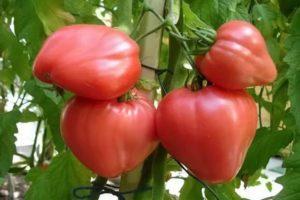
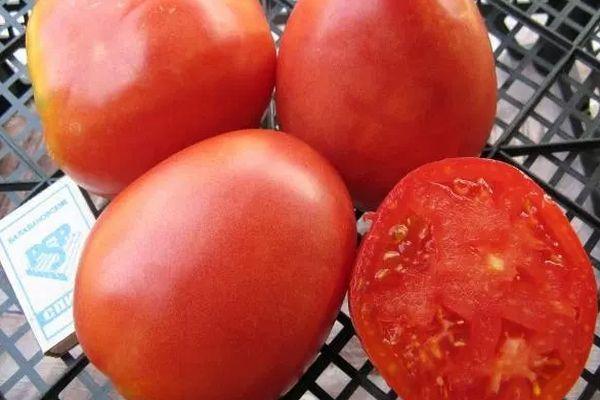
The fruit is round and vertically elongated, reminiscent of the Ox's Heart fruit, although smaller. The average weight of a single tomato is 200-250 g, with some specimens reaching 300 g. The tomatoes are borne in simple clusters of 3-5 fruits. The size of the ovaries within a cluster can vary significantly.
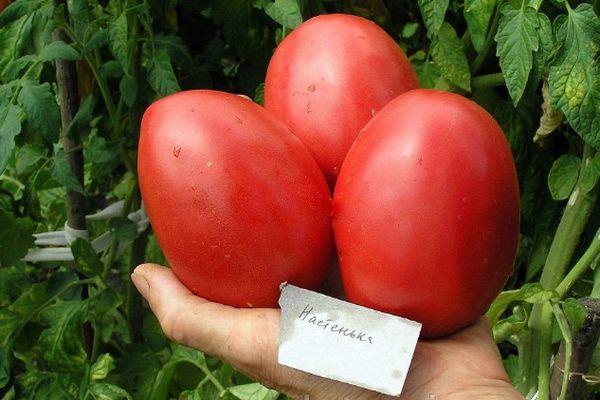
The skin is thin and not particularly strong. The base of the fruit can crack if exposed to excess moisture during ripening. This reduces the quality of the fruit and, in some cases, leads to partial harvest losses due to rot. At biological maturity, the color is deep pink; unripe tomatoes are pale green, with a spot near the stem. Greenish patches sometimes remain on the shoulder even when the Nastenka tomato is fully ripe.
The flesh is meaty, grainy when broken, and resembles Bull's Heart or similar varieties in texture. The core contains several small seed chambers, but most of them are located around the perimeter of the fruit. The flavor is average. Like many pink varieties, the taste leans toward sweet, but also has a slight piquant tartness. The aroma is medium, typical of tomatoes.
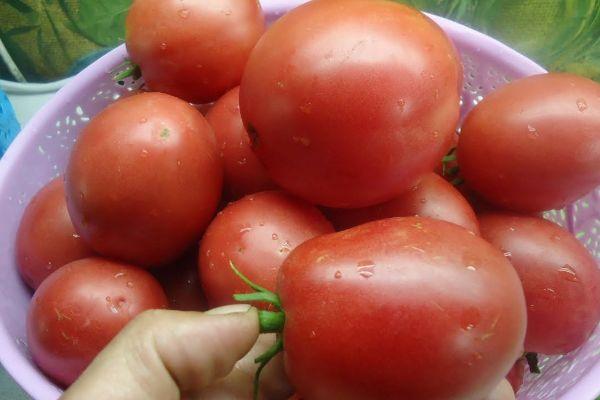
This type of tomato is perfect for fresh salads and various appetizers. The fleshy berry is perfect for slicing and as a sandwich filling. Tomato slices make a great garnish for baked goods. They can be used in caviar, soups, and sauces, where the tomato's lack of vibrant color isn't a concern.
For whole-fruit canning, select only small, unripe tomatoes. Firm, unsoftened blanched tomatoes can be pickled in barrels. Surplus pink tomatoes are best processed into juice and sauces.
The pulp from Nastenka's fleshy berries will be thick and won't require long simmering. This product will better preserve vitamins and nutrients, and the sauces will be lighter in color than standard sauces. The increased sugar content makes this product healthy for children and suitable for low-acid diets.
Agricultural technology of the variety
To grow a good harvest, you need to prepare the seedlings. At home, you can provide both lighting and the right soil mixture. Depending on how much care the young plants receive, they will develop into adults, setting fruit.
It's best to sow the tomatoes 60-70 days before transplanting them into the garden or greenhouse. Prepare the soil with equal parts sand, fertile soil, and humus. To reduce soil acidity, add 2 tablespoons of ground chalk or eggshells for every 10 kg of the mixture.
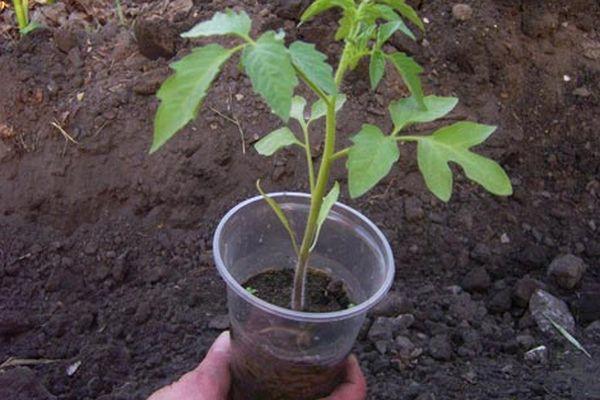
Disinfect the prepared substrate directly in the container by soaking it in a hot solution of potassium permanganate. Once the soil has cooled, sow the seeds, spreading them over the surface of the moist soil. Cover the seeds with a thin layer of sand (0.5 cm). Cover the containers with plastic film with 2-3 holes and place them in a warm place for germination. Once the seedlings begin to sprout, remove the film.
At the stage of 2-3 true leaves, seedlings are transplanted according to a 10x10 cm scheme. Further care consists of regular watering of young plants.
The soil should not dry out or become overly wet. Water when the top layer of soil in the container has dried out. The water used should be warm, approximately the same temperature as the soil.
To prevent black leg, add a little potassium permanganate to the water or, after each watering, dust the soil and stems with sifted wood ash.
The seedlings can be transplanted to the greenhouse in mid-May, and to the open beds after the spring frosts have passed. Four plants can be placed per square meter, planted in a 40x70 cm pattern. About two weeks after planting, the tomatoes should be earthed up, covering part of the stem with soil to encourage additional root development.

In dry weather or when growing Nastenka tomatoes in a greenhouse, the plants will need to be watered. The watering schedule should ensure sufficient moisture. For busy gardeners, even in hot weather, periodic watering every 5-7 days is sufficient. If growing tomatoes in a garden plot, water as the soil dries out to a depth of 2-3 cm. To conserve moisture, the soil can be mulched with sawdust or chopped straw.
Related posts:
 What is the best way to feed tomato seedlings to make them plump?
 Description of the best tomato varieties for pickling and canning
 What varieties of tomatoes are best to plant in a polycarbonate greenhouse?
 What fertilizers and when to use for feeding tomatoes in a greenhouse
 What is the best way to mulch tomatoes in open ground and greenhouses?
 How to prepare tomato seeds for planting seedlings
 The best and most productive tomato varieties for greenhouse cultivation in the Urals, with descriptions
 Carrot care guidelines for outdoor cultivation to ensure a good harvest