
- What is mulch for?
- Benefits of Mulching Tomatoes
- Mistakes and disadvantages of mulching
- Types and properties of the material
- Organic
- Inorganic
- What can be used as mulch?
- Film
- Non-woven material
- Paper and cardboard
- Mulch from pine needles and spruce sawdust
- Tree bark sawdust
- Compost
- Straw mulch
- From the leaves of old strawberries
- Earth
- Sackcloth
- Mown grass
- Moss
- What is prohibited for mulching a tomato bed?
- When should the procedure be performed?
- In the greenhouse
- In open ground
- Mulching techniques and rules for greenhouses and gardens
- Reviews from gardeners
Using agricultural practices can improve yields in garden plots, protect plants from disease, and make gardening easier. Mulching is a well-known method for increasing yields, used for a long time in most European countries and the United States. Let's look at the specifics and rules of mulching tomatoes in open ground and greenhouses, the best materials, and the right techniques.
What is mulch for?
Mulching is the process of protecting soil from external influences using special materials (mulch) applied to the soil around plants. Mulch's functions are not limited to this. Therefore, it's important to understand what mulch is and what other purposes it can serve.
The soil around plants is exposed to the harsh effects of wind and sun. Much of the irrigation water simply evaporates, never reaching the plant's roots and providing no nutrition. By covering the soil surface with special materials, you can retain moisture, and when mixed with the soil, it makes it lighter and allows air to easily reach the roots.
If mulch protects from the hot sun in summer, then in winter it protects the roots from freezing when there is insufficient snow.
Mulch can be synthetic or made from organic waste. Beneficial organic matter also acts as a fertilizer for plants. Mulching has been used for a long time, with many benefits being found in this agricultural practice and the plants rewarding it with a bountiful harvest.
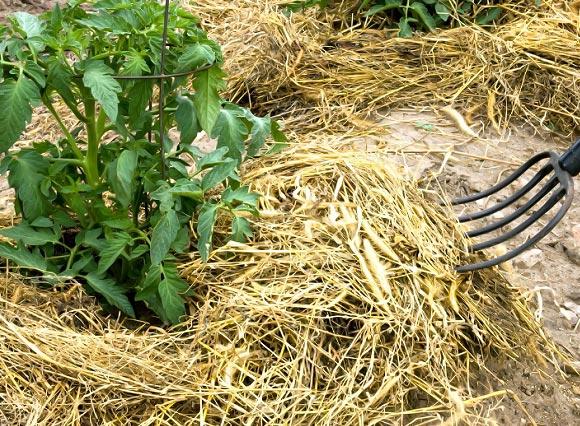
Benefits of Mulching Tomatoes
Tomatoes will grow and ripen without mulching, but mulching will ensure a better harvest and protect against many diseases. In many regions, tomatoes are planted or grown entirely in greenhouses, making mulching particularly important. The benefits of mulching for tomatoes include:
- retaining moisture to nourish the plant;
- acceleration of fruit ripening and increase in yield;
- increased content of soil microorganisms that live and multiply in the warm and moist layer of the earth;
- preventing the formation of a hard crust that deprives the root system of oxygen;
- inhibition of weed growth;
- insect protection;
- when combined with soil - its cultivation, lightening and fertilization;
- eliminating the need for frequent loosening;
- reducing the number of waterings, due to which the roots are less exposed and better protected.
Mulching solves another problem: strong evaporation from bare soil contributes to excessive moisture in the fruit and its infection with fungal diseases.
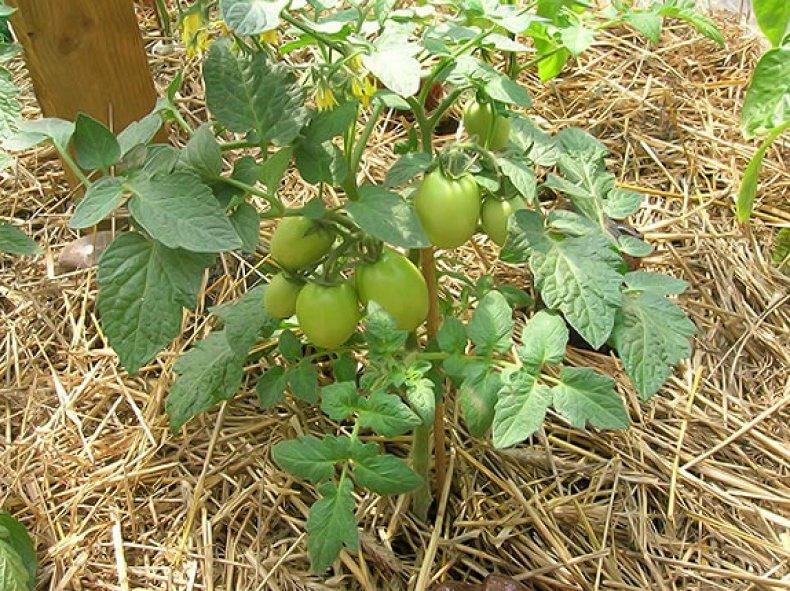
Furthermore, heavy fruits often push the bushes to the ground, and tomatoes ripen in wet soil, which does not improve their quality or appearance. Greenhouse cultivation creates conditions for accelerated moisture evaporation, so mulching tomatoes in enclosed spaces is especially important.
Mistakes and disadvantages of mulching
While mulch has a significant impact on plant life, it can sometimes have a negative impact. The disadvantages of this method include:
- The layer of organic matter laid down, especially if it is too thick, may rot.
- In heavy soils, with excess moisture, the soil lump does not dry out and the roots may deteriorate.
- Organic matter attracts mice and moles, which damage crops. Slugs can breed in the material, and earthworms attract birds, which spoil the fruit.
Take a look Also
The condition of the mulch layer must be carefully monitored to prevent rotting.
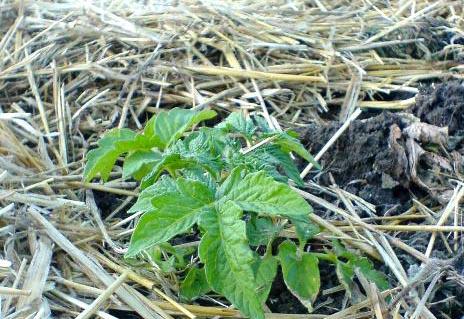
Types and properties of the material
Using natural and synthetic materials as mulch has its own specific characteristics and application guidelines. The best choice for protecting tomatoes is determined based on the available organic matter and its capabilities.
Some people find unexpected options to mulch their garden beds: sunflower seed husks, grain husks, and moss.
Organic
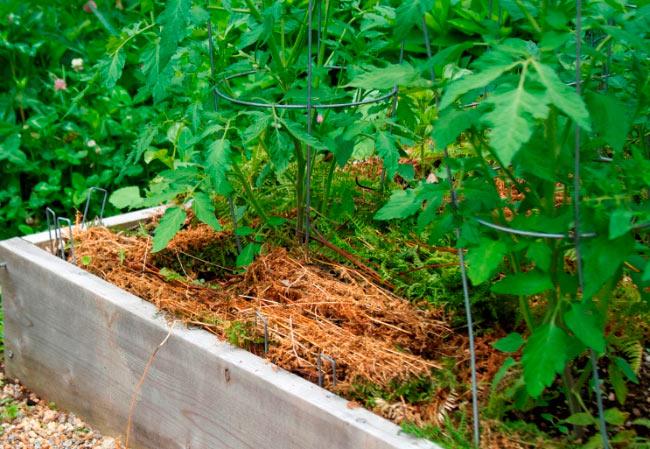
Organic matter has undeniable advantages when used as mulch, as it accomplishes all the stated objectives. Besides providing a protective function, it also fertilizes and improves soil quality during digging. When choosing a material for garden beds, consider the soil composition and remember that the mulch will later act as a fertilizer.
With its help, you can change the acidity, improve the content of microelements and bacteria.
Inorganic
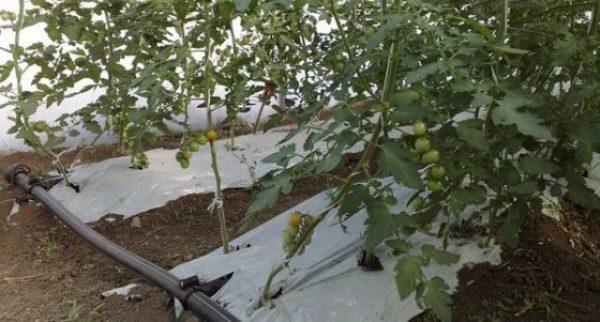
Inorganic materials cannot fertilize the soil, so mulch doesn't fulfill this important function. Opaque film is used for tomatoes; it retains moisture but prevents weeds from growing. Colored materials can be used; with proper care, they last for years.
What can be used as mulch?
Tomato beds can be mulched with various materials, adjusting the amount depending on soil characteristics and improving their composition with the components contained in the mulch. This applies to different types of organic matter. Synthetic materials are convenient and practical, although not without their drawbacks.
Film
This inorganic material is easy to use, inexpensive, and reliable. It doesn't act as fertilizer, so it can be reused. If the summer is warm and sunny, it's best to use light-colored plastic to avoid overheating the roots.
One of the disadvantages of this mulch is that the roots become damp without ventilation and air refreshment.
Non-woven material
Non-woven fabric is similar to film in its uses, but without its drawbacks. It is moderately permeable to air and light, protects from cold and overheating, and ensures comfortable root growth. With proper use and storage, it will last up to 5 years. The main drawback is its high cost, which makes this convenient material unaffordable for many gardeners.
Paper and cardboard
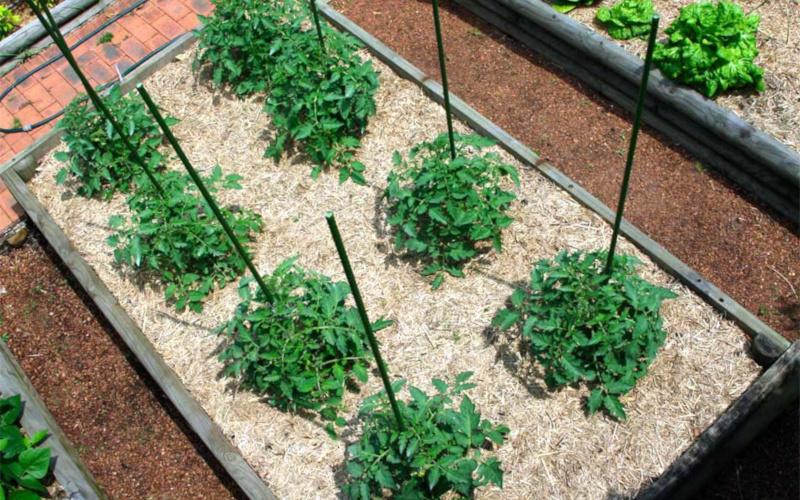
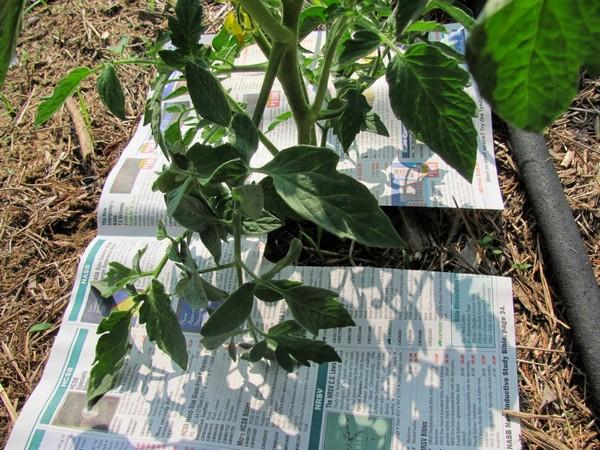
An important and affordable type of synthetic mulch is cardboard. For tomato beds, use uncolored, pre-shredded materials. Paper and cardboard, whether colored or printed, are not used.
Before filling, the paper is soaked in liquid fertilizer to provide nutrition to the tomatoes.
Most gardeners appreciate cardboard for its availability and affordability, but it spoils the appearance of their garden beds; the mulch needs to be regularly turned and removed in the fall. It sometimes rots and becomes moldy, and slugs thrive in the mulch.
Mulch from pine needles and spruce sawdust
Coniferous materials are rarely used for tomatoes, as they contain a high content of essential and acidifying components, which have a negative impact on plant growth.
Tree bark sawdust
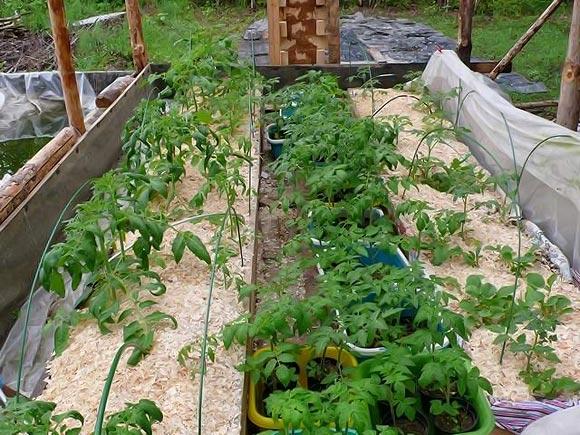
To prevent soil oxidation, the material is pre-alkalined, which improves the quality of the fertilizer. Ideally, sawdust is allowed to age for a year or two before being used as mulch. To conserve nitrogen, the sawdust is soaked in urea and spread in a layer 8-10 centimeters thick. This type of mulch is rarely used for tomatoes; it is primarily used for winter insulation.
Compost
One of the best materials for improving soil composition and protecting it from negative impacts. It is applied in a 6-8 cm layer. Compost contains a wealth of nutrients, which is beneficial for tomatoes, but often stimulates excessive growth of the green part of the plant. Its pH is neutral, making it suitable for all types of soil.
If compost is immature, it contains many parasites and plant seeds, which reduces the quality of the fertilizer. It is often used in combination with sawdust or chopped grass.
Straw mulch
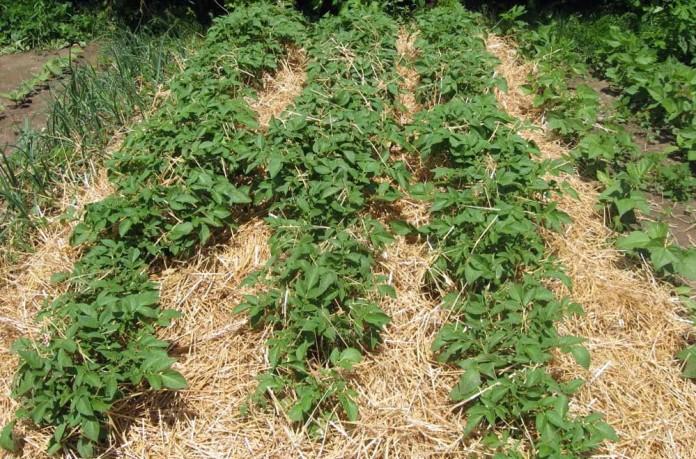
Hay and straw give tomato beds a neat appearance and serve as excellent mulching materials. They are used for both open ground and greenhouse cultivation, with a layer no thicker than 7-8 centimeters. Straw is sold in briquettes and is readily available to most people.
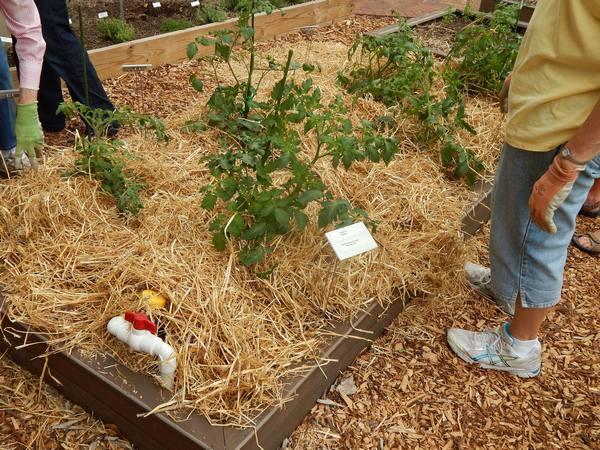
The main problem is the love of rodents for the material, which breed in the hay and damage the crop.
Important: When using straw for mulching, take measures to protect against mice and rats.
From the leaves of old strawberries
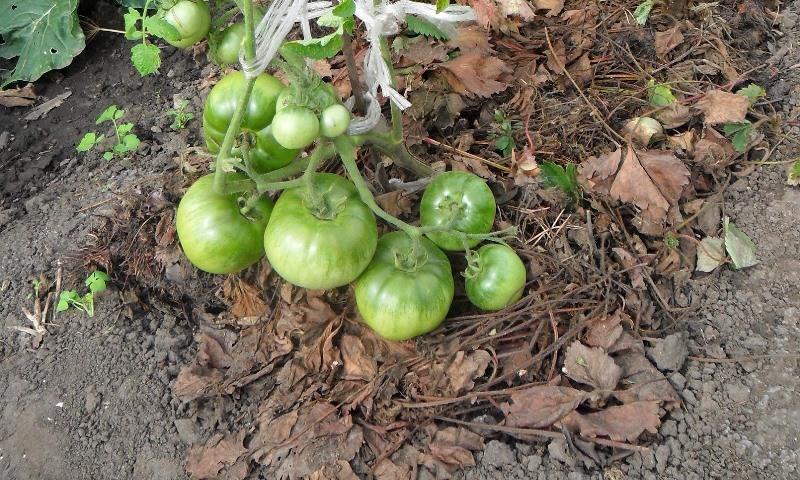
Many gardeners, in the absence of other materials, use cut leaves from garden strawberries. It's important to note that healthy leaves, free of disease and pests, are suitable. This material is used in July, after pruning the berry bushes, removing the roots to prevent the strawberries from sprouting.
Earth
Soil mulch forms naturally after loosening—it consists of small pieces of broken-up soil. It lasts only until rain or watering, turning into a hard crust after contact with water. This is the most labor-intensive mulching method and has a short lifespan.
Sackcloth
Covering tomato beds with burlap protects the soil for a short time, as the fabric quickly allows moisture to pass through, but it still protects the soil. If you have a lot of burlap and don't have other options, you can protect your tomatoes from harmful effects this way.
Mown grass
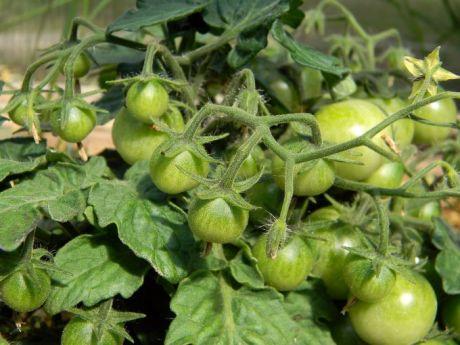
Grass is a good mulch for tomato beds, but it requires special preparation. It should be dried before application to the tomatoes. Grass should be mown before flowering; using it with seeds will introduce weeds. Lawn grass is ideal. It contains nitrogen, so be aware of this when applying it.
Moss
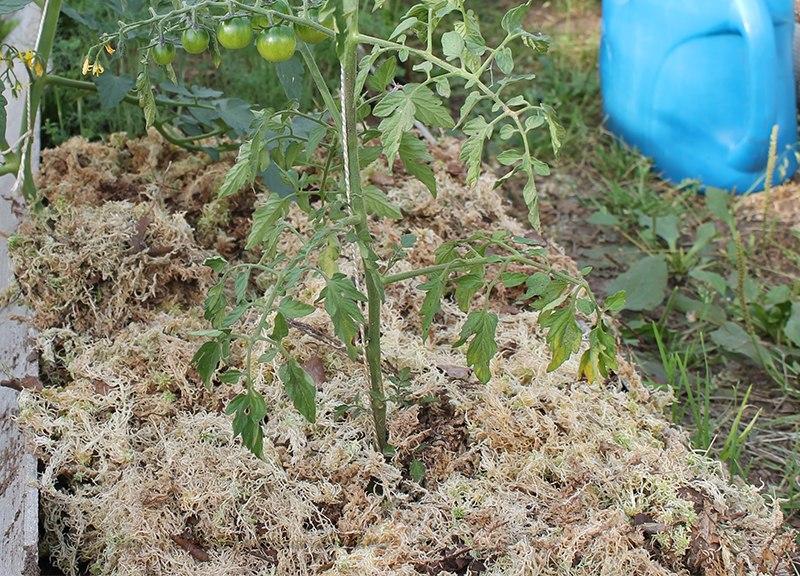
Gardeners who have plenty of this material use moss to cover their beds. Some go to bogs to collect dried sphagnum moss for tomato and other beds. In the absence of other means, moss is used as a cover.
What is prohibited for mulching a tomato bed?
Not all materials are suitable as mulch. To avoid harming tomatoes, follow these guidelines:
- the leaves and tops must be healthy – free from diseases and pests;
- grass - seedless, young;
- paper - without paint and printing;
- use of roofing felt - only with the crumb side up, it is better not to use it at all;
- You should not use fresh manure and pure peat.
Using film can cause root rot; it is better not to use it in extreme heat.
When should the procedure be performed?
The timing of mulch application follows the general rule for greenhouses and outdoors: the soil should be warm, but not overheated.
In the greenhouse
In a well-heated greenhouse, tomatoes are mulched immediately after planting. This immediately protects the seedlings from all types of negative influences. If the soil hasn't warmed up sufficiently, wait until the deep layers have completely thawed and reached 15°C. Applying mulch early will block the surface from the sun and act as a heat insulator, trapping cold in the soil.
Take a look Also
In open ground
When planting in open ground, mulch after the soil has warmed completely (15°C at a depth of 20-30 centimeters). Don't delay mulching, as the soil will overheat, the material will retain excess heat, and the roots will be damaged. It's also harmful to mulch cold soil, insulating it from the warm sun.
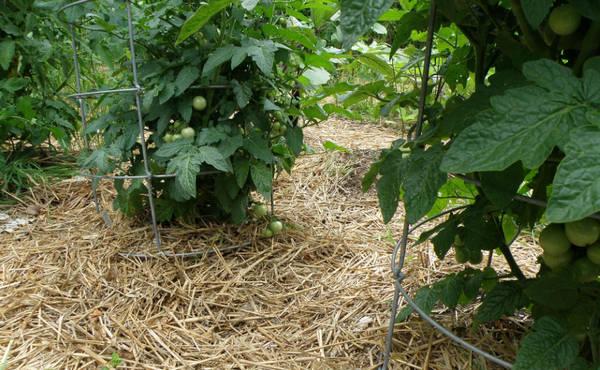
Mulching techniques and rules for greenhouses and gardens
When mulching, adhere to the following rules:
- Before processing, clear the land of weeds.
- They loosen the soil well and sprinkle it with long-acting fertilizers – ash, dolomite flour.
- Mulching films and fabrics are laid out and secured on the beds, making cuts for planting seedlings.
- Organic mulch is prepared depending on the type, enriched with the necessary elements.
- Spread the mulch in a layer of 10-15 centimeters; later, compact it to 7-8 centimeters. Avoid covering the tomato stems with the mulch; leave a small gap for watering.
- As a general rule, apply a thinner layer of mulch to heavy clay soils.
- The surface needs to be renewed as it deteriorates and weathers.
- Water tomatoes less frequently and more abundantly so that the water reaches the ground and not just wets the mulch.
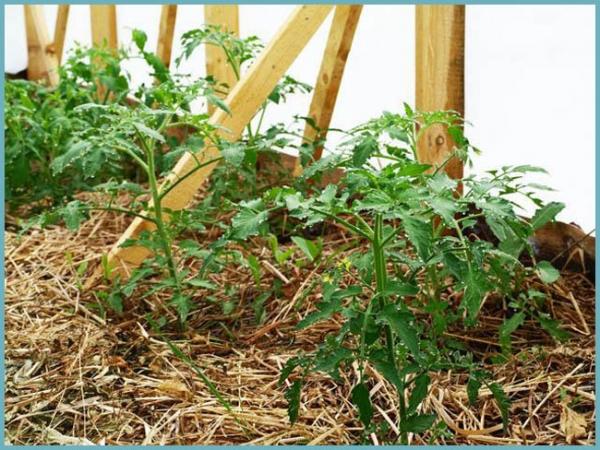
The surface of the beds is renewed after some time to compensate for losses and improve the appearance.
Reviews from gardeners
Most gardeners who use mulch are satisfied with the results and often experiment with different types of materials, leaving tips and photos of their beds.
Mikhail, 15 years of experience in gardening.
This year, we used four types of mulch: buckwheat hulls, straw, grass, and sawdust from a stable. We used each on the same tomato varieties. The best harvest came from the sawdust and straw—the tomatoes ripened earlier, resulting in a higher yield.
Natalia.
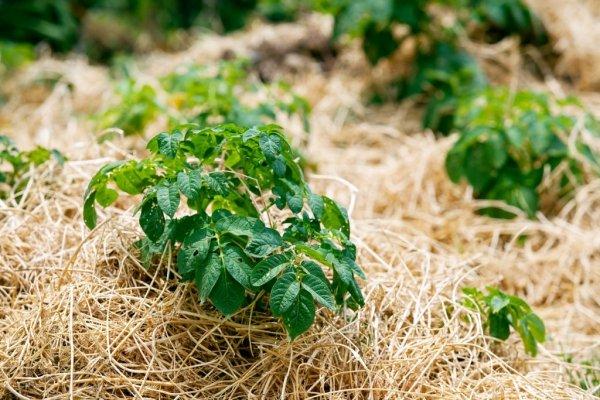
I cut down weeds with a lawn mower, dry them, and cover the tomato beds with them. I don't have time to run around with a hoe after every watering. Grass is a good weed control layer, but you just need to spread it thinly to allow air to circulate. The beds look beautiful.
Anton.
I go to the nearby spruce forest and rake up a layer of needles, humus, and dried grass. I cover the tomato beds with it—it's both fertilizing and protecting them.
Mulching has been used since ancient times, even before agricultural science existed. This simple method improves tomato yields in greenhouses and open fields, increasing resilience to adverse conditions. It also has an economic benefit, reducing the need for irrigation.Making mulch is a creative process, and many people show resourcefulness and ingenuity in coming up with new types of materials and incorporating them into their gardens.
Related posts:
 What is the best way to feed tomato seedlings to make them plump?
 How and what is the best way to mulch strawberries, the benefits and harms
 What fertilizers and when to use for feeding tomatoes in a greenhouse
 The best eggplant varieties for growing in a polycarbonate greenhouse: planting and care
 What is mulch and how to use it correctly, the benefits of the procedure
 Is it possible to mulch cabbage with mown grass and what else can be used?
 Agricultural practices for growing tomatoes in greenhouses and open ground
 When and how to properly transplant tomato seedlings, the best days in 2025