
The Mamont tomato is a favorite among gardeners who appreciate large tomatoes. If you're interested in this variety, first read its description.
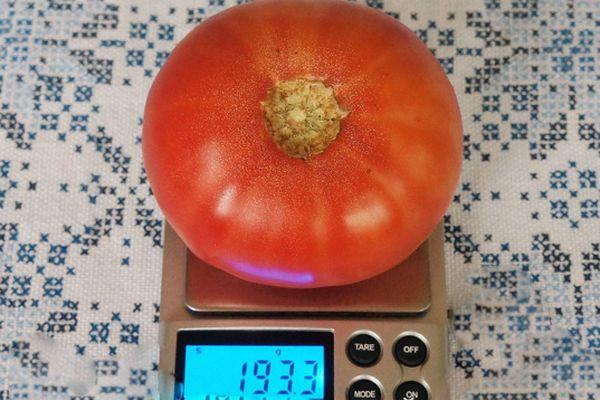
This is an ancient variety, over 200 years old. Its homeland is Germany. Ripe fruits weigh between 300 and 650 grams, but despite their large size, they are very tender. These tomatoes are striking due to their round, slightly flattened shape and golden-yellow surface. They are very healthy and considered a dietary food. They can be safely given to small children without fear of an allergic reaction.
Characteristics of the variety
Mammoth tomatoes are renowned for their gigantic size, and among them is another giant—the Black Mammoth, distinguished by its deep burgundy-chocolate color. Black Mammoth tomatoes are not suitable for long-term storage; they spoil quickly. Therefore, they are eaten fresh or canned immediately.
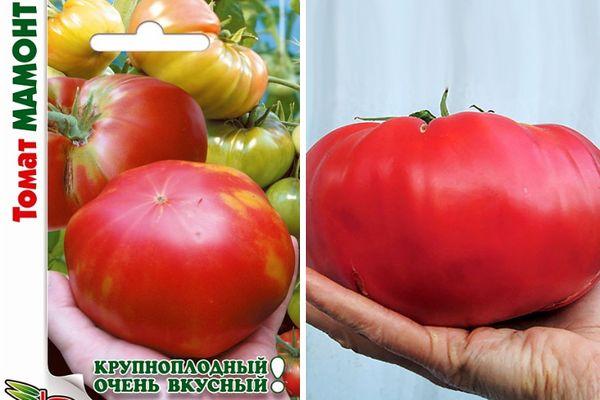
Characteristics and description of the Mammoth Giant variety:
- This is an indeterminate plant that grows up to 2 m in height, so it must be tied to supports and trellises.
- A bush formed into 2 stems produces a yield of up to 10 kg.
- 3-4 fruits are formed per brush.
- A single bush can produce 4 or 5 clusters. Giant tomatoes ripen in 110–115 days.
Sweet-tasting tomatoes are used in a variety of ways. They're eaten fresh, added to salads, and in various dishes. However, due to their size, giant tomatoes aren't suitable for preserving whole in jars.
It's best to purchase ready-made soil for growing vegetables from a specialist store, as it contains all the components necessary for proper plant growth.
Rules for growing seedlings
Before planting seedlings in individual pots, they need to be germinated in a common container. To do this, seeds, pre-soaked in a solution of growth stimulant and potassium permanganate, are planted in the substrate to a depth of 2 cm. Cover with glass or plastic wrap and leave in a warm place until the first shoots appear. Do not water the soil, but only spray occasionally with water to prevent it from drying out.

Seedlings must be hardened off two weeks before planting. To do this, take the plants outside for several hours each day. Hardening off should begin with the shortest possible time.
Plant at a rate of 3 bushes per 1 m². Add 1 tablespoon of a mixture of superphosphate and potassium sulfate to each hole before planting.

The yield depends largely on proper bush training. When inflorescences appear, try to leave 3-4 flowers on each cluster. Dead leaves at the bottom of the bush must be removed, but this can be done after the inflorescences appear.
When fruit begins to form, the plant will need feeding with magnesium sulfate. As for watering, it's important not to overdo it, but to maintain soil moisture. The Mammoth Giant variety is prone to cracking, and overwatering is known to contribute to this.
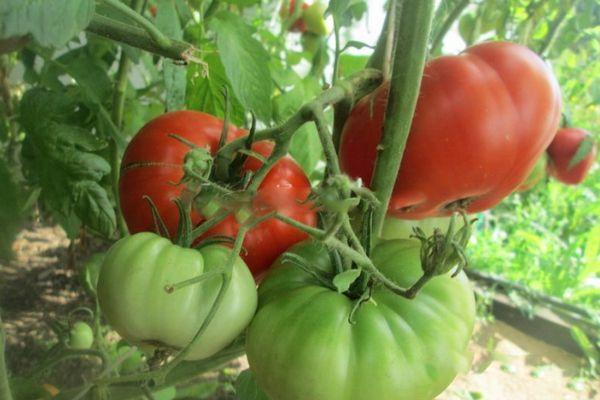
The German Golden Mammoth tomato has a strong immune system and is not susceptible to disease, but preventative measures are still necessary. The plant will thrive if the soil around the roots is occasionally loosened and weeded. Mulching the soil is helpful to retain moisture and protect against infection. Covering the root zone with straw will solve this problem. Let's look at reviews from gardeners and other gardeners about the Mammoth variety.
Reviews from gardeners
Nikolay, Nizhny Novgorod:
"I recommend everyone plant Mamont tomatoes. The description and photos match the resulting harvest perfectly. This giant is truly worthy, and most importantly, very tasty."
Evgeniya, Moscow:
"The garden is 40 km outside the city. I grew giants in the greenhouse. I was pleasantly surprised by both the excellent taste and the high yield. I'll be planting more."
Konstantin, Vladimir region:
"I bought Biotekhnika seeds for planting. I ordered them online. I recommend them to everyone, as the harvest was a great success."
Related posts:
 Description and characteristics of Giant tomato varieties for growing in greenhouses and open ground
 Description and characteristics of the Pink Giant tomato variety, yield and cultivation
 Description of varieties of sowing peas and cultivation, to which family they belong
 Description of the large-fruited tomato Giant Novikov and cultivation techniques
 Description of the best tomato varieties for open ground and greenhouses in the Krasnodar region
 Description of the large-fruited tomato Honey Giant and growing seedlings
 Description of the large-fruited tomato variety Lemon Giant and growing instructions
 Description of the Raspberry Giant tomato variety, cultivation and care features
Take a look Also

I like this variety, I grow it for a variety of salads, and it turns out very tasty. I don't do anything special when growing it, just use BioGrow and that's it, the seedlings grow quickly.