
Among the large-fruited varieties, the Honey Giant is the most popular tomato among gardeners and small farmers. It isn't particularly demanding or susceptible to disease, unlike some giant tomatoes, and is considered an early-ripening variety.
Description of the plant
The bush is indeterminate, with unlimited growth. Because of this, the bushes can grow up to 2 meters tall in greenhouses. Outdoors, the plant reaches 1.5 meters, producing 7-8 clusters of fruit at varying stages of ripeness by the end of the season. The harvest can be picked from mid-July until almost frost. Unripe tomatoes can ripen indoors, but will lose some of their flavor.
Honey Giant tomatoes require staking and shaping. The plants are prone to side shoots, so gardeners will need to constantly monitor their growth and promptly remove any lateral shoots.
The Honey Giant tomato is considered mid-early in terms of ripening time. It takes about 100 days from sowing to the first fruits ripening.

The plant is resistant to fungal infections. The bushes do not require fungicide treatment, tolerate low temperatures well, and show virtually no loss of yield during cold summers.
Each bush yields up to 5 kg of fruit. To increase the yield per bush, the plant is trained into two stems. Only three plants can be planted per square meter. To achieve larger fruit, plant the bushes in a 40x100 cm pattern.
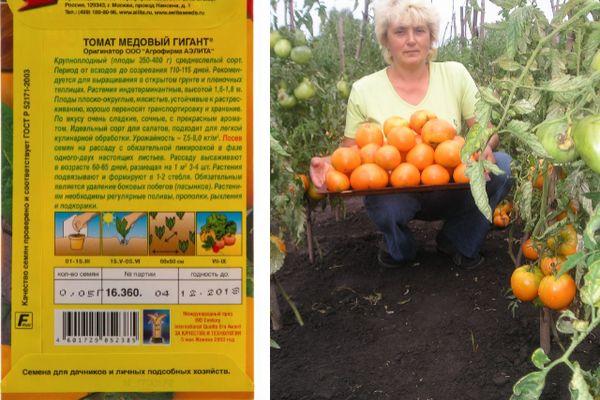
Giant fruits
Skin coloring Honey Giant tomatoes of rich yellow color Color. The flesh has the same hue, often containing pinkish flecks and veins. A green spot may develop near the stem.
The average fruit weight is 400-500 g. Tomatoes often ripen on the lower clusters, weighing up to 1 kg. To grow record-breaking tomatoes, you need to leave no more than 3-4 fruits on the brush, which are located closer to the stem of the plant. The size and yield of tomatoes are also influenced by proper fertilizing of the bush.
The variety's characteristics and description, based on State Register catalogs, highlight the flavor of the ripe giant tomato. Like all yellow-fruited varieties, the tomato aroma is subtle, but the pulp's allergenicity is reduced. The fruit's sugar content reaches 6%, making the Honey Giant sweet without being sour. Gardeners' reviews indicate that children really enjoy this flavor.
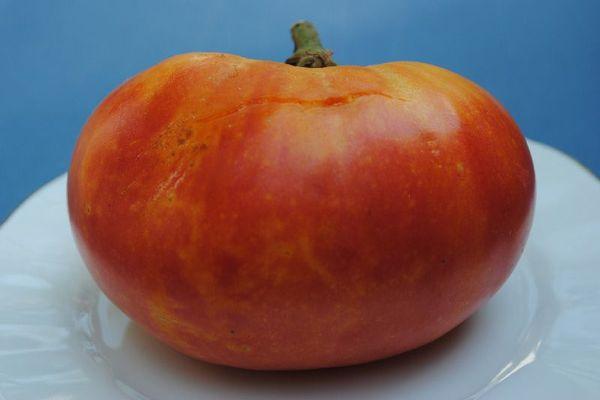
Tomatoes can be eaten raw or used in salads and appetizers. They are not suitable for canning due to their size. Winter salads with tomatoes or canned diced tomatoes will look impressive when paired with Honey Giant and red tomatoes.
Honey Giant tomatoes have firm flesh and tough skin. This ensures good shelf life and excellent transportability. Even ripe tomatoes will retain their nutritional value when transported from the dacha to the city.
How to grow seedlings?
This variety is not a hybrid. Gardeners can obtain seeds from any bush they like for its productivity or large fruit. The following season, plants from these seeds will retain all the characteristics of the parent plant.
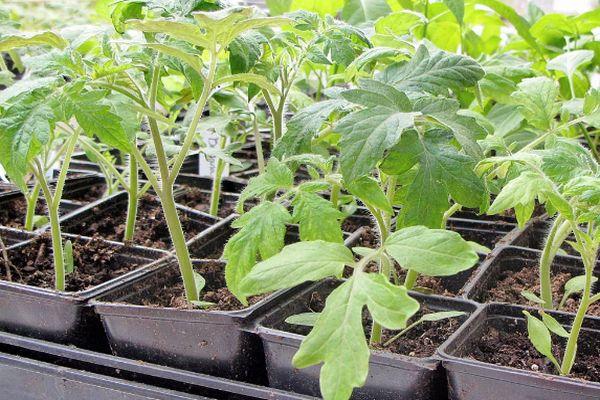
Before sowing, prepare the soil: disinfect it with a solution of potassium permanganate and fertilize it with a solution of complex tomato fertilizer. Seeds can be sown without waiting for the soil to dry out if its temperature has reached +20°C. Level the soil and spread the seeds over the surface. Sprinkle a thin layer of dry sand or peat (0.5 cm) on top.
It's best to germinate under glass or film to retain moisture in the soil and avoid overwatering the sown seeds. Seedlings will appear within a week. After this, remove the glass.
After 10-14 days, true leaves will form on the seedlings. When they have 2-3 leaves, they are transplanted into individual pots or into a 10x10 cm box. From this point on, the young plants require plenty of light, increasing the daylight hours to 10 hours per day.


Depending on the growing method, tomatoes are planted in early May (in a greenhouse) or early June (in open ground). Before transplanting (7-10 days), it is recommended to feed the plants with a complex fertilizer. If this is not done, fertilize them once the tomatoes begin to grow (one week after planting). Honey Giant will require two more applications during the season:
- when 1-2 flower clusters are formed on the plants;
- 14-15 days after that.
To produce large tomatoes in large quantities, the Honey Giant requires a plot with fertile, very loose soil. The variety's characteristics and description note that dense or loamy soils will produce small tomatoes and a less abundant harvest.
Related posts:
 Description and characteristics of Giant tomato varieties for growing in greenhouses and open ground
 Description of the Honey Spas tomato variety, cultivation and care features
 Description and characteristics of the Pink Giant tomato variety, yield and cultivation
 Description of the large-fruited tomato Giant Novikov and cultivation techniques
 Description of the best tomato varieties for open ground and greenhouses in the Krasnodar region
 Description of the large beef tomato Orange Giant and the growing features of the variety
 Description of the large-fruited tomato variety Lemon Giant and growing instructions
 Description of the Raspberry Giant tomato variety, cultivation and care features