The Yellow Giant tomato, reviews of which indicate it can be grown in a garden, is distinguished by its sweet flavor and intense yellow color. Its high yield and fruiting throughout the season allow you to enjoy fresh tomatoes throughout the season.
Benefits of Culture
The variety's characteristics and description place it among the indeterminate plants, 1.2–1.7 m tall, with a medium ripening period. From seedling emergence to fruiting, it takes 110–122 days. Tomato yield per bush reaches 5.5 kg.
Description of fruits:
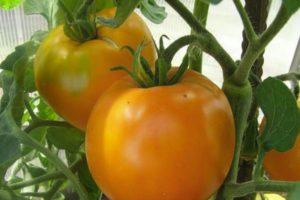
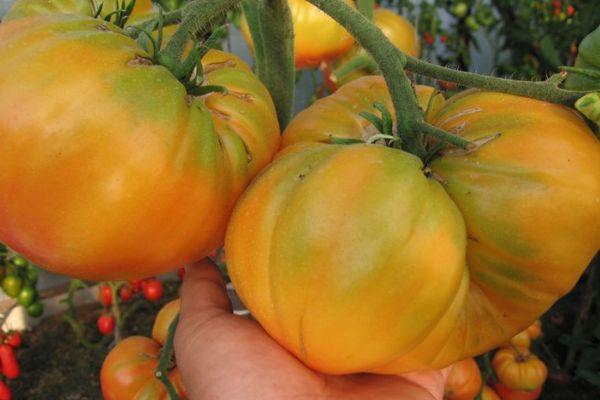
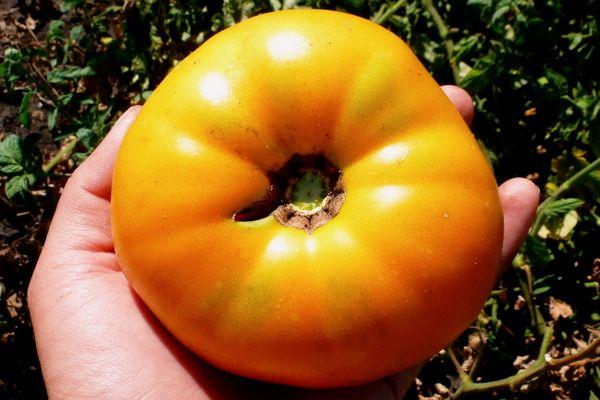
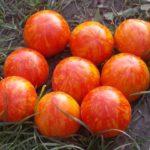
- The fruits are large, weighing up to 400 g, round and flattened, sweet in taste with a honey aroma.
- When ripe they acquire a yellow color.
- Tomatoes are used for salads, in cooking they are used fresh and for preserving in slices, and for making tomato juice.
The mineral composition of the yellow tomato allows it to be included in the group of foods recommended for children and the elderly. The presence of niacin in the fruit helps strengthen blood vessels and has a positive effect on the gastrointestinal tract.
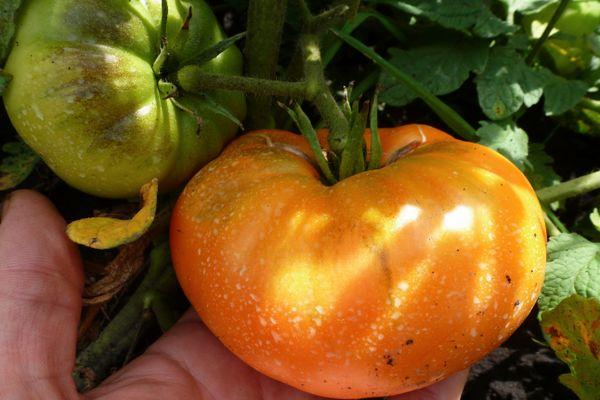
The Yellow Giant tomato variety is not suitable for long-term storage, but this is compensated by regular fruiting throughout the entire period, which lasts 40-45 days.
Cultivation techniques
The Yellow Giant variety is intended for growing outdoors and in greenhouses. A greenhouse-grown tomato plant will be taller than a natural one. Greenhouse tomatoes begin fruiting earlier.
Seeds for seedlings are sown two months before the expected date of planting in a permanent location. To ensure uniform germination, the seeds are soaked in a solution of potassium permanganate and a growth stimulant. The seeds are placed in containers with prepared soil.
After moistening the soil with warm water using a spray bottle, cover the container with plastic wrap until the seeds germinate. When the seeds have developed two true leaves, transplant them into individual pots.
To avoid damaging the root system when transplanting to a permanent location, it is best to use peat pots in which to transfer the seedlings to the garden bed.
When planting in a permanent location, leave space between the crops to allow for future growth. To ensure a high tomato yield, remove excess shoots as they grow. High productivity is achieved by training the bush into two stems.
During the growing season, apply mineral fertilizers, water, and hill the soil. The plant requires tying to a support or trellis.
Robust tomato plants are not resistant to late blight, tobacco mosaic virus, and other nightshade diseases. To prevent disease, treating plants with fungicides is recommended. Among biological pests, the Colorado potato beetle is particularly damaging.
Recommendations and opinions of vegetable growers
To ensure a high tomato yield, you need to consider the advice of experienced gardeners on growing the crop.
Anatoly Fedoseev, 49 years old, Astrakhan:
"I've been growing the Yellow Giant tomato for several seasons, so I can confidently say that its yield depends on proper soil preparation. The soil should be prepared for planting in the fall. Dig over the soil and add organic fertilizer. Well-rotted manure is ideal for tomatoes, applied at a rate of 4 kg per square meter. The same amount of organic fertilizer is applied when planting in the spring, but with the addition of potassium and phosphate mineral supplements. Anyone who has grown this variety knows that the Yellow Giant is a gigantic tomato. Therefore, it's important to ensure timely watering throughout the fruiting period. The tomatoes are very fragrant, with a honey-like flavor, and last for a long time thanks to their alternate ripening process, which lasts for 1.5 months."
Evgenia Kharitonova, 51 years old, Balashikha:
"Growing tomatoes has shown that seeds purchased from specialty stores have the best germination rate. I bought a Yellow Giant tomato by mail several years ago. Since then, I've been collecting seeds myself from large, overripe tomatoes I harvested myself. I place the tomatoes on a sunny windowsill. Once they've softened, I scoop out the cores and place them in a container of water for 2-3 days, rinse, and set them aside to dry. I like the taste of this tomato variety and the fact that it can be used in dietary meals."
Related posts:
 Yellow tomato varieties with descriptions and characteristics for greenhouses and open ground
 What is the best way to feed tomato seedlings to make them plump?
 Description of the best tomato varieties for pickling and canning
 Description and characteristics of the best indeterminate tomato varieties for greenhouses
 Description of the English Yellow gooseberry variety, planting and care
 Which tomato varieties are best for open ground?
 What fertilizers and when to use for feeding tomatoes in a greenhouse
 Description of the best tomato varieties for open ground and greenhouses in the Krasnodar region