Many people would like to grow their own tomatoes, but not everyone has a plot of land. The Knopka tomato may be the solution; this ornamental variety thrives in small containers on windowsills and balconies. This compact plant will not only add variety to your windowsill but also allow you to prepare delicious, attractive dishes.
A small tomato may not be ideal for making juice or tomato paste, but it's perfectly suitable for garnishing dishes, adding to salads, and canning whole tomatoes. The well-known agricultural firm "AELITA" sells Knopka tomato seeds.
Description and characteristics of tomato
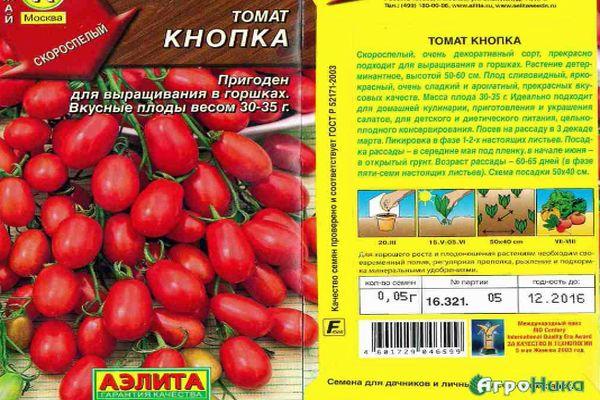
The description of the "Knopka" tomato variety should begin with the fact that it belongs to the early-ripening nightshade family, a type of cherry tomato. This ornamental, determinate tomato variety can grow to 50-60 cm in height with proper care. This vegetable produces its first ripe fruits 80-85 days after germination. This compact tomato doesn't require pinching or staking, and its fruits ripen uniformly and en masse.
Small, elongated tomatoes weigh 30-40 g at market maturity. Their red skin is firm and resistant to cracking. The flesh is sweet, with a distinct tomato aroma. After harvest, the crop can be stored for 1-1.5 months.
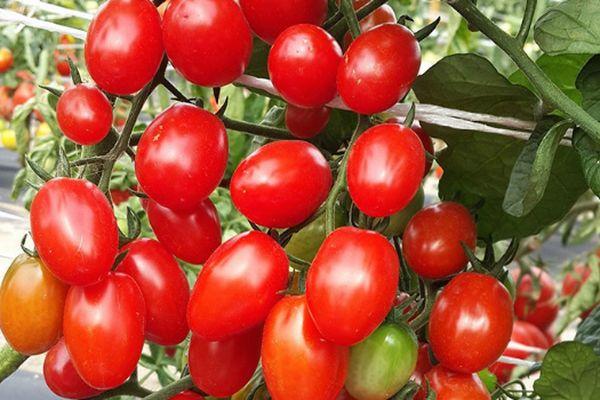
The yield of this small bush is enviable; under favorable growing conditions, a plant can easily yield up to 1-1.5 kg of wonderful little tomatoes. Fruits form 8-10 per branch.
A description of the Knopka variety would be incomplete without noting that these early-ripening, small-fruited tomatoes are resistant to the main diseases of nightshade crops: they are rarely affected by late blight, septoria, and gray mold.
Growing ornamental tomatoes
Late March and early April are considered the best time to sow early-ripening tomato seeds. Before planting, it's necessary to prepare the seedlings and growing medium. Furthermore, to ensure rapid germination and healthy growth, it's important to create optimal conditions. Before sowing, the seeds should be disinfected with potassium permanganate. If desired, a germination test can be performed by soaking the seeds in salted water for a while; any unusable ones will float to the surface.

Tomato soil should consist of three components: loam, sand, and humus. To ensure adequate moisture retention, sphagnum moss or fine sawdust is added to the soil. Specialized ready-made potting mixes are now available in stores, as are various products for creating a loose substrate, such as coconut coir or perlite.
To ensure your tomato plants receive the necessary micronutrients from the first days of growth, you can add a small amount of wood ash to the soil. This affordable fertilizer is an excellent substitute for basic chemicals.

In the early stages of growth, wood ash improves crop development, and subsequently allows for more effective fruit set and ripening.
The first transplant of tomatoes occurs when two or three true leaves appear. In the first two months after planting, tomatoes are fertilized twice; during this period, they require superphosphate and a small amount of nitrogen supplementation. It is very important to create proper lighting when growing nightshade crops; tomato bushes respond to sunlight.
The optimal temperature for heat-loving vegetables is +22…+25°C. During the growing season, tomato plants should be watered with warm water and the soil should be loosened periodically.

A mature Knopka tomato plant doesn't require side shoots or staking; it grows with a fairly thick main stem. Various reviews from experienced vegetable growers claim that, when properly cared for, the Knopka variety can delight with a bountiful harvest throughout the fall. Furthermore, some gardeners note that when grown outdoors, the tomato plant grows up to 1 meter in height. Moreover, tomatoes from these plants have a sweeter flavor and a more pronounced aroma.
Related posts:
 What is the best way to feed tomato seedlings to make them plump?
 The best eggplant varieties for growing in a polycarbonate greenhouse: planting and care
 What varieties of tomatoes are best to plant in a polycarbonate greenhouse?
 What fertilizers and when to use for feeding tomatoes in a greenhouse
 The best and most productive tomato varieties for greenhouse cultivation in the Urals, with descriptions
 Description and characteristics of the best tomato varieties for outdoor cultivation in the Urals
 Description and characteristics of the best indeterminate tomato varieties for greenhouses
 What is the best way to mulch tomatoes in open ground and greenhouses?
Take a look Also