The Maryushka tomato, the characteristics and description of which are provided below, is included in the State Register of Plants of Central Russia. This tomato is used in salads and can be preserved whole for the winter. Because its skin is resistant to cracking, it can be transported over long distances.
Briefly about the variety being described
The characteristics and description of the Maryushka tomato are as follows:
- The first harvest is guaranteed to be obtained 105-112 days after sowing the seeds in the ground.
- The plant has a medium number of branches and leaves. The bush reaches a height of 0.25–0.3 m. The leaves are medium-sized and dark green.
- The Maryushka tomato has a complex inflorescence, with the first ones developing above the 6th or 7th leaf, and all subsequent ovaries appearing every 1 or 2 leaves.
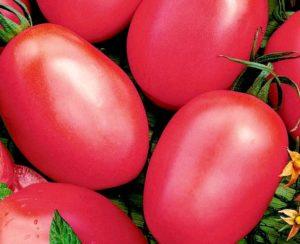
- The peduncle has no joints. The fruit itself is an elongated oval. Its surface is smooth and ribless.
- Unripe berries are light shades of green, while ripe ones are red. A berry can weigh up to 50–60 g. Inside the tomato, there are 2–3 seed pods.
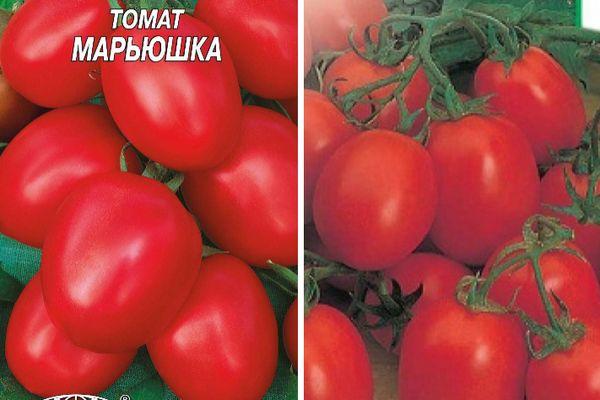
Farmer reviews indicate that when planted commercially, the average yield of this tomato variety in the Volga region reaches approximately 270–280 centners per hectare in open ground. If the plants are grown in a greenhouse, gardeners report a 2- to 2.5-fold increase in yield.
Farmers note that the Maryushka variety ripens at virtually the same time each year, making harvesting easier. This tomato differs from other varieties in that it can set fruit during the hottest part of the year. Because the berries do not crack after harvesting, retailers readily purchase Maryushka tomatoes from farmers.
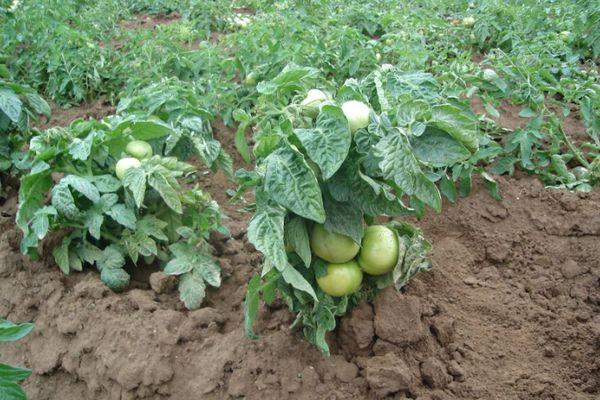
Growing with your own hands
To grow this tomato, you need to purchase seeds from specialized stores or seed farms. First, the seeds are treated with potassium permanganate or similar substances. This is necessary to enhance seed germination and protect them from various diseases. Afterwards, they are germinated in trays filled with soil.
Each seed is planted 12-15 mm deep, after being watered with warm water and amended with peat or manure. Germination takes about a week. Once the seedlings reach 5 cm in height, the trays are moved under special light sources. After 1-2 leaves appear, the seedlings are pricked out. Hardening off the seedlings is done using the standard method.
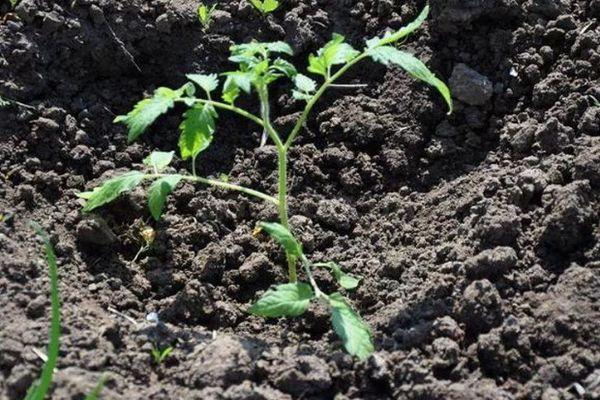
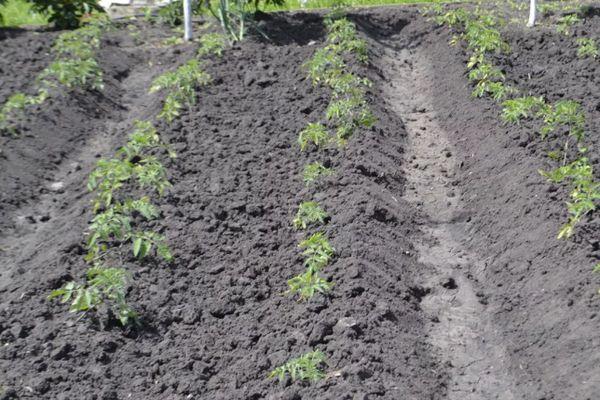
It is recommended to plant seedlings in open ground in the last ten days of April. Prepare the soil in advance by adding nitrogen fertilizer and loosening the topsoil. Plant the seedlings in holes up to 10 cm deep. No more than four stems are recommended per square meter. Train the bush into 2-3 stems.
Water the plants weekly with warm water. Perform various agricultural practices regularly, such as weeding and loosening the soil. This will prevent fungal or viral diseases from infecting the tomatoes.
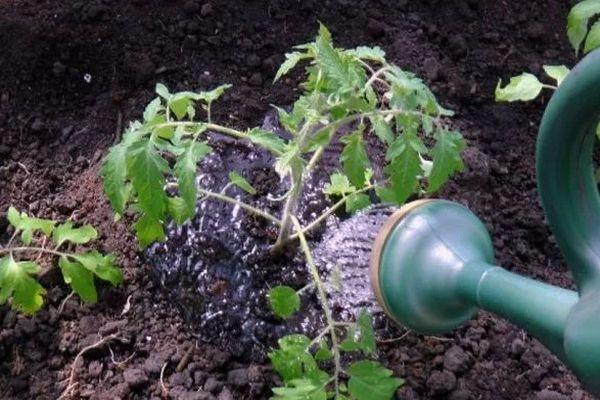
Fertilizing the bushes is done with complex fertilizers, and it is recommended to add phosphorus and potassium fertilizers to the soil immediately after the ovaries appear.
If this is not done, the yield of the bushes will fall by 10-20%.
There's no need to tie up the bushes, as they're not very tall and their branches are strong enough to support the weight of the fruit. If, despite these measures, the bushes become diseased, the disease can be controlled with appropriate treatments.
When planting tomatoes, there's a risk of encountering various garden pests. To neutralize them, you'll need to purchase chemical pesticides or try folk remedies to help eliminate them.
Related posts:
 Characteristics and description of the Sprut tomato variety, yield and cultivation
 Description and characteristics of the best varieties of plum tomatoes
 When and how to properly transplant tomato seedlings, the best days in 2025
 Characteristics and description of the Bull's Heart tomato variety, yield and cultivation
 Description of the tomato variety Cosmonaut Volkov, its characteristics and cultivation
 Description and characteristics of Anyuta tomatoes, yield and cultivation
 Description of the unusual tomato variety Striped Chocolate and its cultivation using seedlings
 Favorable planting days for tomatoes in March 2025, when is the best time to sow