
The Sevryuga tomato has proven itself to be an ideal variety for beginners. It's easy to grow and requires little attention, yet produces excellent yields of fruit with excellent flavor and marketability. It can be grown in all regions of Russia, both in open ground and in greenhouses.
Description of the variety
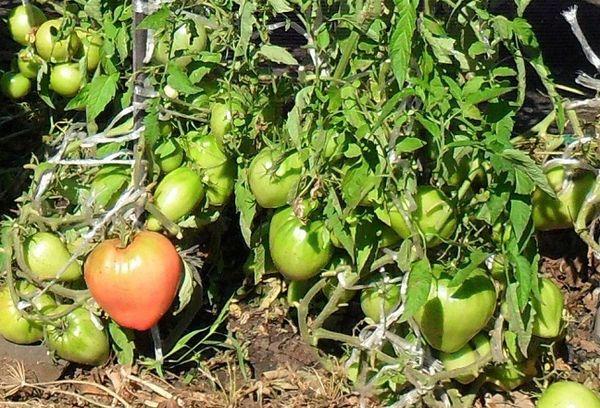
Most gardeners are familiar with this variety's second name—the Pudovic tomato. This tomato owes its name to its enormous size, with a single fruit sometimes weighing up to 1 kg. Its shape is heart-shaped and its texture is very fleshy. The skin is smooth and firm. When ripe, the tomatoes acquire a rich red color. It stands out from its competitors with its excellent flavor, with subtle hints of tartness. Its dry matter content is average, and it contains few seed chambers and seeds.

The Sevruga bush is tall, growing up to 2.5 meters, spreading, and indeterminate. It requires staking and pinching. The leaves are large and dark green. This tomato can be grown both outdoors and in greenhouses. The fruits ripen mid-season. It takes about 110 days from germination to harvest. Each bush yields approximately 5 kg of tomatoes with excellent marketability and flavor.
The Sevryuga tomato is suitable not only for fresh consumption but also for all types of processing. It is not used for canning whole tomatoes due to its large size.
Growing
Sevruga seeds are sown for seedlings from late February to March. The plants require at least 80 days to gain strength and become established before transplanting to the garden beds. Seedlings begin to emerge within a week of sowing the seeds in prepared soil. During this time, the room temperature is maintained at 24°C.

Watering should be moderate, avoiding both drying out and excessive soil moisture.
If you plan to grow Sevruga tomatoes for an early harvest in June or early July, then plant them in the greenhouse as early as the second half of May. Beforehand, the plants must be hardened off. To do this, they are exposed to the fresh air for a week. The first time, this is done for a few hours, and then the time spent outdoors is gradually increased.

Those who have planted Sevruga in their gardens recommend adding superphosphate to the seedling holes when transplanting. Then, place the young plant into the holes and plant it well. This procedure promotes additional root growth and accelerates fruit growth and ripening. In greenhouses, no more than four plants are planted per square meter. When planting in open ground, ensure that the threat of night frosts has completely passed.
Care Features
The Sevruga tomato produces maximum yield and large fruits with timely watering and fertilization. Avoid allowing the soil beneath the bushes to dry out. Overwatering also negatively impacts plant growth and development.
It is best to feed stellate sturgeon with complex fertilizers, which include:
- organic matter;
- mineral substances;
- nitrogen;
- potassium;
- phosphorus.
This tomato plant grows tall, spreading bushes, reminiscent of potato plants. They require additional support and staking.

Advantages and disadvantages
The characteristics and practical experience of gardeners make it possible to highlight the main advantages of the Sevryuga variety, which include:
- formation of ovaries even under unfavorable weather conditions;
- ease of care;
- high yield;
- large fruits;
- excellent taste;
- versatility of use;
- suitability for long-term storage;
- increased resistance to major diseases.
Reviews from gardeners and farmers indicate that the Sevryuga variety has no significant drawbacks. It's a bit disappointing that the tomatoes can't be preserved whole. However, there's a solution to this problem and a suitable preservation method.
Pests and diseases
The Sevruga variety promises increased resistance to major diseases and pests. To prevent any risk of plant infestation and crop damage, it is recommended to promptly treat the beds with insecticides. To prevent fungal diseases, spray tomato plants with Bordeaux mixture.

Harvesting and storage
Gardeners who have grown Sevruga in their plots claim that the fruits can be stored for about a month after harvesting in a cool, dark place. This does not affect their flavor or marketability.
If weather conditions are favorable, you can enjoy the first fruits of the Sevruga sturgeon 95–100 days after germination. This time coincides with the beginning of the harvest of early tomato varieties. The harvest is used in salads and eaten fresh, but it can also be used to make juices, ketchups, fruit drinks, and other culinary delights.

Gardeners' reviews
The Sevryuga tomato variety has already gained immense popularity among gardeners. Both amateur and professional growers are happy to share their reviews.
Vladislav Sergeevich, a novice gardener: "I got the Sevryuga tomato variety by accident. A neighbor shared her leftover seedlings so I wouldn't have to throw them away. She praised the variety and said I wouldn't be left without a harvest. I must admit, I had almost no experience gardening, so I made a lot of mistakes. However, the tomatoes still delighted my family with their harvest, and we made salads and ate fresh tomatoes all season long.
True, they turned out significantly smaller than those of my experienced neighbor, but the taste was simply perfect. Besides, I didn't know how to properly install supports and tie the bushes. When the fruits began to form and ripen, some of the vines, along with the supports, collapsed to the ground. Now, every year, I dedicate a spot in my garden for this variety."

Galina Panteleevna, a seasoned farmer, says, "I've been farming for a long time; it's our family business. I regularly change my tomato varieties, but I also have favorites that I've grown with great success for years. Among them is Sevryuga. The tomatoes grow delicious, large, and almost perfectly shaped. They transport well and have a long shelf life. Isn't that a farmer's dream?"

Elena Yuryevna, a resident of the village: "We constantly grow tomatoes for our own needs. I periodically change varieties and experiment. For example, one day I bought some Sevryuga at the store. As usual, I grew the seedlings, pricked them out, and began waiting for the harvest. I cared for them as usual, without any special tricks. Imagine my surprise when we started harvesting the tomatoes. Compared to other varieties, they were large, and also tasty and juicy. Of course, they didn't fit in jars and couldn't be preserved whole, but we saved some juice for the winter and ate them fresh all season long."
Dmitry Valentinovich, gardener: "I deliberately chose large-fruited tomato varieties for our plot. We don't preserve much, mostly eating the fresh harvest. That's why I turned my attention to Sevryuga. The tomatoes didn't disappoint. However, the grandchildren only ate them in salads. My tomatoes are still small, and it's hard to hold such a large tomato in your hands, let alone eat it whole. My wife used the surplus to make ketchup and adjika. I must admit, I was delighted with the taste of this variety; I'd never seen anything like it before. I'll definitely be planting Sevryuga next season."
Related posts:
 Description of the best tomato varieties for pickling and canning
 Description and characteristics of the best indeterminate tomato varieties for greenhouses
 Description of blight-resistant tomato varieties for open ground and greenhouses
 Characteristics and description of pepper-shaped tomato varieties, yield and cultivation
 Description of the best varieties of black tomatoes for open ground and greenhouses
 Description of the best Dutch tomato varieties for greenhouses and open ground
 Description of the best tomato varieties for open ground in the Moscow region
 Description of the best tomato varieties for open ground and greenhouses in the Krasnodar region
My tomatoes grow very large, I don't use them for canning, I only eat them fresh. I don't use harsh fertilizers, I only buy the "BioGrow".