
The Spanish Giant tomato is popular with gardeners and homesteaders due to its large fruits and high yield. It's a mid-season tomato, with each tomato weighing 350g or more.
What is the Spanish Giant tomato?
Below is a description of the variety:
- The plant reaches a height of 2-3 m.
- About 10 large fruits grow on 1 bush.
- The average weight of 1 tomato is 350-500 g.
- The variety is very productive. One plant yields 5-7 kg.
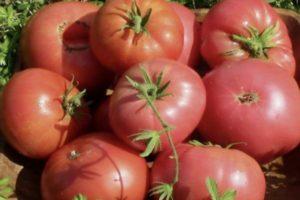
- The shape of the fruit is round, slightly elongated, reminiscent of a plum.
- The tomatoes are red in color. The flesh is juicy. The pulp has a high dry matter content and few seeds.
- The fruits are used fresh, for preparing salads, various dishes, juices, tomato puree, paste, sauces, and gravies.

How to grow tomatoes?
Giant tomatoes are grown in greenhouses because they are not cold-tolerant. In warmer climates, they can also be planted outdoors. The plant should be grown in a sunny spot protected from gusty winds and heavy rainfall. If the climate in your region doesn't allow for outdoor planting, Spanish Giant tomatoes are grown in hotbeds, under plastic, in shelters, and in greenhouses.
Tomatoes are grown from seedlings. The yield depends on the quality of the seedlings, so it's important to follow the care instructions for this variety. In the southern regions, tomatoes are sown in late February, and in the central zone, in mid-March. To determine the sowing time for your region, count about 55 days from the end of frost. You can sow Spanish Giant tomatoes in a greenhouse two weeks earlier.

Seedlings require plenty of light and moist soil. They germinate best at temperatures between 18 and 25 ºC. Before sowing seeds, the soil and seeds must be disinfected by treating them with a weak solution of potassium permanganate for 20 minutes.

You can also treat the planting material with a soda solution. Take 0.5 g of baking soda and mix it with 0.5 cups of water. You can also soak the planting material in a Fitosporin solution for 2 hours. This also increases the plant's resistance to various diseases.
Prepare the soil as follows. Bake the soil in an oven at 200ºC. You can also treat the soil with boiling water or a potassium permanganate solution. Ten days after this preparation, sow the seeds. Place them in 1-cm-deep holes, spacing them closely. Afterward, place the seedling container in a warm room and cover with plastic wrap.

The soil should be kept moist at all times, and watered regularly. The first shoots appear 3-4 days after sowing. The seedlings need to be watered and provided with 16 hours of light per day. The room should have fresh air. Fertilize them once every three weeks. After 2-3 leaves have formed, transplant the seedlings. After the inflorescences have formed, transfer the plants to a greenhouse.

Before planting, disinfect the soil. To do this, add a 17-cm layer of manure to the soil. Mix the manure with wood ash first. The best soil for growing Spanish Giant tomatoes is a mixture of peat and black soil. Plant in warm, wind-free weather. The seedlings should be planted thoroughly.
Bushes should be trained into 1-2 stems. 7-8 clusters are left on the bushes. The tops of the stems are pinched. The bushes should be tied to a support. Watering should not be too abundant.

The soil is mulched with peat and straw. The greenhouse should be regularly ventilated to maintain a temperature of 25ºC. Every 10 days, the plants should be fed with organic and mineral fertilizers. The harvest is collected as the fruit ripens.
Gardeners' reviews of the Spanish Giant tomato are positive. They are drawn to its excellent flavor and fleshiness.
Related posts:
 Description and characteristics of Giant tomato varieties for growing in greenhouses and open ground
 Description and characteristics of the Pink Giant tomato variety, yield and cultivation
 Description of varieties of sowing peas and cultivation, to which family they belong
 Description of the large-fruited tomato Giant Novikov and cultivation techniques
 Description of the large beef tomato Orange Giant and the growing features of the variety
 Description of the Raspberry Giant tomato variety, cultivation and care features
 Description of the large-fruited tomato variety Lemon Giant and growing instructions
 Description of the best tomato varieties for open ground and greenhouses in the Krasnodar region
For a better harvest, I recommend using BioGrow, a great product, it is a bioactivator of plant growth, I really liked it, you won’t regret it.