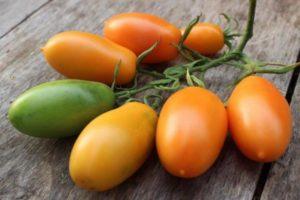
The Black Pear tomato is perfect for those who appreciate tomatoes with a unique color and rich flavor. The plant is exceptionally decorative, and the fruits can be used for a wide variety of purposes.
Characteristics of the Black Pear variety
The bushes are indeterminate and tall. In greenhouse conditions, they can reach 1.8 m. In open ground, they can reach 1.5 m, and gardeners artificially limit further growth by pinching the tops in mid-August. This is done to allow the ovaries on the last clusters to fully develop.

The variety has a long fruiting period. From sowing to the first ripe berries, the Black Pear will grow for about 120 days. However, those who have planted the Black Pear tomato outdoors note that the ripening period is delayed by another ten days (approximately to early August). The tomatoes on each truss ripen uniformly, allowing growers to harvest part of the crop ripe on the vine, even in Siberia or the Urals.
Black Pear yields quite high, reaching 3-4 kg per bush. Each stem produces 5-6 simple, long clusters, each with 4-7 tomatoes.
The characteristics and descriptions of this variety given by gardeners indicate that the first fruits are slightly larger (up to 150 g), especially those arising from double flowers. The remaining ovaries are much smaller and rarely exceed 100 g. To increase the yield per plant, it is trained into 2-3 stems and tied to a trellis.

The plant's varietal characteristics include a tendency to form lateral shoots. To prevent the bush from becoming dense and losing its ability to produce flower clusters, side shoots should be regularly removed, leaving only 1-2 shoots for development. To achieve this, remove leaves from the lower part of the plant.
This promotes better ventilation of plantings and serves as a preventative measure against fungal diseases.
The tomato is resilient to temperature fluctuations and tolerates cold weather well. However, Siberian weather, with frequent, prolonged rains, adversely affects the tomato's flavor. Fruit grown in a cold summer differs from those ripened in a greenhouse or in hot, dry weather. To appreciate the true flavor of the Black Pear, it's best to grow it in a greenhouse or hothouse, and give it the sunniest spot in the garden.


Black Pear Fruits
The tomatoes are pear-shaped, with narrow shoulders and a widened tip. Sometimes the fruits have subtle ribbing, reminiscent of the Truffle variety. At biological maturity, the tomatoes are dark burgundy or brownish in color, often with green patches remaining on the shoulders (when grown outdoors).
The skin is thick and durable. Black Pear tomatoes do not crack when ripe and withstand heat treatment well during canning. Ripe fruits retain their marketable appearance for about two weeks. This variety is highly transportable; tomatoes can be shipped long distances while ripe and green.

The flesh is fleshy, with a delicate, oily texture. The seed chambers are small, located along the edge of the cross-section. The color is dark red, with a lighter core. The taste is excellent: the tomatoes have a very sweet flavor, typical of dark-colored varieties, and a rich tomato aroma. When artificially ripened or during the cold season, a tartness develops in the flavor, which is not to everyone's taste. Tomatoes contain large amounts of lycopene, vitamins, and protein.
These tomatoes are best eaten fresh. If you grow other varieties of pears, you can decorate your table with colorful pear slices or an unusual and colorful salad. Slices of the fleshy flesh are perfect for hamburger filling, sandwich filling, or the base for a portioned appetizer. The intensely colored flesh is perfect for borscht, pasta sauce, and vegetable caviar.

Surplus tomatoes can be preserved for the winter. They are small, making them ideal for whole-fruit pickling or marinating. For these purposes, it's best to use slightly unripe, firm tomatoes. Very overripe, soft tomatoes can be used for juice or sauces. Box-ripened tomatoes are also often used for processing; they don't taste as good fresh as those grown in the field.
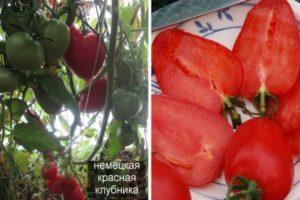
Agricultural technology of the variety
You can sow seeds for seedlings 2.5 months before the expected date of planting Black Pears in the ground or greenhouse. For sowing, prepare the soil with a mixture of garden soil, sand, and humus (1:1:1). To kill fungi and pests, the soil is baked in the oven or soaked in a hot solution of potassium permanganate.
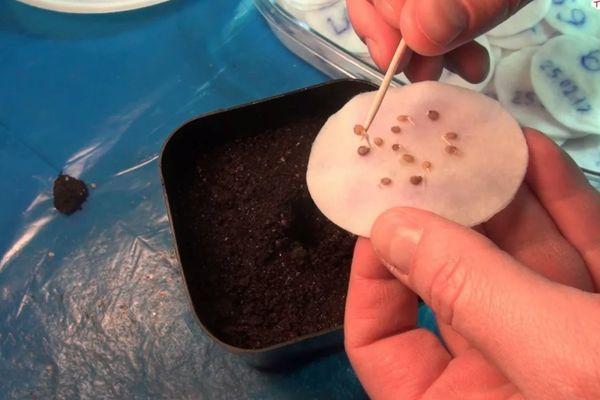
The Black Pear tomato variety is not a hybrid, and its seeds can be saved for propagation the following year. Before sowing, homegrown seeds should also be disinfected by soaking them in a warm solution of potassium permanganate for 30-40 minutes.
Scatter the seeds over the soil surface and cover them with a 0.5 cm layer of dry sand. Cover the trays with plastic film with 2-3 holes and place the seeds in a warm place (+25°C). Seedlings will appear in 4-5 days, after which the plastic film should be removed.
 In the phase of 2-3 true leaves, the sprouts are transplanted into separate containers or common boxes at a distance of 10 cm from each other.When transplanted, the plant experiences stress, from which it quickly recovers and begins to grow vigorously. Caring for the seedlings during this time involves regular watering.
Tomatoes should be planted 40 cm apart in the ground. Rows should be spaced 70 cm apart. To form a bush, shoots should be left above 1-2 flower clusters, and the remaining shoots should be removed throughout the growing season. Fertilize tomatoes twice during growth. The first feeding should be done when the first flower cluster forms, and the next two weeks after that. For additional feeding, use mineral mixtures high in phosphorus and potassium (Signor Tomato, Agricola Vegeta, etc.).
Related posts:
 The best eggplant varieties for growing in a polycarbonate greenhouse: planting and care
 The best grape varieties for growing in the Urals, planting and care rules in summer
 80 Best Eggplant Varieties for Different Regions with Descriptions and Characteristics
 Descriptions of the 20 best cherry varieties for the Moscow region, their planting and care
 Description and characteristics of the best seeds of pea varieties and types
 Methods for planting and propagating cherries at home
 Description of the Velika grape variety, cultivation and care tips
 Is it possible to soak treated cucumber seeds before planting and how to do it correctly?