Originally colored, tasty and healthy Banana tomato The orange variety was bred specifically for growing indoors. However, there are no restrictions for Russian gardeners, and early-ripening varieties can easily be grown in open beds. Orange bananas appeared in 2006 and, over the course of a decade, have fully met the expectations of experimental gardeners.
General description of the plant
The bushes are indeterminate, but not too tall. The description notes their average height—only 1.5 m. The stems are strong and require shaping and support. Without these measures, they form too many shoots, which hinder the growth and ripening of the fruit.
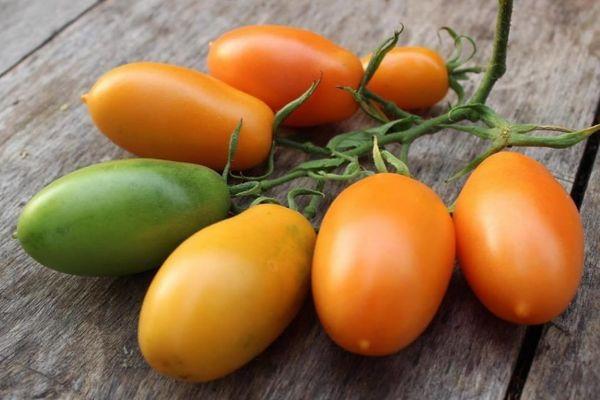
Fruiting is prolonged, with ovaries ripening simultaneously on the cluster. Orange Banana tomatoes produce fruit throughout the summer. The total yield can reach 3.5-4 kg of marketable produce per bush. Four bushes can be planted per square meter, resulting in a good return on your plot.
Tomatoes were developed by Russian breeders and classified as greenhouse varieties. However, this doesn't preclude the possibility of growing them outdoors.
Reviews from those who have planted these tomatoes indicate that the Orange Banana variety is quite tolerant of central Russia's climate, withstanding cold snaps and prolonged rains while still producing a large number of berries. When grown in an open bed, the Orange Banana variety will yield a harvest 1-2 weeks later than those grown in a greenhouse.

Banana Orange tomatoes are resistant to fungal diseases, but late blight also affects them. To prevent the disease, experienced gardeners recommend removing the lower leaves up to 1/3 of the stem's height. This is done gradually, cutting only the foliage below each newly opening flower cluster at a time. This improves ventilation in the planting and reduces the risk of fungal spread.

Long-fruited varieties are susceptible to blossom-end rot. To prevent it from developing in banana beds, ensure the plants have sufficient calcium in the soil. Blossom-end rot is caused by a deficiency of this mineral.
Consumer properties of fruits
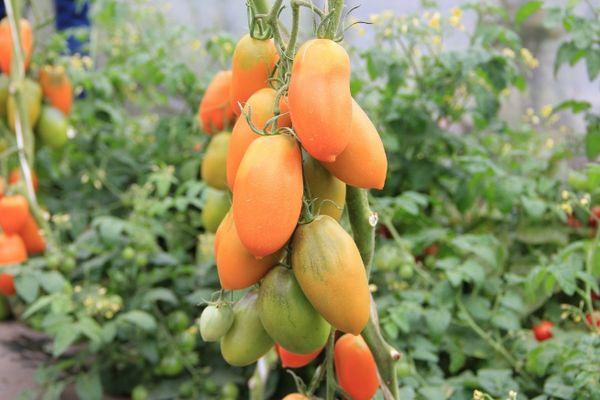
The Orange Banana tomato produces striking clusters of fruit, reminiscent of exotic fruit bunches. Each cluster produces up to eight identical, elongated tomatoes. Each fruit weighs 100-150 g, and the average "banana" length is 7-10 cm. This is an early-ripening variety, with ripening beginning 95-105 days after germination.
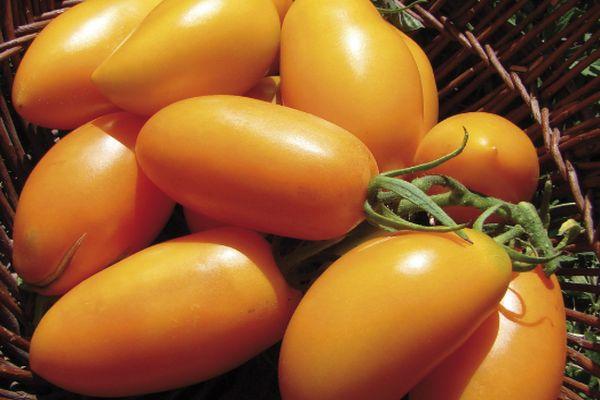
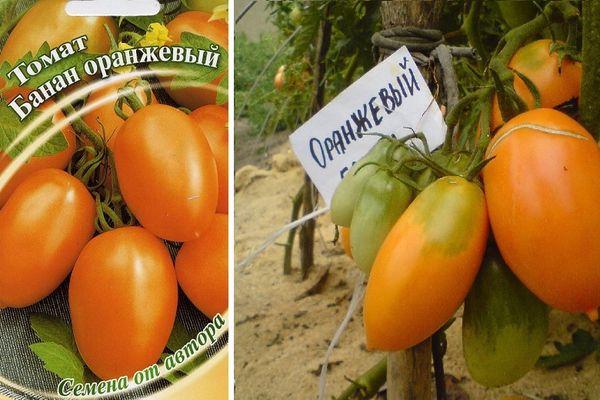
Tomato skin is firm but not rough. It reliably protects the fruit from cracking and spoilage during storage and transportation. Tomatoes retain their marketable appearance for a long time and can ripen indoors if picked at the ripe stage. Ripe tomatoes are bright orange, reminiscent of orange. At the ripe stage, the fruits are pale green, with a diffuse dark spot at the base.
Gardeners' descriptions of the fruits note that in open ground, the green tint at the stalk can remain until the tomato is fully ripe, but in a greenhouse, tomatoes are colored evenly.
The orange flesh is firm but not elastic. The berry contains 2-3 large seed chambers with a few small seeds. The variety's characteristics and description highlight the tomato's excellent taste: high in sugars, the fruits of the Orange Banana are sweet with a piquant tartness. The classic tomato aroma is medium.
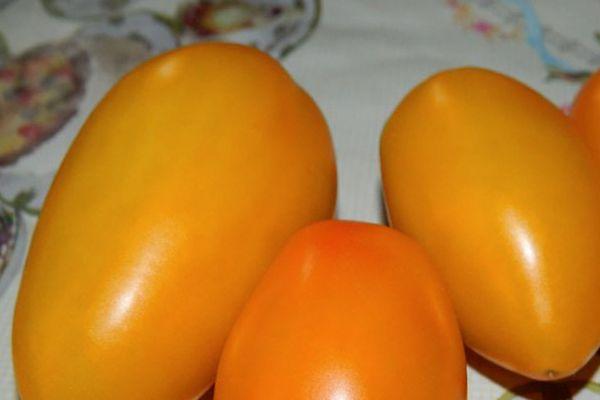
Orange Banana tomatoes can be eaten fresh throughout the season. Unripe fruits picked in the fall gradually ripen, ensuring a supply of vegetables even after the season ends. The elongated fruits look beautiful on a holiday table, and salads made with a mix of bright orange slices and other vegetables are not only delicious but also picturesque. The slices can be used to garnish sandwiches and canapés, and the flesh is perfectly suitable as an ingredient in hot and cold dishes that call for tomatoes.

Surplus brightly colored tomatoes are preserved whole: they are convenient for jarring and very decorative. To preserve all the valuable properties of tomatoes, they are processed into juice and puree. The orange flesh contains large amounts of carotene and lycopene. The fruits are also rich in other minerals and vitamins, which are almost completely preserved during processing.
Orange tomato juice produces a beautiful, unusual color and a pleasant flavor. It can be boiled down to serve as a dip for appetizers and lecho, or used as a canned vitamin-rich drink. Its low acid content and reduced allergenicity, compared to red tomato varieties, make orange bananas suitable for dietary and baby food.
How to Grow Orange Bananas?
General tomato cultivation guidelines are also applicable to the early-ripening Orange Banana. Sowing occurs 60-70 days before the expected planting date. In this case, a harvest of ripe tomatoes can be expected approximately one month after transplanting.
 For orange bananas, soil preparation and watering are important. To ensure that tomatoes are sweet and ripen on time, you need to plant them in the sunniest and warmest spot in the garden.
Mineral mixtures high in potassium and phosphorus (Signor Tomato and others) are added to the soil, along with last year's compost (1 bucket per 1 m²) and ground chalk or dolomite flour (1-1.5 kg per 1 m²). These additives serve as a source of calcium.
To ensure full absorption of minerals, plants require adequate moisture. Tomatoes tolerate dry soil well, but they also need water. If gardeners are unable to visit their garden frequently during hot periods, watering can be done once every 5-7 days, applying at least 10 liters of water under each plant. For more regular watering, aim for the top layer of soil (2-3 cm deep) to dry out. To reduce moisture loss, mulch the soil with sawdust, grass, or other material.
Related posts:
 Characteristics and description of the tomato variety Banana Red, yield and cultivation
 50 Best Pumpkin Varieties with Descriptions and Characteristics for Outdoor Planting
 80 Best Eggplant Varieties for Different Regions with Descriptions and Characteristics
 Description of the large beef tomato Orange Giant and the growing features of the variety
 Description of the long-fruited pumpkin Pink Banana and cultivation techniques
 The best grape varieties for growing in the Urals, planting and care rules in summer
 Description of the delicious and beautiful Orange Russian tomato variety
 Yellow tomato varieties with descriptions and characteristics for greenhouses and open ground
Take a look Also