
The Orange Russian tomato is a variety bred abroad (USA). It was introduced to Russia in 2010 and has since gained popularity not only for its yield but also for the unusual appearance of its fruit.
Description of the plant
This mid-season tomato (110-120 days from sowing to harvesting the first fruits) is best grown in a greenhouse in Russian conditions. When grown outdoors, seedlings should be sown earlier, approximately 70-90 days before planting, to ensure a larger harvest before the cold nights of late August.
The bush type is indeterminate, with an unrestricted main stem. The plant is tall, capable of reaching 2 m or more in greenhouse conditions. In open ground, it is recommended to pinch the tops in the second or third ten days of August. By this time, the tomato has reached a height of 1.5–1.7 m. Like all tall varieties, the plants require support to a trellis.
The bush has a graceful structure, with a rather slender stem that produces few side shoots. The leaves are widely spaced, and the foliage is small and delicate. Thanks to these characteristics, Orange Russian 117 tomatoes can be planted more frequently than other tall varieties. For a good yield in a limited greenhouse space, 6 plants per square meter can be planted.
The variety's average yield is quite high: one bush can produce 3-3.5 kg of marketable produce when grown in beds. In a greenhouse, this figure can be increased to 4.5 kg. For a good yield from a plot where Orange Russian tomatoes are planted, it is recommended to train the plants into 2-3 stems.
Fruits of the Orange Russian 117 variety
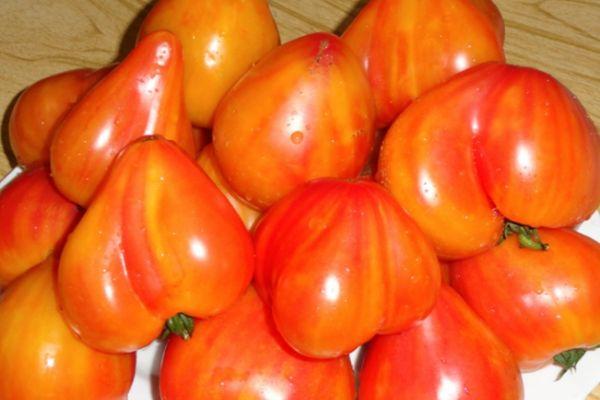
Fruit descriptions in catalogs often don't match the results gardeners see in their plots. To avoid this and ensure your Russian 117 tomatoes are a delight, purchase seed from trusted producers. The main characteristic noted by everyone who has grown this tomato variety is its beautiful heart-shaped form and orange color with red highlights.
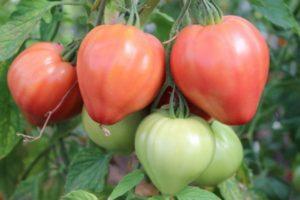
A cluster produces 4-6 large, roughly identical fruits. The average weight of a Orange Russian tomato is 250-280 g. Four to five fruit clusters form on a bush.
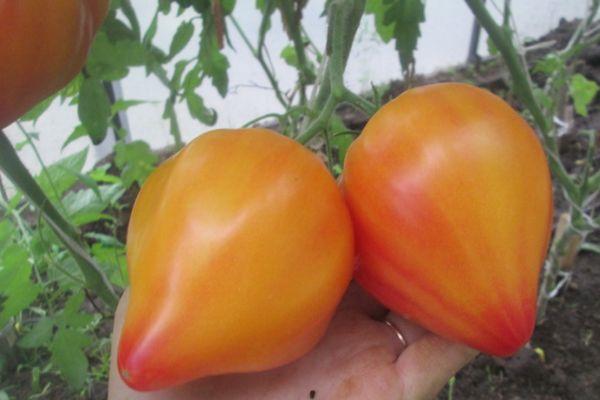
The skin is thick and glossy, and the tomatoes are resistant to cracking during cold periods or rainy weather. The base of the tomato is bright orange, with scattered reddish hues. Toward the top of the fruit, the red hues predominate, and the tip is a deep crimson. This color pattern allows the Orange Russian variety to be classified as a bicolor.
The flesh is a rich orange colour, and when fully ripe, red streaks run from the tip into the inside of the tomato.
The texture is quite dense, but not dry. The flesh has a melon-like consistency, and the flavor is sweet, sometimes with a slight tartness, and a delicate fruity aroma. The fruits contain a high amount of dry matter, giving them a very pleasant and rich flavor. The seed chambers are small and often seedless.
A salad variety, Orange Russian looks spectacular in salads and sliced dishes, and can even be a beautiful addition to a holiday table. Children love it thanks to its delicious flavor. Tomato slices can be added to sandwiches.
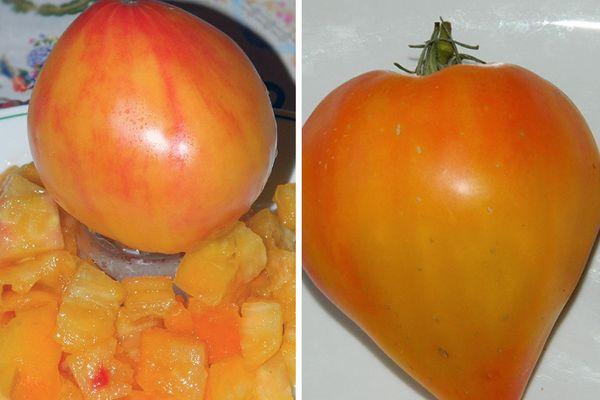
They're not intended for winter preservation, but Russian housewives choose small "hearts" to decorate vegetable platters. Tomatoes retain their shape and consistency well in marinades and pickles. The orange flesh of large tomatoes makes excellent juice or puree with an unusual color. Sweet, without excess acidity, tomato products are well-suited for dietary and baby food.
How to grow heart-shaped tomatoes?
Sow seedlings around mid-March. To protect delicate seedlings from blackleg, it is recommended to thoroughly saturate the soil with a hot solution of potassium permanganate (dark pink). Spread the seeds over the surface of the cooled, moist soil and sprinkle with a thin layer of dry sand (0.5 cm). Cover the containers with glass or plastic to retain moisture. At a temperature of 25°C, seedlings will appear in 4-5 days.

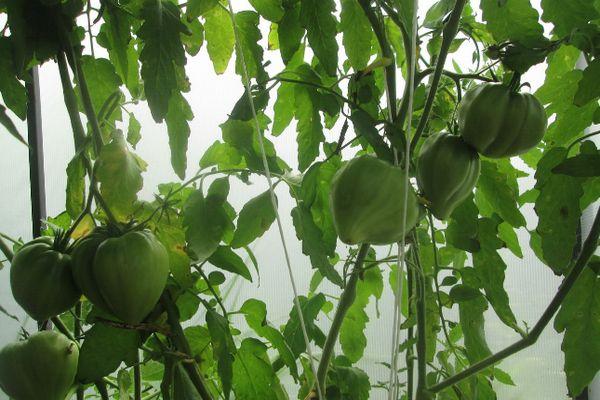
Grow small tomatoes until they develop 1-3 true leaves. Transplant into individual 0.5-liter pots. Grow Orange Russian tomatoes in a well-lit area with a temperature of 20 to 25°C.
As with all heart-shaped tomatoes, seedlings can become very elongated due to natural reasons (high stem growth rate), and even increased lighting will not solve this problem. When transplanting to a permanent location, such bushes need to be deepened into the soil, leaving 4-5 leaves above the ground. It is convenient to plant the bushes in grooves about 20 cm deep. Fertilize 2-3 times per season with special fertilizers for tomatoes (Kristalon tomato).
Related posts:
 Description of the large beef tomato Orange Giant and the growing features of the variety
 50 Best Pumpkin Varieties with Descriptions and Characteristics for Outdoor Planting
 Characteristics and description of the tomato variety Russian Size F1
 Description of the Russian Yellow gooseberry variety, planting scheme and care
 80 Best Eggplant Varieties for Different Regions with Descriptions and Characteristics
 Description of the Russian Bogatyr tomato, its characteristics and cultivation techniques
 Characteristics and descriptions of the most beautiful types of daffodils, names of the best varieties
 Characteristics and description of the Orange Elephant tomato variety