
The Indigo Rose tomato belongs to a series of black, cluster-type tomatoes. In catalogs, this variety may be listed as Indigo or Indigo Rose. This tomato is characterized by high yields, excellent flavor, exotic coloring, and resistance to disease and low temperatures.
Benefits of Tomatoes
Indigo Rose tomatoes were developed in 2015 by crossing a cultivated variety with wild tomato species. This variety is characterized by a medium ripening period, taking 75 days from germination to fruiting.
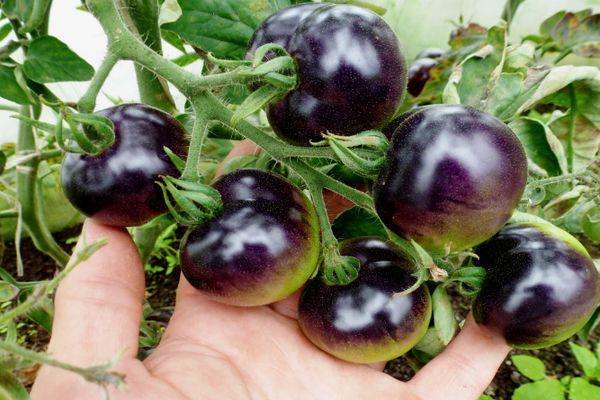
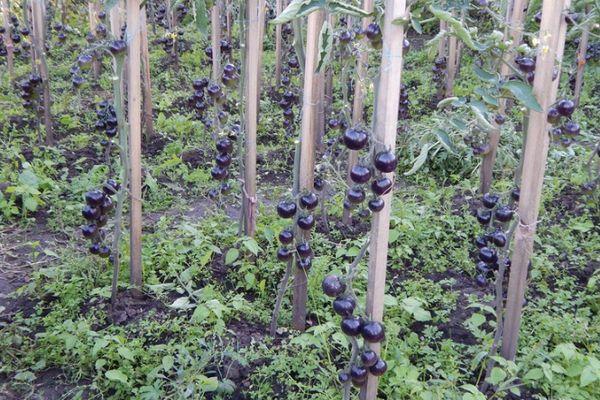
The determinate plant reaches a height of 100-120 cm. When grown indoors, the bushes reach a height of 120-150 cm. For increased yield, the plant is trained into single- or double-stemmed plants. The bush is sparsely foliated, with regular-shaped leaves. Occasionally, they may curl, a characteristic of the variety.
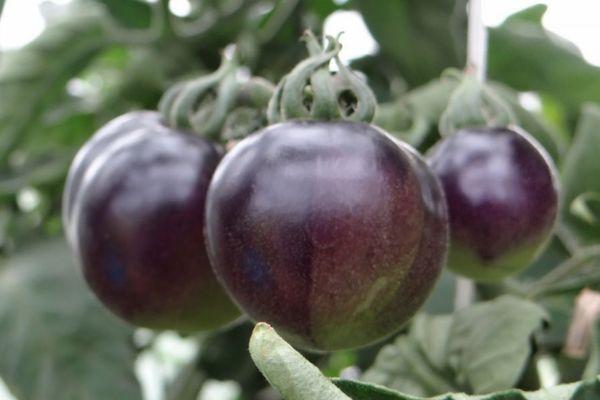
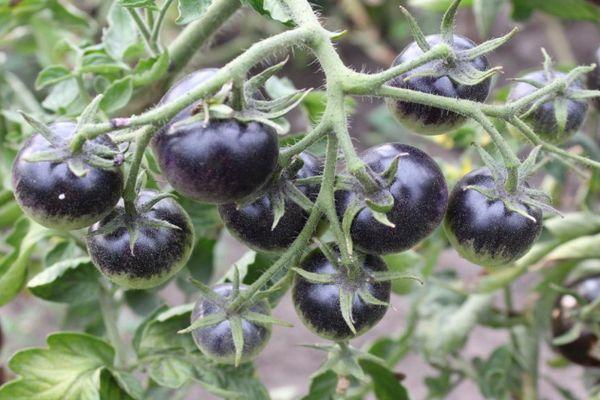
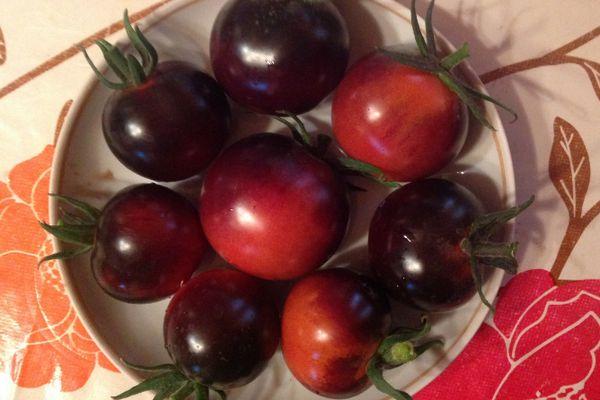
The variety's description is based on the exotic purple-black color of its fruits. The exceptional appearance is due to the anthocyanin content. This beneficial component has antibacterial properties and strengthens the immune system.
Exotic tomatoes included in the diet can replenish the deficiency of anthocyanin, which is not synthesized in the body.
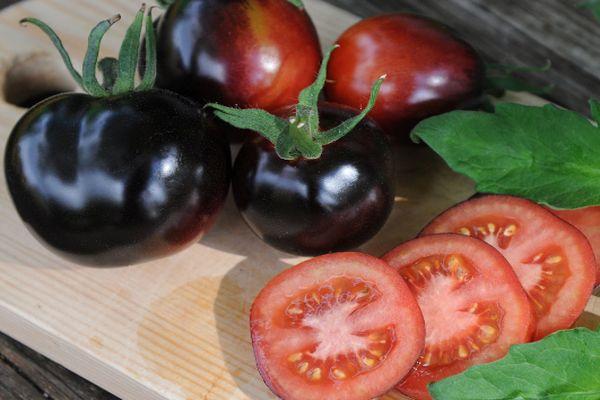
The plant forms a simple brush, in which 6-8 fruits weighing 30-100 g ripen. The tomatoes are round in shape, with a glossy surface and dense skin, fleshy, with dense red-pink pulp.
The fruits have an excellent sugar-to-acid ratio, giving them a distinctive flavor. A horizontal cut reveals chambers containing numerous seeds. The fruits have a strong aroma that can be detected from a distance.
The Indigo Rose tomato variety is interesting due to certain characteristics associated with resistance to low temperatures and frosts down to -5°C.
In cooking, tomatoes are used fresh. When canned, the fruits retain their shape.
Reviews from vegetable growers indicate the variety's exceptional yield and resistance to fungal and viral diseases of nightshade crops.
Agricultural technology for growing the variety
To achieve early tomato production, it's important to create ideal growing conditions for seedlings. Excessive heat and insufficient light cause seedlings to become spindly and stretch out.
Before planting, the seeds should be soaked until they swell, then treated with an aqueous solution of potassium permanganate and a growth stimulant. After treatment, the seeds are dried until they are free-flowing.
Fill the containers with substrate or potting mix, compact it lightly, and make furrows 1 cm deep, spaced 10 cm apart. Place the seeds in these furrows. After sowing, carefully cover the containers with a thin layer of soil, 5 mm thick, using a sieve.
This method ensures uniform seed placement and uniform emergence of seedlings. To avoid displacing the seeds from the planting site, watering is carried out using a hand sprayer.
Once the soil has settled, you can use a watering can. Watering should be done daily until the seeds germinate, as loose soil doesn't have time to absorb moisture and dries out, forming a crust.
After the seeds germinate, discard weak seedlings that could cause the planting to become too dense. Leave a distance of 1-2 cm between plants. As the seedlings develop, apply a combination fertilizer.
It's recommended to add a 3-5 cm layer of soil between the rows to encourage additional root development. This helps strengthen the plants thanks to the soft texture of the topsoil. Seedlings grown this way adapt well to their new environment when planted in their permanent location.
To grow bushes, it's important to create better conditions than in a nursery so as not to disrupt the rooting and growth process. For normal plant development, it's recommended to use organic fertilizers.
When planting in a permanent location, maintain a distance of 30-40 cm between bushes and 70 cm between rows. This arrangement allows for adequate airflow to the plants, creating more comfortable growing conditions.
During the growing season, the soil is loosened and the bushes are hilled. When applying fertilizer, the soil condition and the appearance of the plants are taken into account. The qualitative and quantitative composition of the fertilizer is adjusted at each stage of growth.
To prevent the surface soil from drying out and to evenly distribute moisture, mulch is used. Black non-woven fiber is used for this purpose. Using organic materials (straw, leaves, grass) as mulch provides a source of organic nutrition for plants.
Related posts:
 Instructions for use of the Indigo preparation, composition and dosage of the fungicide
 The best eggplant varieties for growing in a polycarbonate greenhouse: planting and care
 Description of the best varieties of black tomatoes for open ground and greenhouses
 The best grape varieties for growing in the Urals, planting and care rules in summer
 80 Best Eggplant Varieties for Different Regions with Descriptions and Characteristics
 Description of the Velika grape variety, cultivation and care tips
 Description of the best varieties of onions, planting and care in open ground
 Methods for planting and propagating cherries at home