
Fruit trees and grapevines can suffer from fungal diseases that damage not only the trees but also the harvest. Let's look at the composition of "Indigo," its operating principle and purpose, how to properly dose it for solution preparation, and how to calculate its consumption. We'll also discuss which products it's compatible with, storage conditions, and how much to store it, as well as its possible substitutes for agricultural use.
Composition and release forms
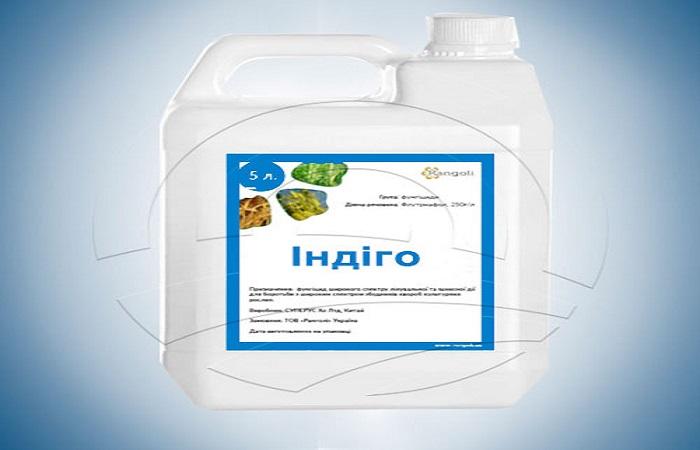
Shchelkovo Agrokhim, the manufacturer of the fungicide "Indigo," produces the product as an emulsifiable concentrate. It contains the active ingredient tribasic copper sulfate at a concentration of 345 g per liter. It is classified as a contact pesticide with protective action. It is available in 5- and 10-liter commercial canisters.
Operating principle and purpose
Copper ions enter the fungal cells and interact with enzymes, leading to inhibition of activity, impaired respiration, and protein denaturation. Spores and conidia stop growing and are unable to penetrate the plant. The solution adheres well to the leaves, covering the surface evenly.
Forms a wash-resistant layer that, when left on plants, effectively inhibits spores and their germination, thereby preventing the development and spread of pathogens and providing protection in adverse weather conditions.
Calculation of consumption and rules of use
The dosage of "Indigo" for apple and pear trees is 3-5 liters per hectare, for grapes – 4-6 liters, and for cherries and plums – 4-5 liters. A total of four treatments are carried out, the first as a preventative measure, followed by subsequent treatments at intervals of 1-1.5 weeks. The waiting period varies: 15 days for apple trees, 20 days for grapes, and 7 days for cherries.
The maximum effect from the use of "Indigo" occurs with prophylactic use, which is carried out even before the appearance of signs of the disease (germination of spores and growth of fungal conidia).
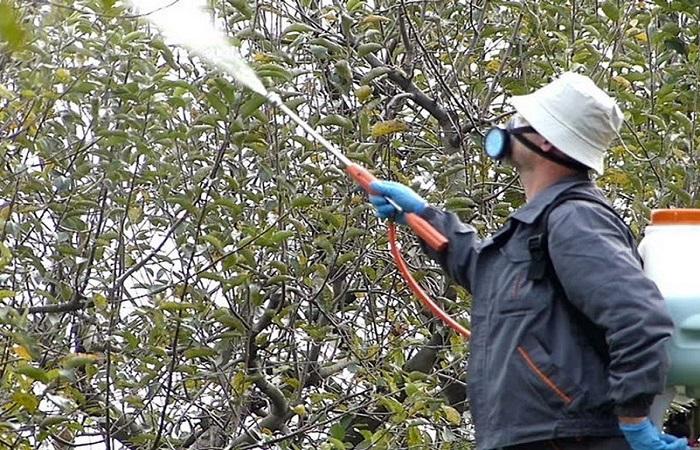
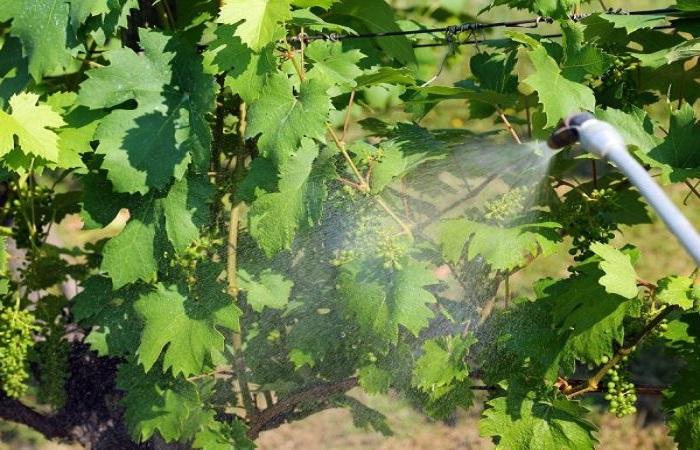
Spraying with Indigo should be done at moderate humidity and temperature, on a clear, windless day, in the morning or evening, when sunlight is not intense. Apply the solution so that it evenly and completely wets the surface of the leaves and branches. It is important to follow the recommended intervals between treatments to prevent new growth from becoming infected. Avoid spraying immediately after or before rain; allow at least 4-5 hours after application for the fungicide to be effective.
The fungicide "Indigo" is non-toxic to treated plants when used at the recommended dosage. High humidity during spraying can cause leaf burn and web formation on copper-sensitive apple trees. Fungal resistance does not occur with repeated applications.
Safety precautions
Indigo is moderately toxic to humans and bees, classified as Class 3. Gardens can be sprayed using aerial vehicles. Do not use near bodies of water due to the potential for poisoning of their inhabitants.
When spraying, wear protective clothing, gloves, plastic goggles, and a respirator. This protection is necessary to minimize contact of the solution with the skin, eyes, and respiratory tract of the worker.
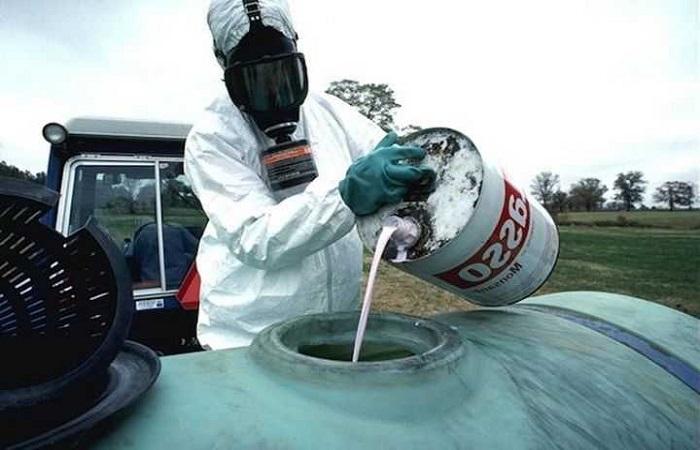
After finishing work, remove clothing, wash your face and hands, and rinse any areas where the solution came into contact with clean water. If symptoms of poisoning occur, perform an activated charcoal rinse. In severe cases, consult a doctor.
Is compatibility possible?
The fungicide "Indigo" is considered compatible with many pesticides; however, it should not be mixed with products that are highly acidic or alkaline. Despite good compatibility, a test should always be performed to determine the chemical compatibility of the ingredients.
How and how long can it be stored?
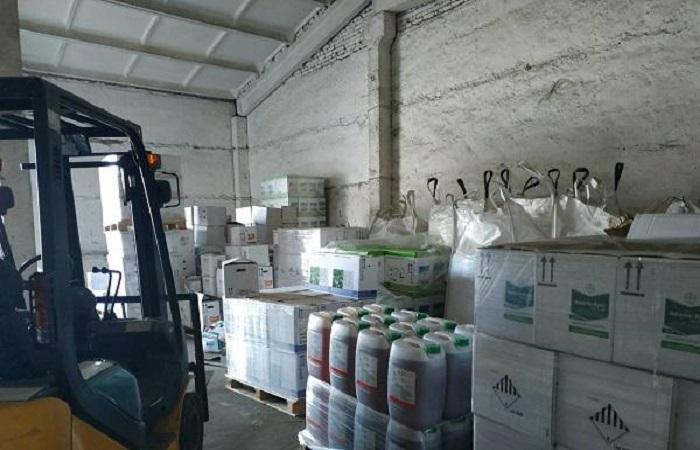
After the production date, Indigo fungicide can be stored in canisters for two years. Store the fungicide in a designated area for agricultural products. Do not store water, food, medications, or household products near the fungicide. Fertilizers and plant protection products may be stored there. Any remaining product is unusable after the expiration date. The solution should be used on the day of preparation; its effectiveness significantly decreases after 24 hours.
What to replace it with
Copper sulfate is included in products such as "Kumir" and "Kuprosat." Bordeaux mixture can be used in private homes, as it works similarly to commercial products, preventing the germination of fungal spores. All products are used for preventative treatment, both before the onset of potential infection and after symptoms of infection appear.
Indigo fungicide prevents dangerous, easily transmitted fungal diseases from infecting orchards and vineyards. It is used in modern plant protection systems and is considered fast-acting and effective in preventing the emergence and spread of a range of diseases. Indigo fungicide can be used from early spring through the season. It remains active in both hot and cold weather. The solution is washable, non-phytotoxic, and copper sulfate does not accumulate in tissues or fruits, making it safe.
Related posts:
 Instructions for using Falcon fungicide for treating grapes
 Description of the Indigo Rose tomato and cultivation techniques
 Instructions for use and composition of the fungicide Fitosporin-M, application rates
 Instructions for use and composition of the fungicide Teldor, application rates
 Instructions for use and composition of the fungicide Raek, application rates and analogues
 Types of garden fungicides and descriptions of the top 24 best, instructions for use
 Instructions for use and composition of the fungicide Fitolavin, dosage and analogues
 Instructions for use and composition of the fungicide Bayzafon, dosage and analogues