- Composition, existing forms of release and purpose
- How does the drug work?
- Pros and cons
- Calculation of consumption
- Plant type
- Amount of working mixture
- Preparation of the working mixture
- Instructions for use
- Safety precautions during processing
- How toxic is it?
- Possible compatibility
- How and how long can it be stored?
- Similar drugs
Plants in gardens, fields, and vegetable plots are plagued by a huge number of diseases caused by microorganisms such as fungi and bacteria. They are impossible to ignore, as they never go away on their own. Over time, treatment becomes more difficult and protracted. The fungicide Fitolavin, a universal biological product with simple instructions for use, will cure a wide range of diseases on virtually all crops.
Composition, existing forms of release and purpose
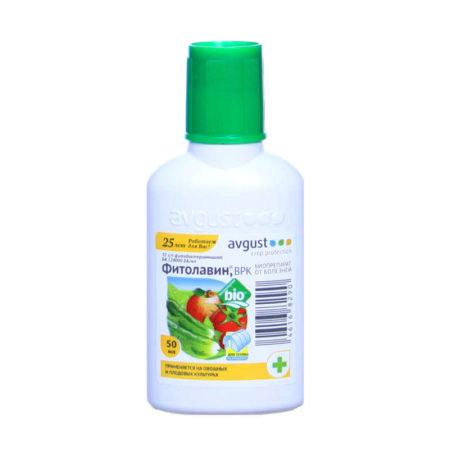
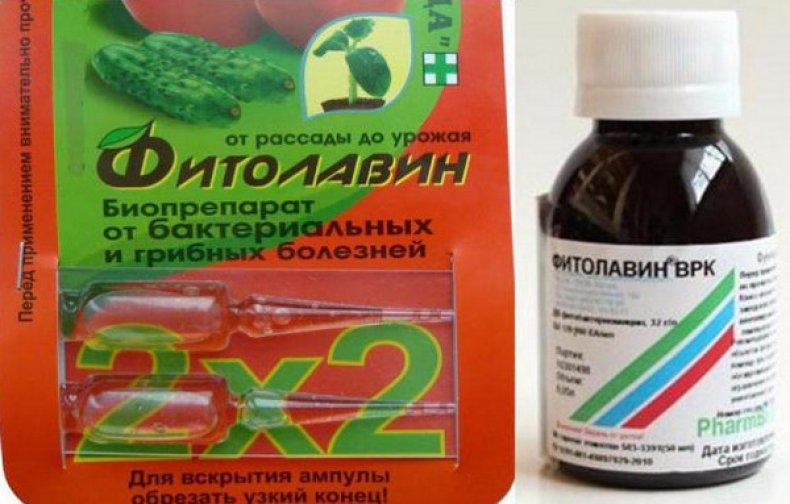
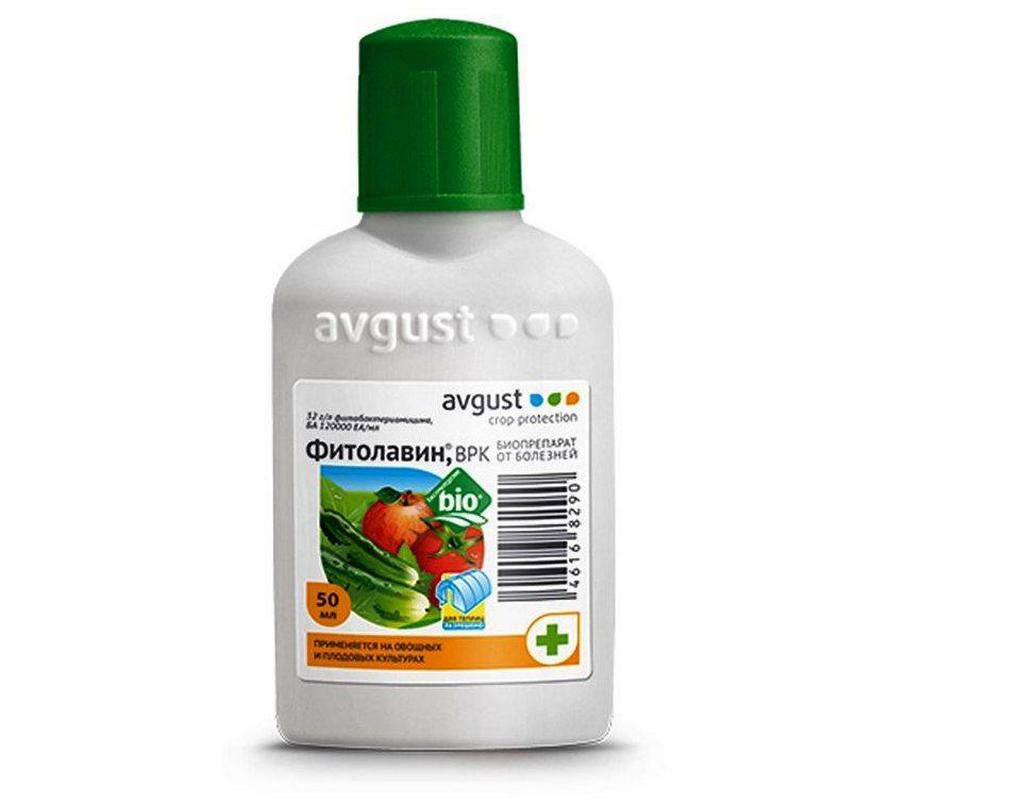
Fitolavin is a bacterial fungicide whose active ingredient is phytobacteriomycin in combination with other streptothricin antibiotics. It is packaged as a water-soluble concentrate in 50, 100, and 400 ml bottles and 1- and 5-liter canisters. It is manufactured by the Russian company PharmBioMedService for the protection of crops from pathogenic bacteria and fungi.
How does the drug work?
The fungicide Fitolavin strengthens the plant, allowing it to fight harmful microorganisms on its own. By accelerating metabolic processes in the treated plant, the product strengthens the immune system. Fitolavin fungicide:
- easily penetrates plant tissues;
- active for 9-38 days;
- in recommended doses it is harmless to the cultivated plant.
Pros and cons
The benefits of using the antibiotic Fitolavin outweigh the negative effects. For ease of comparison, it's worth listing these benefits side by side.
Calculation of consumption
It's difficult to predict how much Fitolavin fungicide solution will be needed to treat a specific area of plants. The following factors play a role:
- planting density;
- plant height;
- the volume of the crown or green mass of the crop.
Previous experience with spraying with other products can be helpful. For beginning gardeners, approximate application rates are provided, so it's best to buy a small amount, which is possible thanks to the variety of containers available.
Plant type |
Amount of working mixture |
| Potted crops | Small – 100 ml, woody – 200-300 ml |
| Seedling | 30-45 ml |
| Cereals and vegetables | 20 liters per hundred square meters, 2000 liters per hectare |
| Shrubs | 1.5-2 l |
| Trees | 3-5 liters |
Preparation of the working mixture
The manufacturer advises that to prepare a spray solution, add 2 ml of Fitolavin to 1 liter of water. After thoroughly mixing, begin spraying. Shake the solution at least once every five minutes; the larger the sprayer, the longer the shake.

Instructions for use
The fungicide Fitolavin is used against a number of bacterial infections.
| Culture | Disease | Symptoms | Method and phase of processing, consumption of working fluid |
| Wheat, rye, barley, oats | Bacterial diseases, root rot | A reddish-brown rot appears on the stem. The root rots. Yellow spots on the leaves enlarge. The grain degenerates, the embryo darkens, and the ear scales turn black. | Seed treatment before sowing. 10 l/t |
| Spraying at the beginning of tillering. 300 l/ha | |||
| Protected ground cucumber | (1) Wilting, (2) root collar rot | (1) Loss of turgor, drying out. (2) Wet ulcers in the area of the central root and the bottom of the stem. Leaves are green. Rapid death. | Watering the root zone of seedlings at the stage of 2-3 true leaves. 1500 l/ha |
| Water at the roots 1.5-2 weeks after planting. Spray after 2-3 weeks. 400 l/ha. | |||
| Angular leaf spot | Wet spots, bordered by small veins, appear on the underside of the leaf. After drying, a white crust appears. The fruits are deformed. | If signs are detected, spray 2000 l/ha. | |
| Open-ground tomato | (1) Blossom end rot, (2) Alternaria | (1) Dark green, sunken spots form on unripe fruits. They harden and dry out. Affected fruits quickly begin to turn red. (2) Dark brown, almost black spots with concentric circles appearing on leaves and fruits. | Spraying at the stage of 2-4 true leaves. 1000 l/ha |
| Second spraying after 2 weeks. 4000 l/ha | |||
| Apple | (1) Bacterial burn, (2) moniliosis | (1) Inflorescence death, leaf clusters drying out and curling. Neither leaf clusters fall off. (2) Brown spots on the fruit expand. The apple acquires an alcoholic taste. Then whitish pads appear on the surface of the rot. The fruit dries out and may hang around until spring. | Spray from the budding period until the fruit diameter is less than 5 cm, no more than 2 times in a row. 1000 l/ha. |

Safety precautions during processing
When handling the antibiotic Fitolavin, do not smoke, eat, or talk. The medication can irritate the skin, so it is recommended to wear gloves and cover the skin as much as possible. If Fitolavin comes into contact with the skin, rinse the affected area thoroughly with water. If Fitolavin gets into the eyes, rinse thoroughly with water while keeping the eyes open. Then consult an ophthalmologist.

How toxic is it?
In rodent experiments, large doses of the fungicide concentrate Fitolavin were fatal. When working in areas where the antibiotic was sprayed, a rash around the mouth, fatigue, and a burning sensation in the mouth may occur.
Possible compatibility
The fungicide Fitolavin should not be used with other antibiotics. They will either increase the drug's toxicity or reduce its therapeutic effect. It is compatible with other chemicals, with the exception of strong alkalis.
How and how long can it be stored?
The shelf life of Fitolavin fungicide is 1 year. Store in a dry, ventilated area, out of reach of children and animals. Store at a temperature of 5-30°C. The prepared fungicide solution must be used promptly.
Similar drugs
Fungi and bacteria quickly adapt to Fitolavin. Therefore, it is strongly recommended not to apply the product more than twice in a row. In advanced cases, the following products can be used instead of Fitolavin fungicide:
| Fungicide name | Curable diseases |
| Fitosporin-M | Root rot, black leg |
| Alirin-B | Moniliosis, root rot, trachymosis wilt, alternaria |
| Gamair | Bacterial diseases, rot, spotting, moniliosis |
| Planriz | Rot, spotting, bacterial diseases, black leg |
Related posts:
 Instructions for using Falcon fungicide for treating grapes
 Instructions for use and composition of the fungicide Fitosporin-M, application rates
 Instructions for use and composition of the fungicide Raek, application rates and analogues
 Instructions for use and composition of the fungicide Teldor, application rates
 Types of garden fungicides and descriptions of the top 24 best, instructions for use
 Composition and instructions for use of the fungicide Kumulus, application rates and analogues
 Instructions for use and composition of the fungicide Amistar Extra, its analogues
 Instructions for use and composition of the fungicide Switch, application rates, and analogues