- Composition, existing forms of release and purpose
- Mechanism of action
- Pros and cons
- Calculation of consumption for different crops
- Preparation of the working mixture
- Instructions for use
- Precautions when working
- How toxic is it?
- Is there resistance?
- Possible compatibility
- Storage terms and conditions
- Analogues
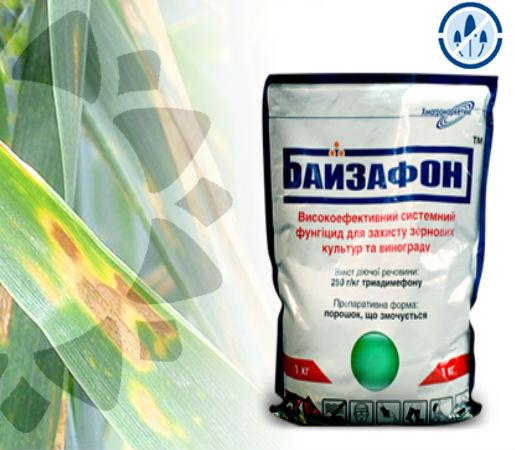
By planting crops in their plots, gardeners and farmers plan to reap a bountiful harvest for their families and for sale at market. However, watering and fertilizing seedlings is not enough; they also need to be protected from diseases that develop in adverse weather conditions. The instructions for the fungicide "Byzafon" state that it is used to treat and prevent fungal diseases affecting vegetable and fruit crops.
Composition, existing forms of release and purpose
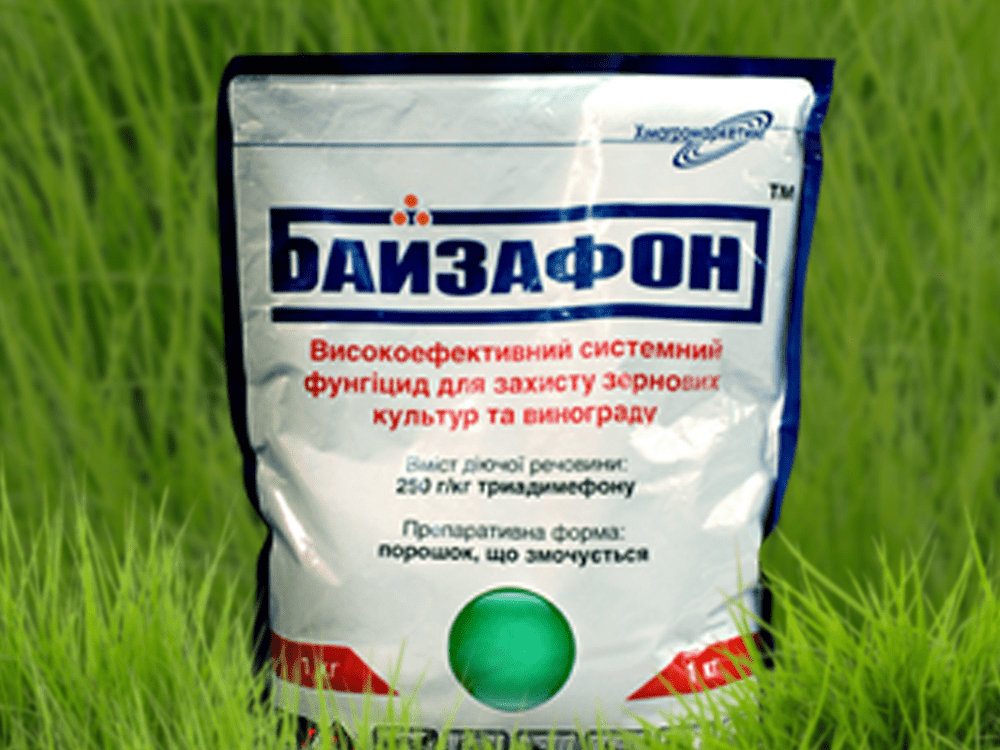
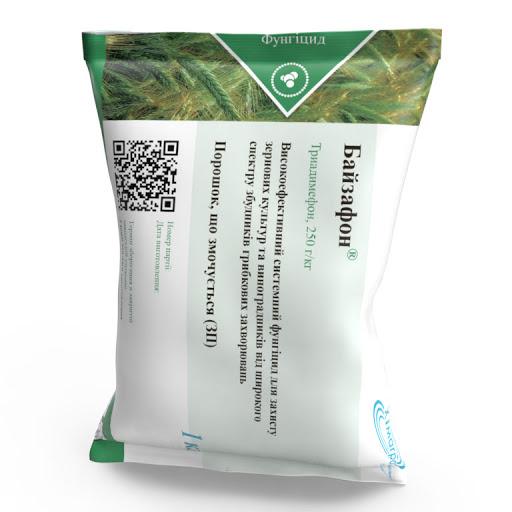
The active ingredient in the systemic fungicide "Byzafon" is triadimefon, a member of the triazole class of chemicals. One kilogram of the product contains 250 grams of the active ingredient. The fungicide is sold as a wettable powder packaged in 1 kg sachets. This dosage is convenient for owners of small gardens.
The instructions state that the systemic fungicide is intended for the treatment and prevention of diseases of wheat, grapes, vegetable crops, apple trees, and sugar beets, such as oidium and various types of spotting, powdery mildew, and stem rust.
Mechanism of action
The systemic fungicide works by inhibiting fungal sporulation with its active ingredient. After application, the substance quickly penetrates the plant tissue and begins to inhibit spore formation. Furthermore, the component forms a protective film on the surface of the treated plant, preventing pathogenic microorganisms from penetrating. The effect of the product is observed within 3-5 days.
Pros and cons
After using the chemical pesticide on their plots, gardeners assessed its strengths and weaknesses in practice.
During the process of using the systemic fungicide, gardeners did not notice any disadvantages of this drug.
Calculation of consumption for different crops
To achieve the expected result after treatment, it is necessary to adhere to the manufacturer's recommended fungicide application rates.
The calculation for different crops is shown in the table:
| Cultivated plant | Pathogens | Norm of the drug | Permissible number of treatments per season |
| Cereals and sugar beets | Powdery mildew and septoria, spots, including ear spots | From 500 grams to 1 kg per hectare of field | Up to 4 times |
| Grapes and vegetable crops | Powdery mildew, rust and powdery mildew | From 150 to 300 grams per hectare of plantings | Up to 4 times |
| Melons | Powdery mildew | From 300 to 400 grams per hectare of field | Up to 4 times |
Preparation of the working mixture
Prepare the working solution wearing protective clothing and rubber gloves. Do this before treating the plants; a pre-prepared solution will lose its effectiveness. Fill the tank with water (halfway full) and add the powder, following the recommended dosage. Turn on the stirrer and wait until the fungicide dissolves in the water. Then add the remaining water and stir again until a homogeneous liquid is obtained.
Instructions for use
The instructions included with the systemic preparation recommend starting spraying early in the morning or in the evening, at minimum wind speed (up to 4 m/s).
Since the preparation is not sensitive to low temperatures, treatments are carried out in any weather, as long as the thermometer is above zero.
The working solution remaining after spraying should not be poured into water bodies, despite its relative safety. Dispose of the chemical according to safety regulations.
Precautions when working
Although the fungicide "Byzafon" is classified as a low-hazard product, safety precautions should be taken when handling it. Wear overalls, a headscarf, and gloves. A respirator should be used to protect the respiratory tract from chemical vapors.

After finishing work, be sure to shower and wash your face with soap. If the substance accidentally comes into contact with your eyes, rinse them with water and seek immediate medical attention. If the chemical is swallowed, take activated charcoal and consult a doctor. Gastric lavage and symptomatic treatment are typically prescribed in this case.
How toxic is it?
The systemic fungicide "Byzafon" belongs to the 4th toxicity class and, if safety requirements are met, does not harm humans and animals.

Is there resistance?
To avoid the development of resistance, the fungicide "Byzafon" is alternated with other chemical pesticides.
Possible compatibility
Before using a systemic fungicide with other chemicals, conduct a compatibility test. To do this, take a small amount of each product and observe the reaction. If sediment or flakes appear, discontinue use.
Storage terms and conditions
In sealed original packaging, the fungicide is usable for 3 years from the date of manufacture. Store in a separate room, out of reach of children, at a maximum temperature of 30 degrees Celsius.
Analogues
If there is no fungicide available for sale, it is replaced with a product with the same active ingredient - "Bayleton".
Related posts:
 Instructions for using Falcon fungicide for treating grapes
 Instructions for use and composition of the fungicide Fitosporin-M, application rates
 Instructions for use and composition of the fungicide Teldor, application rates
 Instructions for use and composition of the fungicide Raek, application rates and analogues
 Instructions for use of the fungicide Topaz for plants, composition and analogues
 Types of garden fungicides and descriptions of the top 24 best, instructions for use
 Instructions for use and composition of the fungicide Amistar Extra, its analogues
 Composition and instructions for use of the fungicide Kumulus, application rates and analogues