Farmers who sow grain crops in their fields often encounter diseases that reduce yields. To prevent this problem, they use fungicides that provide protection against pathogenic microorganisms throughout the growing season. The fungicide "Titan" was developed by Russian specialists for the treatment of grain crops against a wide range of diseases.
Composition, existing forms of release and purpose
The only active ingredient in the fungicide "Titan" is propiconazole, a member of the triazole class. One liter of the product contains 250 grams of the active ingredient. "Titan" is sold as an emulsifiable concentrate in 5-liter plastic canisters. Since small gardeners rarely use this chemical, this dosage is justified, as the product is most often purchased by farmers growing crops for future sale.
The instructions for use indicate that the chemical is effective in combating diseases of grain crops, such as rhynchosporiosis, rust, powdery mildew, and other pathologies.
How does a fungicide work?
The active ingredient, propiconazole, interferes with the pathogenic microorganism by disrupting mycelial growth. This stops sporulation, and the pathogen dies. Grain crops treated with Titan begin to grow and develop faster. Furthermore, the active ingredient promotes increased photosynthesis in plant tissue.
Pros and cons
When planning to use a chemical pesticide on their fields, farmers seek feedback from those who have already used the fungicide.
The fungicide "Titan" is intended only for treating grain plants; it is not suitable for vegetable and fruit crops, and this is its main drawback.
Calculation of consumption for different plants
The instructions for use indicate the permissible doses of the preparation for processing cereal crops.
| Cultivated crop | Pathology | Consumption rate | Features of application |
| Oats | Red-brown spot and rust | 500 ml of fungicide per hectare (300 liters of working liquid) | No more than once a season |
| Spring and winter wheat | Rust, powdery mildew and spot | 500 ml of emulsion per 1 hectare of field (300 liters of working liquid) | No more than 2 times per season |
| Winter rye | Spotting, rhynchosporium and powdery mildew | 500 ml of the preparation per 1 hectare of plantings (300 liters of working solution) | No more than 2 times per season |
| Spring and winter barley | Powdery mildew and stem rust | 500 ml of chemical per 1 hectare of crops (300 liters of working liquid) | No more than 2 times per season |

Preparation of the working mixture
To ensure the fungicide is effective, prepare the spray solution before use. Add half the volume of water, filtered to remove any particulate matter, to the sprayer tank. Add the recommended dose of the product and turn on the mixer. Once the emulsion has completely dissolved, add the remaining liquid and mix thoroughly again.
Instructions for use
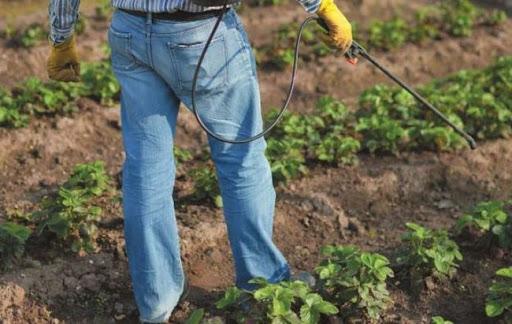
The instructions for the fungicide indicate that spraying can be carried out throughout the entire growing season. Work should begin either in the morning or evening. It is best to do this in clear weather with minimal wind speed. When spraying plants, ensure that the spray solution evenly covers all crop surfaces. Rainfall two hours after application will not affect the fungicide's effectiveness.
Precautions for handling
When working with any chemical, it's important to prepare protective equipment in advance. Wear a full-body coverall, gloves, and a cap or headscarf. The respiratory tract is sensitive to chemical vapors, so a respirator is used to protect it.
After finishing work, all clothes are washed and hung outside to air. Farmers are required to shower with soap. If the fungicide accidentally gets into their eyes, rinse them with clean running water and seek medical attention, having the chemical label handy. If the product is swallowed, take several tablets of activated charcoal and seek medical attention.
Degree of toxicity
The fungicide "Titan" belongs to toxicity class 3. It poses little risk to humans and beneficial insects. However, if there is an apiary nearby, it's worth notifying the owners about the upcoming treatment.

Possible compatibility
This crop protection product is approved for use in combination with other chemicals in tank mixes. However, compatibility testing is performed first, using a small amount of each product.
Storage terms and conditions
Under favorable conditions and in its original packaging, the shelf life of Titan fungicide is 3 years. Store the chemical in a non-residential area where the temperature does not rise above 30 degrees Celsius.
Similar means
If the store does not have the drug "Titan", it is replaced with fungicides such as "Tilt" or "Sargon".
Related posts:
 Description of the standard tomato Titan and cultivation techniques
 Description and characteristics of the Titan Pink tomato variety
 Instructions for using Falcon fungicide for treating grapes
 Instructions for use and composition of the fungicide Fitosporin-M, application rates
 Instructions for use and composition of the fungicide Teldor, application rates
 Instructions for use and composition of the fungicide Raek, application rates and analogues
 Types of garden fungicides and descriptions of the top 24 best, instructions for use
 Composition and instructions for use of the fungicide Kumulus, application rates and analogues