
- What is included in the composition and existing forms of release
- Mechanism of operation and purpose
- Calculation of consumption
- Instructions for use
- Basic rules
- To prevent diseases of fruit crops
- Preventive treatment of vegetable crops
- Prevention and treatment of oidium – powdery mildew of grapes
- For soaking seeds, tubers, cuttings, and treating seedlings
- Precautionary measures
- First aid
- Is compatibility possible?
- Storage conditions
- Analogues
Using chemical crop protection products can be dangerous for humans, animals, and beneficial insects, especially bees and other pollinators. Modern fungicides often rely on biological action, which has a much gentler and less harmful impact on the environment. Baktofit is safe to use and guarantees excellent results.
What is included in the composition and existing forms of release
Baktofit is a fungicide based on the IPM-215 strain of the Bacillus Subtilis microorganism. The product also contains hormones, antibiotics, and naturally occurring enzymes, trace elements, as well as inert substances that act as fillers, stabilizers, and preservatives.
"Baktofit" is available in two versions:
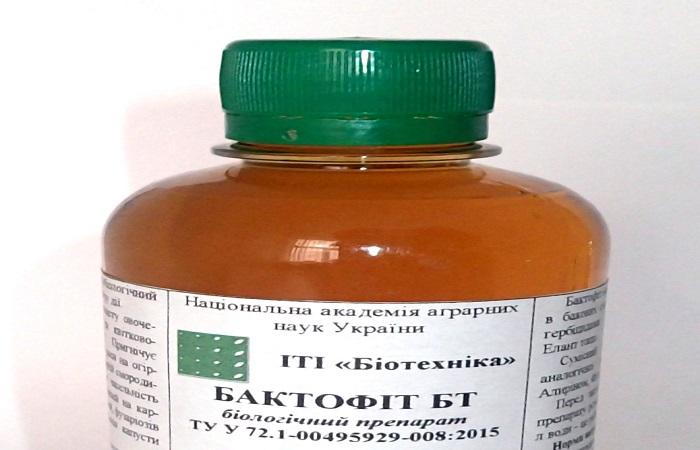
- Suspension concentrate (SC). It has the appearance of a golden-brown suspension.
- Wettable powder (WP).
After treatment, the waiting period is 24 hours. The product does not cause immunity to plant pathogens and can be used from planting until harvest.
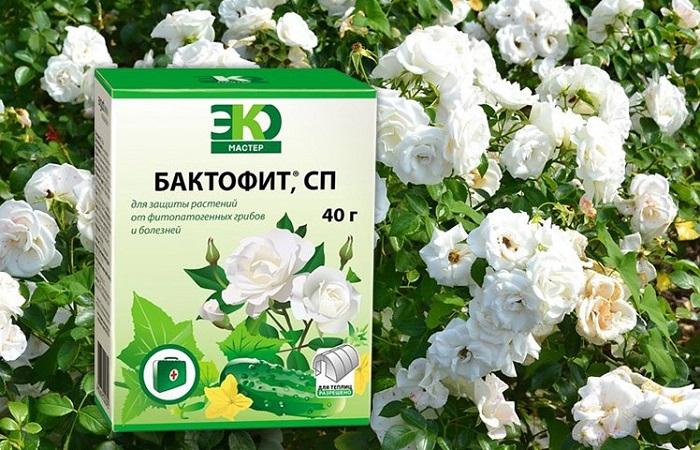
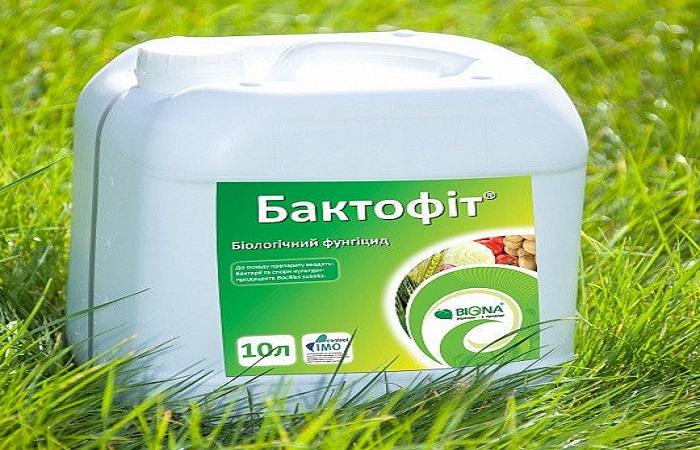
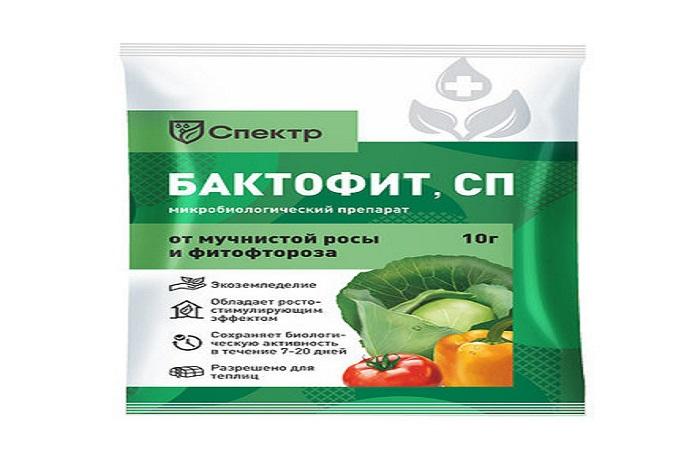
For indoor and garden use, it is available in 10- and 40-gram packages. For industrial use, Baktofit SP is sold in hermetically sealed 20-liter bags, and Baktofit SK is sold in 10-liter plastic canisters.
Mechanism of operation and purpose
A unique feature of Baktofit is that it only affects specific types of pathogens, meaning the drug has no toxic effects on humans or wildlife.
The product's effectiveness is based on its ability to produce enzymes, the most important of which is chitinase. Since most harmful microorganisms contain chitin in their cell membranes, using Baktofit destroys them at the cellular level.
The presence of antibiotics in the composition suppresses the growth of pathogenic microflora. The product's components also help retain moisture in crops.
Calculation of consumption
Since this product is a biological plant protection and treatment agent, it must be used on the same day the working solution is prepared. For this purpose, the following application rates are used for plants:
- For cereals, sunflowers and corn: 2-3 liters per hectare, solution consumption – 250-300 liters per hectare.
- For vegetable and fruit and berry crops: 3-5 liters of Baktofit per hectare of area, 600-1000 liters of solution per hectare.
Instructions for use
"Baktofit" is used for protection and preventive measures for the following crops:
- Cereals.
- Vegetables.
- Fruit.
- Decorative.
- Grape.
- Indoor and greenhouse flowers.
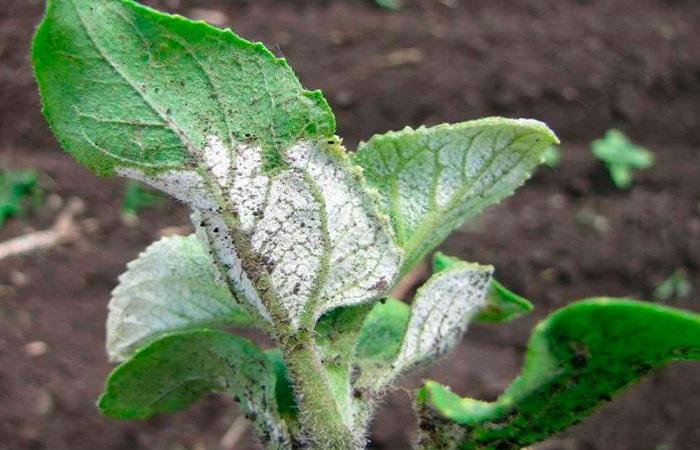
The drug is effective against the following diseases:
- Bacteriosis.
- Wilt.
- Helminthosporium.
- Root rot.
- Powdery mildew.
- Downy mildew.
- Oidium.
- Septoria.
- Phytophthora.
- Fusarium.
The product also has the ability to reduce the effects of stress after planting, transplanting, and the use of herbicides and insecticides.
The drug is used in the following ways:
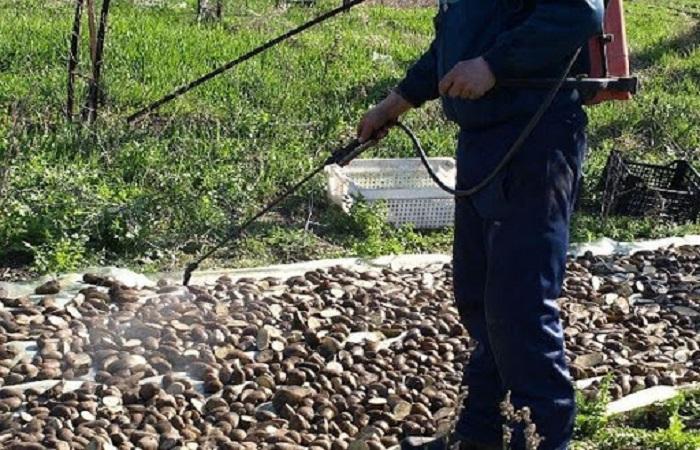
- Treatment of planting material: root system, rhizomes, bulbs, tubers, corms, seeds.
- Spraying on green mass.
- Watering the soil under the plants.
- Use in combination with a herbicide to destroy soil-dwelling fungi.
The product's wide range of uses and its practical safety have made Baktofit popular for treating plants of all types, from indoor plants to agricultural crops.
Basic rules
The instructions for the drug stipulate compliance with the following requirements:
- Dilute Baktofit in settled or filtered water that does not contain chlorine. This substance has a detrimental effect on the microorganisms present in the product.
- The product is effective in neutral or slightly alkaline soils with mulch. If the soil is acidic, such as from pine needles, the addition of neutralizing agents is necessary.
- Before dilution, the drug must be shaken (applies to Baktofit SK).
- The working solution is valid for 12 hours.
- When using a sprayer, the solution must be strained to prevent small particles from clogging the sprayer.
- The opened product must be used within 24 hours.
It is recommended to treat plants early in the morning and in the evening, after sunset, since Baktofit is afraid of direct sunlight.
To prevent diseases of fruit crops
A solution of 20 milliliters per 10 liters of water is used for spraying and 30 milliliters per 10 liters of water for watering under the bush.
Preventive treatment of vegetable crops
For spraying – 10 milliliters per 10 liters, for watering – 20 milliliters per the same amount of water.
Prevention and treatment of oidium – powdery mildew of grapes
It is necessary to dilute 30 milliliters of “Baktofit” in 10 liters of water and use the solution for spraying.
For soaking seeds, tubers, cuttings, and treating seedlings
For seeds and planting material, use 1 gram or 1 milliliter of suspension per 500 milliliters of water and soak for 18 to 24 hours. Soak cuttings for 15 minutes in a solution of 1 gram of Baktofit per liter of water.
Precautionary measures
Baktofit is classified as hazard class 4 for humans and class 3 for bees and pollinating insects. This means this biofungicide is harmless to humans, and the protective zone for bees during the summer is 5-6 kilometers. The product poses no threat to fish and aquatic life. It is non-phytotoxic.
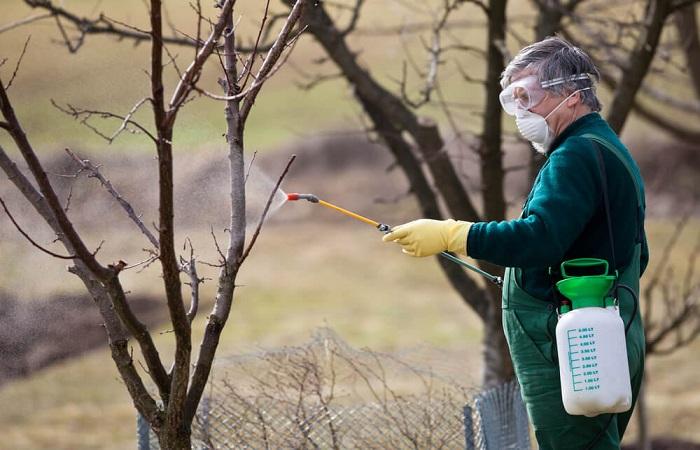
When working with Baktofit, it is recommended to adhere to the following rules:
- Use personal protective equipment: goggles, mask or respirator, rubber gloves.
- Wear closed clothing.
- Do not smoke, drink or eat while handling plants.
After finishing working with Baktofit, you need to wash your hands and face with soap and change clothes.
First aid
If the product comes into contact with skin, eyes, or mucous membranes, rinse with plenty of running water. If accidentally swallowed, drink several glasses of clean water and induce vomiting. Medical attention may be necessary in very rare cases, except in cases of individual intolerance.
Is compatibility possible?
Baktofit should not be mixed with other antifungal agents, including Fitosporin, fertilizers, or growth stimulants. Fruits should not be consumed for at least three days after treatment with Baktofit.
Storage conditions
The guaranteed shelf life of Baktofit in a sealed container is one year, provided it is stored in a cool, dark, dry place. Do not expose to direct sunlight.
Once opened, Baktofit SP has a shelf life of 30 months when stored at temperatures between -30 and +30 degrees Celsius. Baktofit SK has a shelf life of 6 months when stored at temperatures between -5 and +30 degrees Celsius.
Keep the biofungicide out of reach of children and animals. Store it separately from food, feed for livestock and pets, and medications.
Analogues
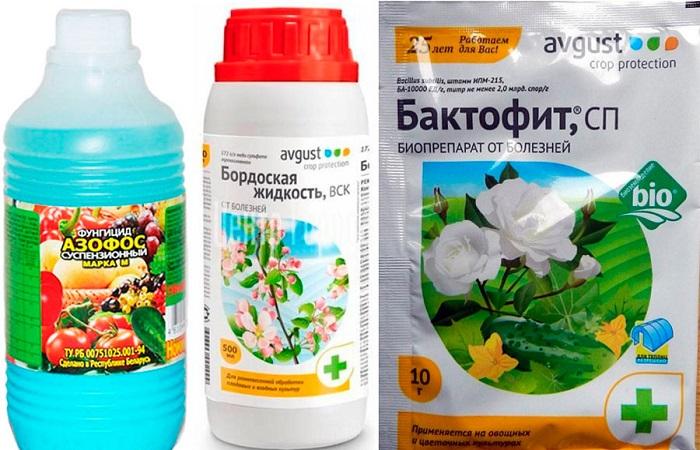
There are no full-fledged substitutes for Baktofit yet, but approximate analogues can be found on sale:
- Fitosporin.
- "Agate 25K".
- "Gamair".
- "Alirin B".
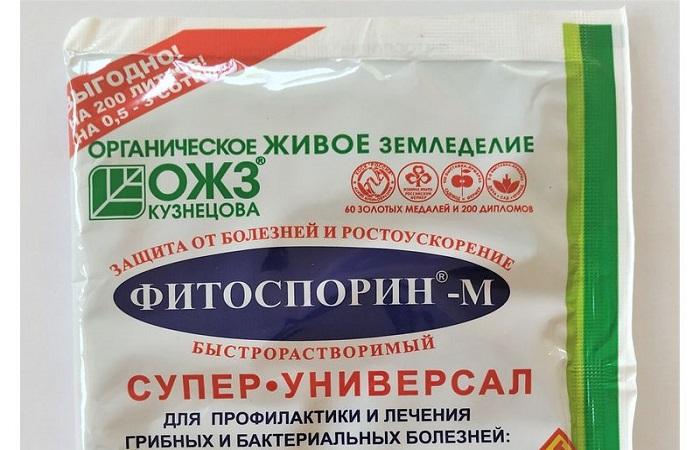
All of these products use derivatives of Bacillus subtilis as their main ingredients. Mikosan works similarly to Baktofit, but it's based on fungal byproducts.
This biological product is an excellent alternative to toxic chemicals, especially if plants need to be treated indoors or near bodies of water. When used correctly and in combination with advanced agricultural practices, it can increase yields by 10-15%.
Related posts:
 Causes and treatment of eggplant pests and diseases, how to combat them at home
 Types of garden fungicides and descriptions of the top 24 best, instructions for use
 The best eggplant varieties for growing in a polycarbonate greenhouse: planting and care
 Types of fungicides for cucumbers in a greenhouse and instructions for use
 How to control carrot flies with medications and folk remedies
 Nitrophoska composition and instructions for use of fertilizer, errors
 Instructions for using green soap against plant pests and its composition
 Instructions for use of Zircon and the composition of fertilizer for plants