
Farmers growing grapes for market sale and gardeners often face the problem of powdery mildew. Without effective prevention, it's impossible to harvest a high-quality crop. The fungicide "Collis" was developed by German specialists to combat powdery mildew pathogens. Before using the chemical, read the instructions for use, which specify the recommended dosage.
Composition, existing forms of release and purpose
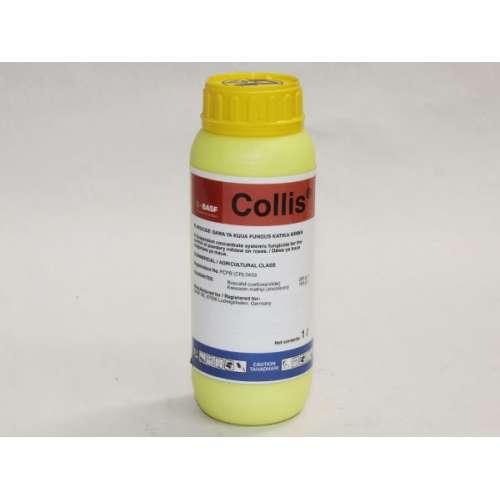
The Collis fungicide owes its effectiveness to its unique composition, which includes two active ingredients. The first active ingredient is boscalid, containing 200 grams per liter of the product. The second component is kresoxim-methyl, containing 100 grams per liter of the fungicide.
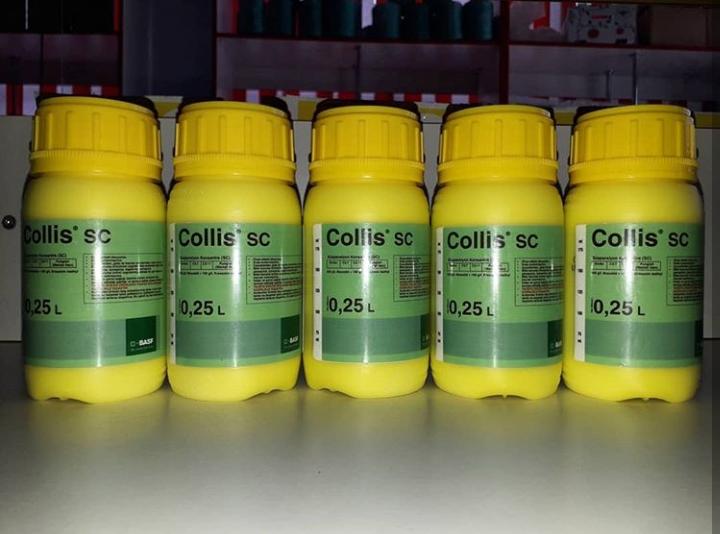
The German company BASF AG produces the fungicide "Collis" as an emulsifiable concentrate. It is packaged in 1-liter plastic bottles, making it popular among small-scale gardeners.
Mechanism of action
A systemic fungicide from German manufacturers works by blocking the metabolism of pathogenic microorganisms. Thanks to its two-component formula, Collis protects treated crops both externally and internally. This is due to the differential distribution of the active components within the crop. Boscalid is partially absorbed by the vines and spreads throughout them, blocking the energy supply and metabolic processes of pathogenic microorganisms. Kresoxim-methyl, upon contact with the plant surface, forms a strong protective film, thereby preventing fungal penetration into the plant tissue.
Although the instructions for use do not indicate that the drug is effective in combating gray mold, some gardeners, based on their own experience, claim that the fungicide prevents the development of this pathology.
Pros and cons of the product
Winegrowers using the Collis fungicide in their fields noted its strengths and weaknesses.
Among the disadvantages of the systemic fungicide is its rather high cost, which is due to the fact that the product is foreign-made.
Calculation of consumption
The effectiveness of a chemical directly depends on the correct dosage. If applied too low, the product will have no effect on pathogens, while exceeding the dosage will lead to phytotoxicity and damage the grapevine.
To treat 1 hectare of crops, use 400 to 650 ml of systemic fungicide. The same area requires up to 1,000 liters of working fluid. Vineyards are treated three times during the growing season, with 12 days between applications.
How to prepare a working mixture
It's recommended to prepare the working solution immediately before spraying to ensure the product retains its properties. Fill the sprayer tank with water (half the total volume) and add the manufacturer's recommended dose of fungicide. Then, turn on the mixer and wait for the product to dissolve. Finally, add the remaining water and mix again.
If any working fluid remains after finishing work, dispose of it according to safety regulations. Saving the solution for subsequent treatments is pointless, as it will lose its working properties.
Instructions for use
The first spraying of grapes is carried out at the inflorescence stage. Subsequent sprayings are carried out at 12-day intervals. It is important that the weather on the day of application be dry and clear, with minimal wind speed. The product requires time to form a protective film, so follow the weather forecast and apply the spray on a day when rain is not expected.

Precautionary measures
All work with chemicals is carried out in special clothing, the head is protected with a scarf, hands with gloves, and the respiratory tract with a respirator.
Degree of toxicity
The systemic fungicide "Collis" is classified as toxicity level 3. This chemical is particularly dangerous for aquatic life.
Possible compatibility
It is permissible to use Collis with other fungicidal preparations, however, before using in tank mixtures, a compatibility test is carried out.
How to store properly and expiration date
If the original packaging is intact, the chemical has a shelf life of 5 years. Store the product in a dark place where the temperature does not exceed 30 degrees Celsius.
Analogues
There is no analogue of Collis that is completely identical in composition. If necessary, it can be replaced with medications such as Thiovit Jet or Skor.
Related posts:
 Instructions for using Falcon fungicide for treating grapes
 Instructions for use and composition of the fungicide Fitosporin-M, application rates
 Instructions for use and composition of the fungicide Teldor, application rates
 Instructions for use and composition of the fungicide Raek, application rates and analogues
 Composition and instructions for use of the fungicide Kumulus, application rates and analogues
 Instructions for use and composition of the fungicide Shirlan, application rates and analogues
 Instructions for use and composition of the fungicide Fital, application rates and analogues
 Instructions for use and composition of the fungicide Oxyhom, application rates