
- Composition, existing forms of release and purpose
- Method of operation
- Advantages and disadvantages
- Calculation of consumption for different crops
- Fruit and berry trees
- Grape
- Cucumbers
- Potato
- How to prepare a working mixture
- Rules of application
- Safety precautions at work
- Degree of toxicity
- Possible compatibility
- Storage rules and periods
- Similar means
Fungal diseases cause significant damage to crops and reduce harvest yields. To protect against these pathogens, gardeners use chemicals. The instructions for the fungicide "Oxychom" state that it is effective in the treatment and prevention of downy mildew and other diseases affecting potatoes, grapes, and other crops. One of the product's advantages is its rapid action.
Composition, existing forms of release and purpose
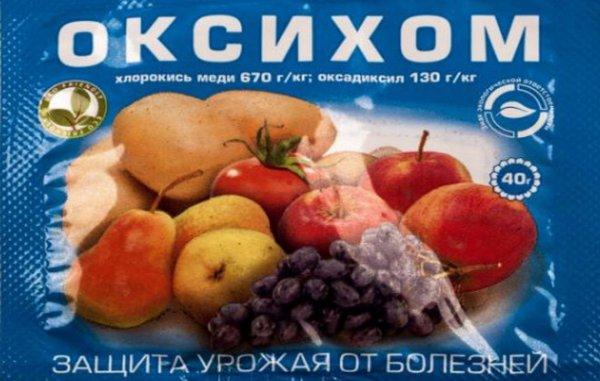
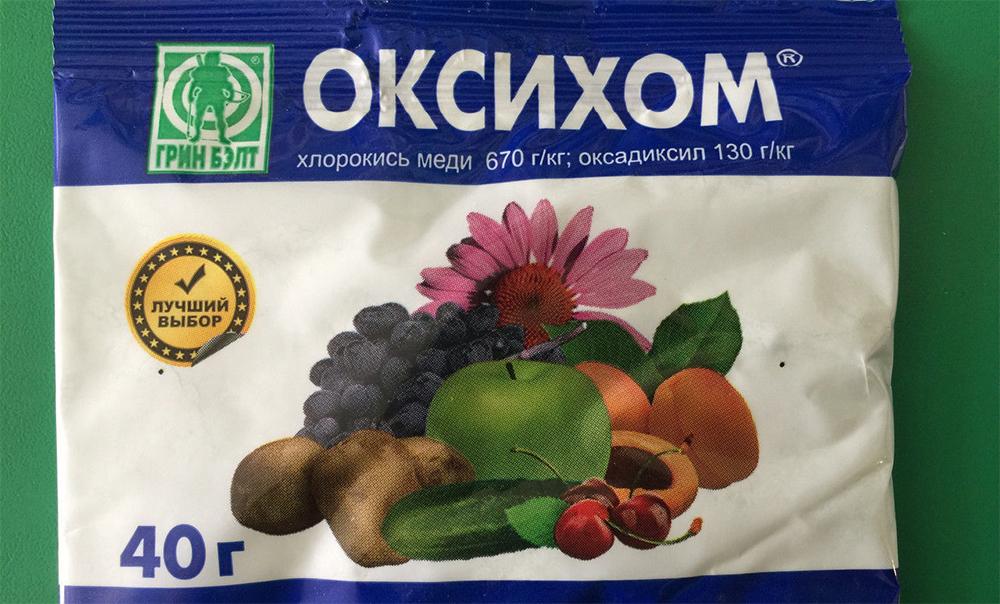
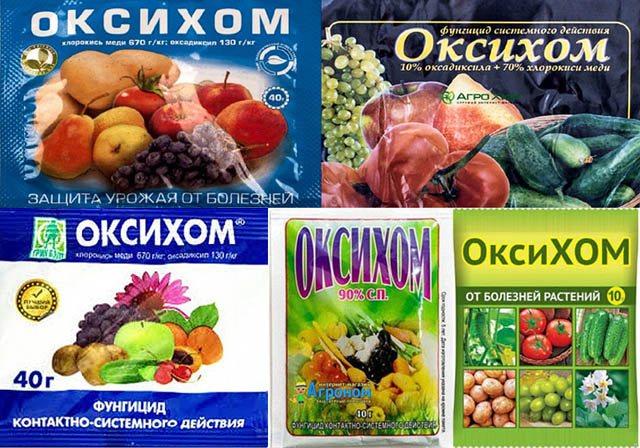
Two-component chemicals designed to combat pathogens are particularly popular among gardeners and farmers due to their high effectiveness. The contact-systemic fungicide "Oxychom" contains copper hydroxide at a concentration of 670 grams per kilogram and 130 grams of oxadixil. Both active ingredients belong to the chemical class of inorganic compounds.
The chemical is formulated as water-dispersible granules or wettable powder. "Oxychom" is packaged in 5-kilogram bags. Disposable 40-gram sachets are also available, a choice more often chosen by owners of smaller plots.
The instructions for use list the diseases against which the product is effective. These include Alternaria and late blight of potatoes, moniliosis and scab of apple trees, mildew of grapes, and clasterosporium of fruit and berry trees.
Method of operation
The fungicide's effectiveness is due to its two-component composition, which provides different effects on pathogens:
- Copper oxychloride penetrates the fungus spores within a few hours of spraying, completely destroying them. The component remains effective for three days.
- Oxadixil is characterized by a longer-lasting effect. It is gradually absorbed by the green mass of the crop plant and from there spreads to other parts, blocking protein synthesis. Its duration of action is two weeks.
Advantages and disadvantages
Gardeners and farmers who have already tested the systemic-contact fungicide on their plots have identified several advantages of the product.
One drawback of Oxyhom is that all fungicide spraying must be completed before flowering begins. If it gets into the fruit, it can be harmful to human health.
Calculation of consumption for different crops
Effectiveness against pathogens depends on adherence to the manufacturer's recommended application rates. Increasing the dosage may cause toxic damage to crops, while lower concentrations will not produce the desired results.
Fruit and berry trees
To spray pome and stone fruit trees, use 15 to 20 grams per 10 liters of purified water. For one hectare of trees, 15 liters of spray solution is required.
Grape
Grapevines are often affected by mildew. To spray one hectare of planting, use 10 liters of spray solution, prepared with 15-20 ml of the product per 10 liters of water.
Cucumbers
The application rate for cucumber beds depends on whether the crops are planted in a greenhouse or open ground. Add 20 grams of the solution to a 10-liter bucket of water and mix. For greenhouse and hotbed applications, use 2 liters per 10 square meters, while for outdoor applications, use 10 liters of the solution per hectare of planted area.

Potato
To treat potatoes against Alternaria and late blight, use 15 to 20 grams of fungicide per 10-liter bucket of water. The recommended application rate per hectare of field is 10 liters.
How to prepare a working mixture
Plants are treated with Oxyhom by spraying. Since one of the active ingredients, oxadixyl, quickly settles to the bottom, a sprayer with an agitator is used. The working solution is prepared immediately before application to crops.
First, prepare a stock solution. To do this, take the recommended dose of the chemical and stir it with a wooden stick in 1 liter of lukewarm water. Fill the sprayer tank with water, filtered to remove any particles that might clog the sprayer screen, until it's two-thirds full. Immediately pour in the prepared solution, keeping the stirrer running. Then add the remaining water and begin treating the plants.
Any remaining fungicide must be disposed of in accordance with safety regulations. Do not pour the chemical into water bodies or onto the ground.
Rules of application
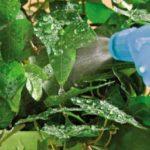
Spray plants in dry, clear weather. The optimal time is morning or evening. It's important to check the weather forecast in advance; rain falling within 24 hours of treatment will wash away the fungicide and reduce its effectiveness. When spraying, ensure the fungicide covers the plant surface in an even layer. Avoid allowing droplets to drip onto the soil, as this will create unprotected areas and significantly reduce the effectiveness of the treatment.
Safety precautions at work
When working with chemicals, observe basic safety precautions. Smoking, drinking, and eating are prohibited during this period. Protect your body with protective coveralls, your hands with gloves, and your head with a headscarf. To prevent fungicide vapors from entering your respiratory tract and causing irritation, be sure to use a respirator or mask.

After finishing work, all clothing should be washed and hung outdoors to dry. The person who performed the treatment should shower with detergent. If the fungicide accidentally gets into the mouth or eyes, seek immediate medical attention.

Degree of toxicity
According to the classification of pesticides and other chemicals, Oxychom belongs to toxicity class 3. It poses little risk to bees and aquatic life, but avoid spilling the solution on nectar-producing plants.
Possible compatibility
The only thing that Oxyhom fungicide should not be used with in tank mixes is highly alkaline chemicals. Before mixing with other plant protection products, conduct a compatibility test.
Storage rules and periods
The chemical's shelf life, when stored properly and in its original packaging, is 3 years. Store the fungicide in a non-residential area away from direct sunlight.
Similar means
The fungicide "Oxychom" can be replaced with preparations such as "Vector" or "Bayleton", but they have a different composition.
Related posts:
 Instructions for use and composition of the fungicide Fitosporin-M, application rates
 Instructions for using Falcon fungicide for treating grapes
 Instructions for use and composition of the fungicide Teldor, application rates
 Composition and instructions for use of the fungicide Kumulus, application rates and analogues
 Instructions for use and composition of the fungicide Raek, application rates and analogues
 Instructions for use and composition of the fungicide Optimo, application rates and analogues
 Types of garden fungicides and descriptions of the top 24 best, instructions for use
 Instructions for use and composition of the fungicide Zato, application rates and analogues