
- Composition, existing forms of release and purpose
- Mechanism of action
- Pros and cons
- How to prepare a working solution?
- Instructions for use and consumption rates
- Potato
- Tomatoes
- Grape
- Wheat
- Onion
- Barley
- How long does it last?
- Safety precautions
- Phytotoxicity
- Possible compatibility
- Storage rules and shelf life
- Similar means
Fungal infections of crops lead to reduced crop quality or even total crop failure. Once established, the disease is difficult to treat and requires significant effort. To prevent the spread of pathogenic spores, farmers use the contact fungicide "Bravo." This highly effective product helps combat infections in vegetable beds, wheat, and potatoes.
Composition, existing forms of release and purpose
The product contains the active ingredient chlorothalonil at a concentration of 500 grams per liter. To enhance adhesion, the manufacturers added adhesives and surfactants. "Bravo" belongs to the chemical class of organochlorine pesticides and is produced in the form of a concentrated suspension, packaged in 5-liter canisters.
The fungicide is designed to combat most types of pathogens causing fungal diseases of agricultural crops:
- late blight;
- Alternaria;
- downy mildew;
- spotting;
- powdery mildew;
- rust;
- septoria.
The product is equally effective on spring and winter wheat. "Bravo" is used by both large and small farms.

Mechanism of action
The additives contained in the product adhere to the surface of the foliage and become firmly attached. After precipitation, they form a protective film that continues to negatively affect pathogenic microflora.
Pros and cons

When working with pesticides, safety regulations must be observed.

How to prepare a working solution?
The suspension concentrate is diluted with water before use. To obtain the working solution, rinse the sprayer tank under running water, removing any residue from the walls. Fill the tank halfway with water, measure out the amount of product, and add it to the tank. Stir the contents, and add water until the desired volume is reached.
During spraying, the tank with the mixture is periodically shaken to prevent sediment from forming.
Instructions for use and consumption rates
The aqueous solution is used within 24 hours of preparation. Application directions, application rates, and consumption rates vary depending on the crop being treated. The product is used prophylactically. If plants are already infected, pre-treatment with curative herbicides is recommended. The instructions for use state that spraying should be done in the morning or evening, in calm, dry weather.

Potato
The crop is treated during the growing season. The first spraying is performed as a preventative measure or after the first signs of infection are detected. Subsequent treatments are repeated every 7-10 days. The recommended application rate is 400 liters per hectare. The product consumption rate is 2.2-3.0 liters per hectare.
Tomatoes
To prevent brown spot and late blight, spray the crop with the working solution during the growing season. According to the instructions, the first treatment is performed as a preventative measure. Apply 3 liters of the product per hectare. The recommended application rate is 400-600 liters per hectare. The treatment is performed three times per season, at 7-10 day intervals.

Grape
"Bravo" protects grapes from mildew, powdery mildew, and anthracnose. Dilute 25 grams of the product in 10 liters of water. Apply 4-5 liters of the solution per 100 square meters of area. Application begins in early spring. The last spraying should be no later than three weeks before harvest.
Wheat
The crop is susceptible to septoria leaf spot, rust, and powdery mildew. To prevent disease development, prepare a working solution using 2.5 liters of the solution per hectare. The recommended application rate is 300 liters per 100 square meters of area. Treatments are carried out twice per season, 40 days apart.
Onion
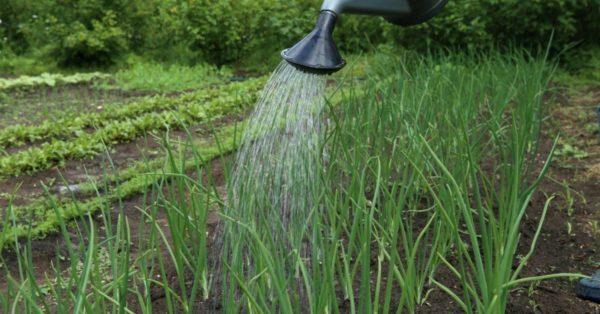
Downy mildew is the crop's main enemy. To protect the plant from this dangerous disease, prepare a solution using 3 liters of the solution per hectare. To treat 100 square meters of area, 300-400 liters of the working solution is sufficient. Spraying is carried out during the growing season at intervals of 7-10 days. A total of 3 treatments are performed per season.
Barley
To protect plants from stem rust and leaf spot, apply a single application of pesticide. Apply 2.5 liters of solution per hectare. The recommended application rate is 300 liters per hectare.
How long does it last?
The product's effectiveness lasts 1-3 weeks and varies depending on the crop being treated, weather conditions, and the severity of the infestation. The effectiveness period for manual work is 10 days, and for mechanized work, 3 days.
Safety precautions
The active ingredient degrades within 10-40 days after entering the soil. When entering water bodies, the substance remains active for a long time. Therefore, treatment is prohibited near water protection areas. Workers must wear protective clothing, a respirator, and gloves during the procedure. Care must be taken to avoid contact with exposed skin or mucous membranes.

In case of poisoning, the victim should receive first aid, then call a doctor. Treatment should be carried out in dry, windless weather.
Phytotoxicity
The fungicide is classified as hazard class 2 for humans and hazard class 3 for insects. Therefore, safety precautions must be strictly observed when working with this pesticide.
Possible compatibility
Bravo can be combined with other pesticides and fungicides, except for those with different application frequencies. Before mixing, check the chemicals for compatibility.
Storage rules and shelf life
Store the product out of the reach of children and animals, away from feed, food products, and medications. Bravo's shelf life is 3 years from the date of manufacture.

Similar means
Analogues of the active substance include:
- "Banco";
- Grammy;
- "Talent".
Bravo fungicide is considered a reliable protection for crops against fungal infections. When using the product, don't wait for the disease to manifest; it's better to use an effective herbicide as a preventative measure.
Related posts:
 Instructions for use of Siliplant and the composition of the fertilizer, pros and cons
 Types of fungicides for cucumbers in a greenhouse and instructions for use
 Instructions for use and composition of the fungicide Bayleton, application rates and analogues
 Instructions for use and application rates for Triafol, fungicide analogues
 Composition and instructions for use of the fungicide Thanos, application rates and analogues
 Instructions for use and composition of the fungicide Signum, application rates
 Instructions for use of Baktofit for plants and the composition of the fungicide
 Instructions for use and composition of the fungicide Koside, application rates and analogues