
To protect crops from diseases, both gardeners and farmers growing commercial crops use chemicals. Many new-generation products consist of two components, which enhances the product's effectiveness against pathogenic microorganisms. The instructions for the fungicide "Signum" recommend using it to treat a range of diseases affecting vegetable and fruit crops.
Composition, existing forms of release and purpose
The effectiveness of this innovative drug for killing pathogenic microorganisms is due to its composition. Signum consists of two active ingredients that belong to different classes of chemicals: pyraclostrobin and boxalide.
- The first component belongs to the strobilurin group of substances. It penetrates plant tissue and inhibits the energy conservation of fungal cells.
- The second substance is from the carboxamide group. After treatment, some of the boxalide penetrates into the plant tissue, while some remains on the surface.
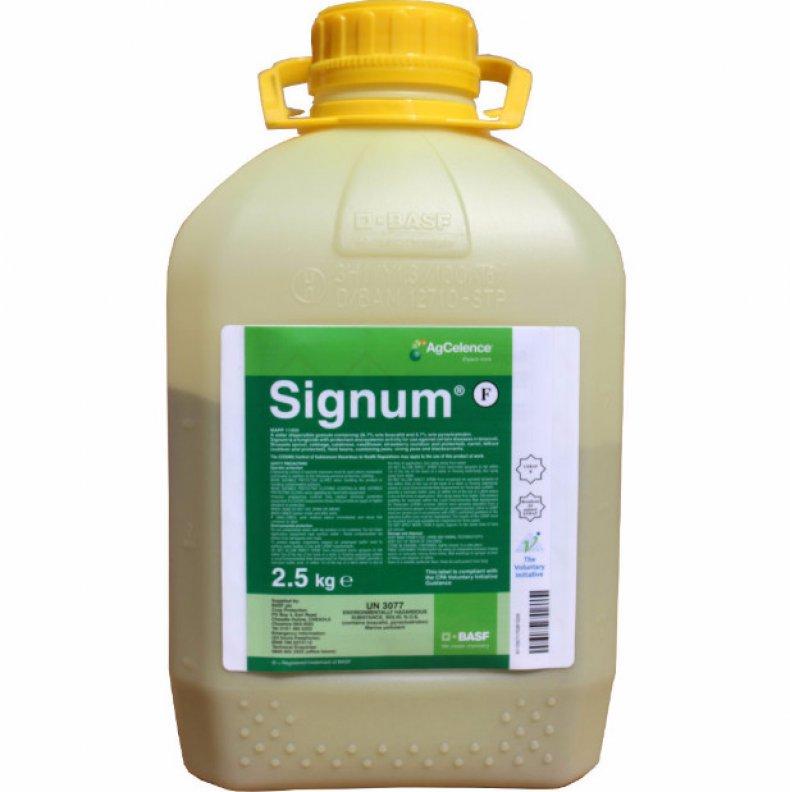
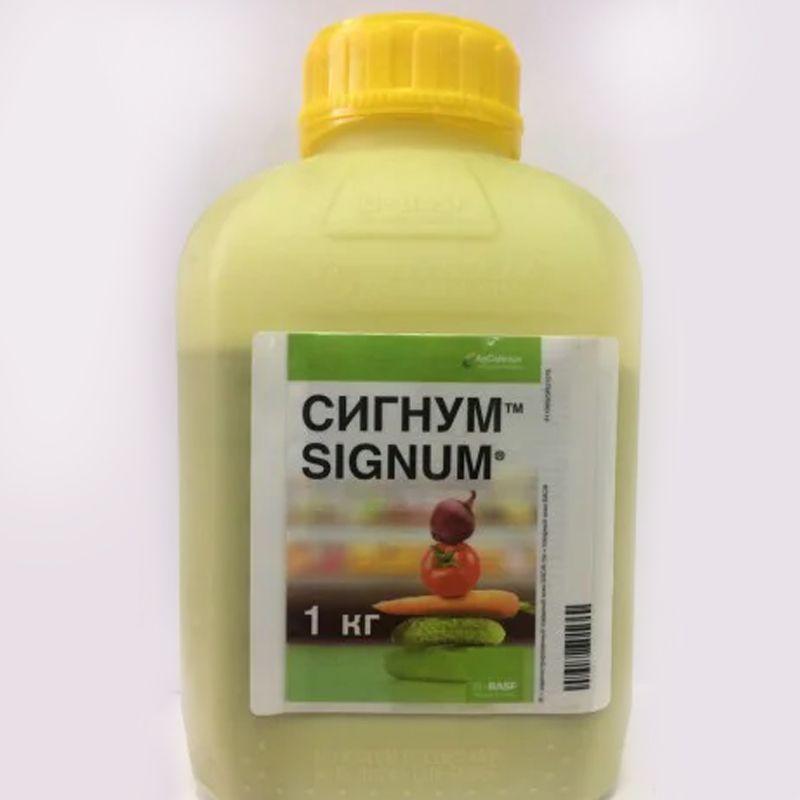
This fungicide is produced by the German company BASF and sold in the form of water-soluble granules. It is used for both treatment and prevention of diseases such as Alternaria leaf spot, gray mold, powdery mildew, and downy mildew. It is suitable for treating stone fruits, raspberries, strawberries, black currants, carrots, and cabbage.
Pros and cons
The new generation fungicide has many advantages over other chemicals, which gardeners note after using it.
The only drawback of the universal fungicide is that it has a weak effect on pathogenic microorganisms in advanced forms of stone fruit diseases.

Mechanism of action
Both active ingredients protect the crop from both sides, as they belong to different chemical groups. Their action inhibits the growth of fungal spores and prevents the formation of new ones. Since one of the active ingredients remains on the plant's surface, it prevents the penetration of microorganisms, creating a protective film.
How to prepare a working mixture
To ensure the effectiveness of the drug, prepare the solution correctly, following simple rules:
- Prepare water, the temperature of which should be between 10 and 16 degrees Celsius; the granules dissolve faster in such a liquid.
- A little less than half of the required volume of water is poured into the sprayer and the required amount of fungicide is added.
- Stir until the granules are completely dissolved and add the remaining water.

Instructions for use
Stone fruit crops are treated during the period of mass flowering and repeated after two weeks. Tomatoes and carrots are treated with a fungicide at the first sign of fungal diseases, twice during the growing season.
Consumption rates
The fungicide application rates for different crops are shown in the table:
| Plant | Norm of the drug | Consumption of working solution |
| Tomatoes | From 1 to 1.5 kg per hectare of field | From 300 to 600 liters per hectare, depending on the degree of crop damage |
| Stone fruit trees | From 1 to 1.25 kg per hectare of garden | From 1000 to 1200 liters per hectare of plantings |
| Carrot | From 750 grams to 1 kg per hectare of field | From 400 to 600 liters per hectare of beds |
| Potato | From 250 to 300 grams per hectare of plantings | From 400 to 600 liters per hectare of field |
How long does the effect last?
During the season, it is necessary to carry out two treatments with an interval of 2 weeks, in which case the plants will be completely protected from the harmful effects of pathogenic microorganisms.
Phytotoxicity
If the recommended rates of the fungicide are observed and the rules prescribed in the instructions for use are followed, the drug does not exhibit phytotoxicity.
Possible compatibility
Another advantage of Signum is its ability to be combined with other herbicides and insecticides in tank mixes. However, before mixing chemicals, it is necessary to test a small amount of each product.
Storage rules
The universal fungicide has a shelf life of 5 years from the date of manufacture when stored properly. Store in a cool, dark place, out of reach of children and pets.
Similar means
If necessary, the drug "Signum" can be replaced with the following chemical agents: "Topaz", "Quadris", "Skor", "Delan".
Related posts:
 Instructions for use and composition of the fungicide Fitosporin-M, application rates
 Composition and instructions for use of the fungicide Thanos, application rates and analogues
 Instructions for use and composition of the fungicide Raek, application rates and analogues
 Instructions for use and composition of the fungicide Teldor, application rates
 Instructions for use of Siliplant and the composition of the fertilizer, pros and cons
 Instructions for use and composition of the fungicide Ferazim, application rates
 Instructions for using Falcon fungicide for treating grapes
 Instructions for use and application rates for Triafol, fungicide analogues
How can a simple gardener calculate the dosage for 10 liters? Thank you.