
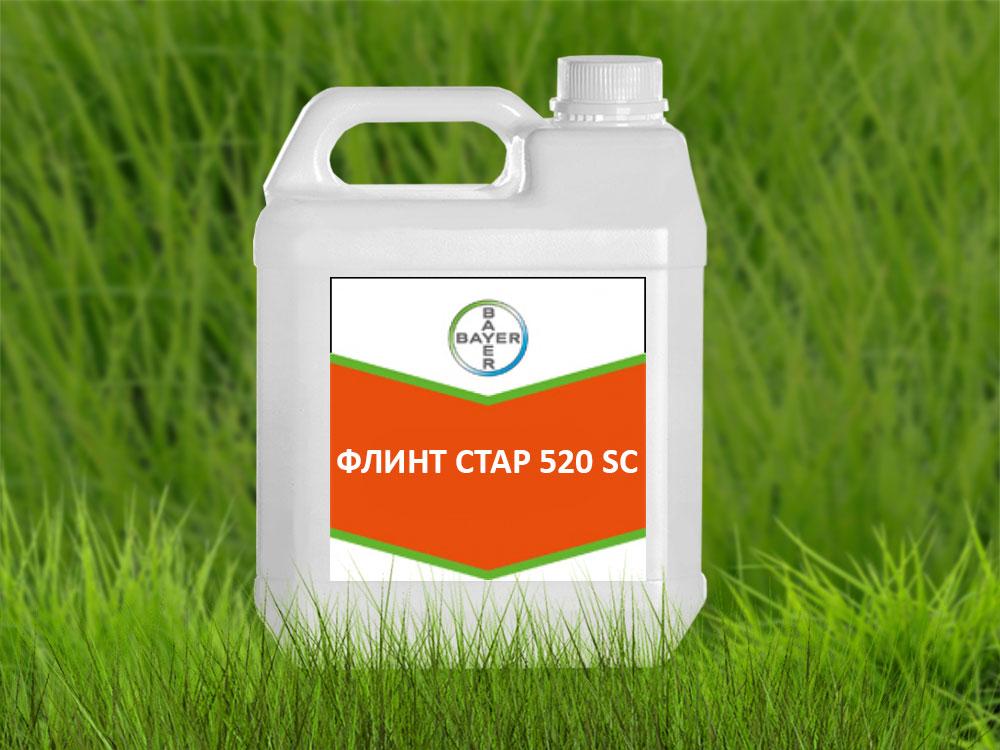
Grain crops, sugar beets, and sunflowers are susceptible to various diseases. Microbial attack leads to reduced or lost yields. The ideal solution for farmers trying to preserve their crops is the combined fungicide "Flint" from Bayer. This product not only protects plants from pests but also stops the spread of disease.
Purpose, composition and existing forms of release
The herbicide is available as an aqueous suspension concentrate packaged in 10-liter plastic containers. It belongs to the triazole class of chemicals. It contains:
- cyproconazole – 80 grams per liter of suspension;
- Epoxiconazole – 120 grams per liter.
The concentrated product is used to treat crops:
- cereals – from rust, powdery mildew, septoria and other infections;
- sugar beet - from powdery mildew, phomosis, cercospora;
- soybean – from anthracnose, alternaria blight, ascochyta blight;
- sunflower - from septoria, phomosis, rot, rust.
How does it work?
The main components of the product act quickly, penetrating the plant and moving acropetally. Cyproconazole inhibits sterol biosynthesis in fungal cells. Epoxiconazole suppresses ergosterol, disrupting the formation of fungal mycelial cell membranes. After infection, it prevents lesions and spore formation.
Pros of the product
In addition to direct contact, the fungicide acts translaminarly, penetrating into infected leaf tissues, blocking the development of mycelium.
How to prepare a working solution
Before using the fungicide, shake the container containing the suspension. Fill the sprayer tank halfway with water and turn on the agitator. Add the required amount of the product and mix the contents. Add water until the volume is full and mix thoroughly again.
To ensure homogeneity of the finished solution, the container is shaken periodically during processing.
Instructions for use and consumption calculation
Flint fungicide is applied to crops 2-3 times per season, depending on the plant species. The waiting period between applications is 3 weeks. Work is carried out in dry weather with minimal wind speed to ensure even coverage of the stems and leaves. The first application is carried out when disease symptoms are detected. Sugar beets are treated when the disease has developed, with infection levels no higher than 4%.

Directions for use:
| Culture | Consumption rate, l/ha | Pests | Method and period of processing |
| Wheat | 0.6-0.8 | Rust, powdery mildew, septoria, pyrenophorosis, rhynchosporium | Spraying during the growing season |
| Barley | Rust, powdery mildew, spotting | ||
| Beet | Phoma, powdery mildew, cercospora |
The consumption of working fluid is 200-400 liters per 1 hectare of area.
Safety precautions at work
When handling the chemical, wear protective clothing, gloves, and a mask. Avoid inhaling or contact with skin. If the product accidentally comes into contact with the skin, immediately rinse the affected area with running water. Dispose of any unused solution.

Possible compatibility
The fungicide "Flint" is combined with other products for preventative and treatment purposes. The exceptions are products with a highly acidic or highly alkaline reaction.
Storage rules and shelf life
The storage temperature range is 0 to +30°C. The suspension is stored in an airtight container for two years from the date of production.
Similar means
The fungicide "Rakurs" is a similar active ingredient. This effective two-component pesticide has a systemic effect and is suitable for controlling most types of pests of grain crops and soybeans.

Flint fungicide is a latest-generation product. Its unique composition provides dual action, effectively protecting crops from fungal diseases. The different modes of action of its active ingredients prevent pathogens from developing resistance.
Related posts:
 Instructions for use and composition of the fungicide Raek, application rates and analogues
 The best eggplant varieties for growing in a polycarbonate greenhouse: planting and care
 Instructions for use and composition of the fungicide Teldor, application rates
 List of the top 16 fungicides for grapes and instructions for their use
 Instructions for use and composition of the fungicide Consento, application rates
 Instructions for using Falcon fungicide for treating grapes
 Instructions for use and composition of the fungicide Switch, application rates, and analogues
 Instructions for use and composition of the fungicide Metaxil, application rates