
- Composition, existing forms of release and purpose
- Mode of action
- How quickly does it work?
- How long does the effect last?
- Calculation of consumption for different plants
- Preparation of the working mixture
- How to use correctly
- Is resistance possible?
- Safety precautions at work
- Degree of toxicity
- Is it compatible with other drugs?
- How to store properly and expiration date
- Similar means
When gardeners plant vegetables and fruit trees, they expect a bountiful harvest. However, in some cases, fungal infections cause crops to die without producing fruit. To protect plants, it's recommended to use chemicals that prevent infection. The instructions for the fungicide Metaxil recommend purchasing a product specifically designed for cucumbers, potatoes, and grapes.
Composition, existing forms of release and purpose
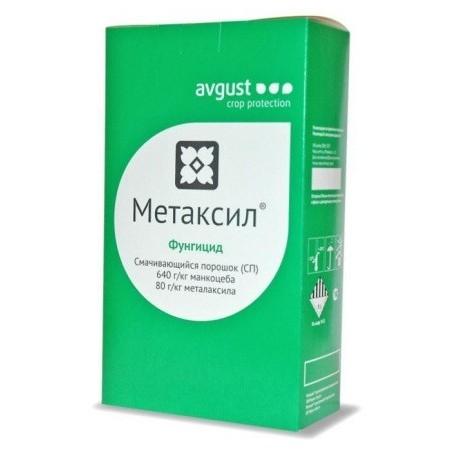
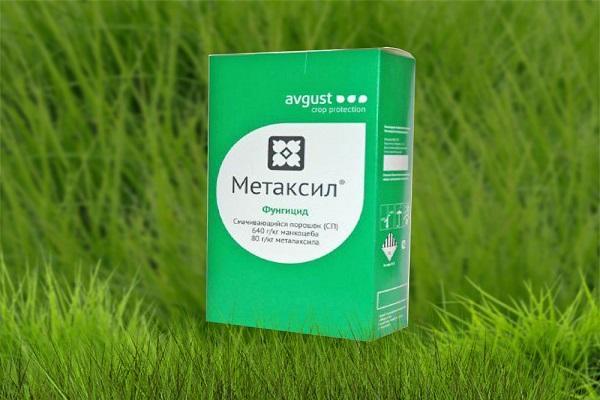
Two-component crop sprays are increasingly attracting the attention of gardeners and farmers. Their balanced composition allows them to target pathogens from both sides. The systemic and contact fungicide "Metaxyl" has two active ingredients that contribute to its effectiveness: mancozeb, containing 640 grams per kilogram, and metalaxyl at a concentration of 80 grams per kilogram.
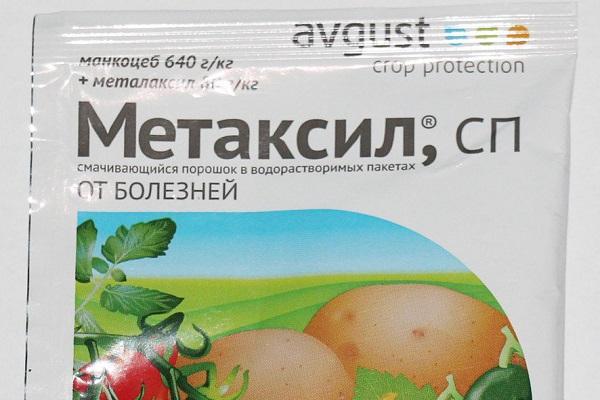
The fungicide is available commercially as a wettable powder, packaged in 1, 2, and 12 kilogram quantities. Smaller boxes are ideal for small garden plots, while bags are convenient for farmers cultivating large fields of crops.
The instructions for use indicate that the fungicide is effective against downy mildew fungi that affect potatoes, cucumbers, tomatoes, and grapevines.
Mode of action
The two active ingredients in Metaxil act on pathogens from different angles:
- Metalaxyl is absorbed into the roots and leaves of the cultivated plant, slowing and disrupting mitosis. Gradually, the active ingredient penetrates the young parts of the treated crop, exerting a curative and therapeutic effect.
- When dissolved in water, Mancozeb produces ethylene bisisothiocyanate sulfide. When exposed to ultraviolet light, it converts to ethylene bisisothiocyanate. Exposure to these components inhibits the maturation of fungal spores and reduces the spread of pathogens within plant tissue.
When using the fungicide on their plots, gardeners identified several advantages of the product:
- No phytotoxicity when recommended application rates are observed.
- Simultaneous systemic and contact action after treatment.
- The speed of penetration of active substances into crop tissues and distribution through leaves and roots.
- Long lasting effect after spraying.
- The possibility of using the drug both for the treatment of plants and for the prevention of diseases.
- Protective effect due to the film on the surface of the crop.
How quickly does it work?
After treating crops with a fungicide, the first symptoms of pathogen death are observed within a few days. Complete destruction of pathogens occurs within 6-10 days, depending on the plant being treated.
How long does the effect last?
The protective effect after spraying lasts for two weeks. After this period, repeat treatments are permitted. However, it's important to remember that no more than three sprayings are allowed per season.
Calculation of consumption for different plants
Before preparing a working solution, it's important to check the manufacturer's recommended dosage to ensure maximum results. Application rates for different plants are listed in the table.
| Cultivated crop | Pathogen | Fungicide consumption rate | Number of treatments per season |
| Cucumbers sown in open ground | Peronosporosis | 2.5 kg per hectare of field | No more than 3 times |
| Tomatoes | Alternaria and late blight | 2.5 kg per hectare of plantings | No more than 3 times |
| Potato | Alternaria and late blight | From 2 to 2.5 kg per hectare of field | No more than 3 times |
| Vine | Mildew | From 2 to 2.5 kg per hectare of plantation | No more than 3 times |
Preparation of the working mixture
The spray liquid is prepared immediately before starting work so that it does not lose its effectiveness.

This is done according to the following algorithm:
- Purified water (half of the total volume) is poured into the spray tank.
- Pour in the powder and turn on the stirrer.
- After this, add the remaining water and mix thoroughly again until smooth.
- The working liquid must be used within several hours after preparation.
If any solution remains, dispose of it safely. Do not pour the chemical into water bodies or onto the ground.
How to use correctly
Spray crops on a dry, clear day. The components need some time to form a protective film on the surface of the leaves and fruits, so rain is undesirable on this day. It is recommended to apply the spray early in the morning or in the evening, when wind speed is minimal.
Is resistance possible?
Thanks to the balanced two-component formula, the risk of developing resistance is minimal. However, to avoid this, it's best to use different protective products.
Safety precautions at work
When spraying with the chemical, wear protective clothing only—coveralls, gloves, and a headscarf. To prevent accidental inhalation of fungicide vapors during treatment, wear a respirator. After finishing work, wash all clothing and take a shower to remove any traces of the chemical.
Degree of toxicity
The fungicide "Metaxil" belongs to the second class of toxicity for humans and warm-blooded animals and to the 3rd class for beneficial insects.
Is it compatible with other drugs?
The fungicide "Metaxil" can be used in tank mixes with other chemicals, subject to a prior compatibility test. The only restriction applies to alkaline chemicals.
How to store properly and expiration date
If the original packaging is intact and the storage instructions are followed, the product has a shelf life of 3 years. Store the fungicide in outbuildings protected from sunlight and at temperatures below 30 degrees Celsius.

Similar means
If necessary, the drug "Metaxil" is replaced with such drugs as "Ridomil Gold" or "Healer".
Related posts:
 The best eggplant varieties for growing in a polycarbonate greenhouse: planting and care
 Instructions for use and composition of the fungicide Teldor, application rates
 Instructions for use and composition of the fungicide Raek, application rates and analogues
 List of the top 16 fungicides for grapes and instructions for their use
 Instructions for using Falcon fungicide for treating grapes
 Types of garden fungicides and descriptions of the top 24 best, instructions for use
 Instructions for use and composition of the fungicide Consento, application rates
 Instructions for use and composition of the fungicide Fitosporin-M, application rates