Weed control chemicals are especially popular among farmers growing crops for sale. Before choosing a product, it's important to understand its intended use and application guidelines to ensure the desired results. The instructions for the herbicide "Fenisan" state that it should be used to control annual and some perennial weeds in grain fields.
Composition and release form
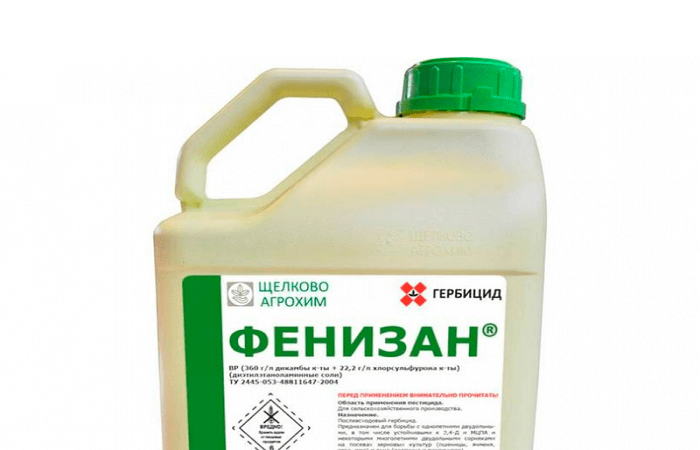
The effectiveness of the herbicide "Fenisan" is due to the presence of two active ingredients from different chemical classes. This combination prevents weeds from developing resistance, and the chemical can be used for several seasons in a row. The first ingredient is dicamba at a concentration of 360 grams per liter of the product, and the second is chlorsulfuron at a concentration of 22.2 grams per liter.
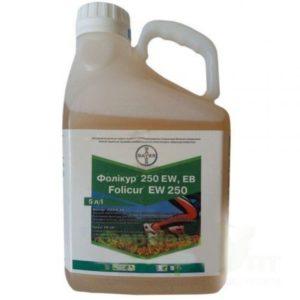
This post-emergence herbicide is produced by a domestic manufacturer in the form of an aqueous concentrate, packaged in 5-liter plastic canisters.
Operating principle
The herbicide "Fenisan" is a post-emergence product, meaning it should be applied when weeds emerge above the soil surface. The chemical has no effect on weeds that have not yet emerged. The first active ingredient (dicamba), when absorbed into plant tissue, inhibits grass growth. A few hours after application, the weeds stop robbing the crops of nutrients and die.
The second active ingredient (chlorsulfuron) inhibits the production of amino acids necessary for weed development. The active components require four hours to penetrate the weed tissue and begin their destructive effect. Over the next two weeks, discoloration and elongation of the plant shoots are observed, after which they completely dry out. Due to the selective action of the product, it has no negative impact on crop plants.
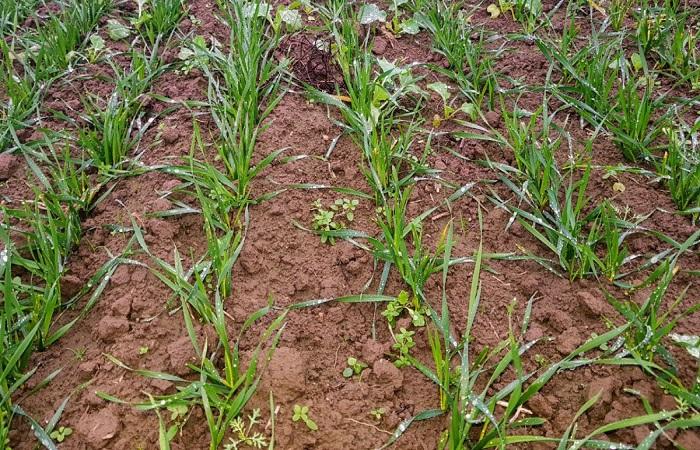
The herbicide "Fenisan" is recommended for use in grain fields to control weeds such as pigweed, dandelion, field bindweed, deadnettle, blue cornflower, cocklebur, and other annual and perennial grasses. The chemical is most effective in the early stages of weed development.
Pros and cons
After testing the herbicide's performance in practice, farmers noted several strengths. They cite the following as advantages of Fenizan:
- a balanced composition of active ingredients that ensures rapid destruction of contaminants;
- the ability to destroy weeds of different groups;
- rapid decomposition of the chemical in the soil, which makes it possible to plant any crops in this place in the future;
- low susceptibility of the active components of the drug to the effects of weather and climatic conditions, which makes it possible to use it in any region;
- the need for one field treatment per season;
- absence of phytotoxicity when the consumption rates specified in the instructions are observed;
- convenience of the dosage form.
The herbicide's disadvantages include its low effectiveness in treating overgrown weeds and its lack of effect on weed seeds.
Calculation of consumption
The instructions for use included with each herbicide canister specify the application rate. If the herbicide is applied from the ground, the application rate will increase, while it will decrease with aerial spraying.
Preparation of the working mixture
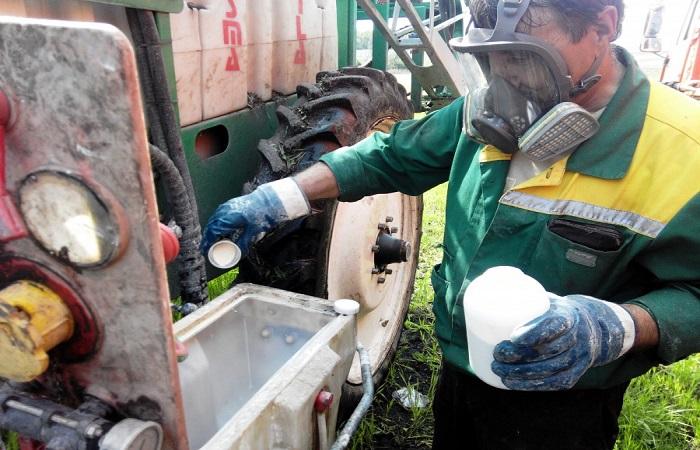
Prepare the spray solution immediately before use on specially equipped (concrete) areas to prevent accidental spills from contaminating the soil. Pour half the solution's volume of water into the sprayer tank, add the prescribed dose of herbicide, and turn on the agitator. Wait until the chemical dissolves completely, then add the remaining water, keeping the agitator running.
Instructions for use
The best time to control weeds is when they are in the seedling stage. Choose a dry, windless day with temperatures no higher than 25 degrees Celsius. Spraying is best done in the morning or evening, when there is no rain in the forecast.
The remaining working solution is disposed of in accordance with safety requirements.
Safety precautions
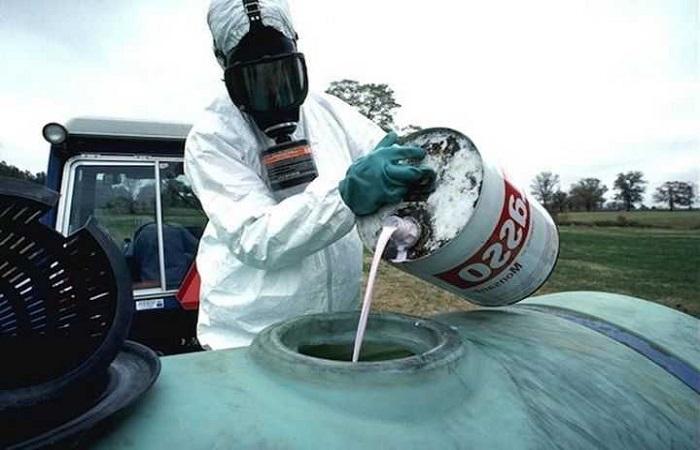
Farmers treating fields with herbicides must adhere to safety precautions to avoid harming their health. They must wear full-body clothing and high boots. Rubber gloves and a respirator are also essential to prevent exposure to chemical fumes.
After finishing work, be sure to shower and wash clothes. If the liquid accidentally comes into contact with skin or mucous membranes, rinse with plenty of running water. If irritation or redness occurs, seek medical attention.
How toxic is it?
The herbicide "Fenisan" is classified as a moderately hazardous substance (toxicity class 3), so personal protective equipment is used when working with it.
Possible compatibility
The chemical is approved for use in tank mixtures with other insecticides and herbicides, but it is recommended to conduct a test first, using a small amount of each product.
Storage terms and conditions
The herbicide has a shelf life of two years when stored properly. Store the chemical in a dark, dry place, locked to prevent access by children and pets.
Analogues
If Fenisan is not available for sale, it can be replaced with the herbicide Cowboy.
Related posts:
 Instructions for use of the fungicide Topaz for plants, composition and analogues
 Instructions for use of the Colorado potato beetle repellent Commander
 The best eggplant varieties for growing in a polycarbonate greenhouse: planting and care
 Nitrophoska composition and instructions for use of fertilizer, errors
 Instructions for use and application rates of the fungicide Horus for different crops
 Instructions for use and composition of the herbicide Aksifor, dosage and analogues
 Composition and instructions for use of the fungicide Strobi, dosage and analogues
 Methods for planting and propagating cherries at home