
Crop plants often suffer from pathogens that cause fungal diseases. To prevent infection and crop damage, farmers use fungicides on their fields. Some chemicals not only prevent the development of diseases but also promote vigorous crop growth. The fungicide Folicur is one such product. The instructions for use specify the optimal dosage and instructions for preparing the working solution.
Composition, existing forms of release and purpose
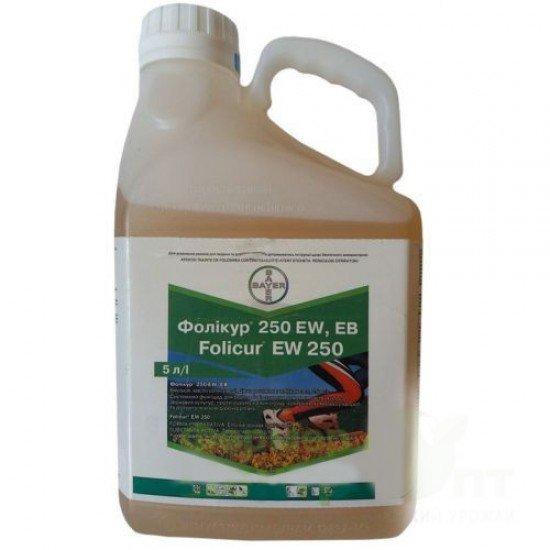
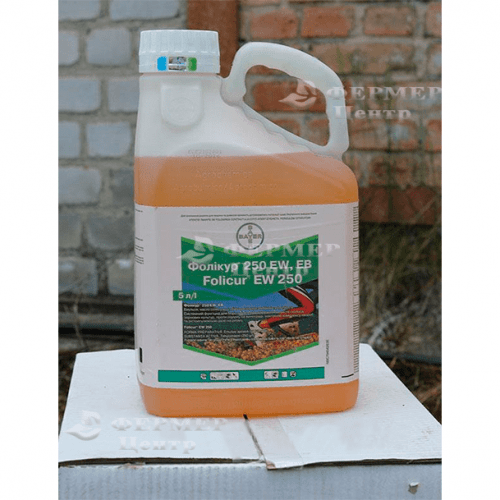
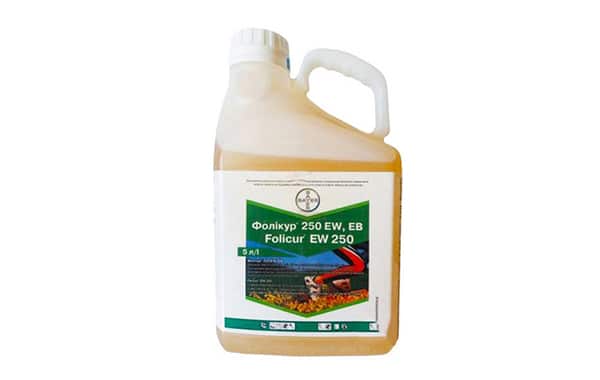
The systemic fungicide contains only one active ingredient: tebuconazole, a member of the triazole class of chemicals. One liter of the product contains 250 grams of this active ingredient. The German company Bayer produces a chemical product in the form of an emulsifiable concentrate. The fungicide is packaged in 5-liter plastic canisters.
The instructions for use state that this systemic fungicide is intended to protect grain crops, rapeseed, and grapes from fungal diseases. It also controls the growth of winter rapeseed.
How does the product work?
Tebuconazole, unlike the active ingredients of other pesticides, has the unique property of inhibiting ergosterol biosynthesis in the cell membranes of pathogenic microorganisms. Treating seeds with the preparation before sowing reduces the risk of subsequent infection by various rots and molds.
Pros and cons
During the use of the systemic fungicide in their fields, domestic and European farmers have identified several advantages of the chemical.
The disadvantage is that the systemic fungicide is only permitted for use on grain crops and rapeseed.

Calculation of consumption
The instructions for use specify application rates for Folicur fungicide for different plants. The dosage is presented in the table.
| Culture | Diseases | Chemical norm | Frequency of use |
| Spring and winter barley | Powdery mildew and rust, rhynchosporium and pyrenophorosis | 1 liter per hectare of field | One time |
| Spring and winter wheat | All types of rust | 500 ml per hectare | No more than 2 times per season |
| Rape | Sclerotinia and Alternaria leaf spot | 1 liter per hectare | Twice a season |
| Oats | Powdery mildew and red-brown spot | 1 liter per hectare | One time |
| Rye | Fusarium head blight and rhynchosporium blight | 1 liter per hectare | Up to 2 times per season |
| Grape | Oidium | 400 ml per hectare | Up to 3 times per season |
How to prepare a working mixture
Prepare the working solution before spraying crops. Fill the tank with half the water and add the recommended dose of the product. Turn on the mixer and wait until the emulsion is completely dissolved. Add liquid to the top of the sprayer and mix again until smooth.
Any remaining solution after treatment must be disposed of in accordance with safety regulations. Disposing of fungicide into water bodies is strictly prohibited.
Rules of application
Work should be carried out on a clear day with minimal wind speed to prevent the solution from spilling onto adjacent plantings. Although the product quickly penetrates plant tissue, rain on this day is undesirable.
Precautions for handling
When working with a systemic fungicide, certain rules must be followed. Wear overalls and rubber gloves. To prevent the product from entering the respiratory tract, protect your hands with a respirator.
After treatment, all clothing should be washed and hung outside to air. Anyone who handled the chemical should shower with soap to remove any remaining residue. If the chemical comes into contact with eyes or mucous membranes, rinse with running water and seek medical attention.
Phytotoxicity
If you adhere to the recommended application rates, toxic effects on crops can be avoided.
Possible compatibility
Folicur can be used in tank mixes with many fungicides and insecticides. However, before treating grain crops, chemical compatibility should be tested using a small amount of each product.
How and how long can it be stored?
The shelf life of the systemic fungicide is 4 years from the date of manufacture. Store the chemical in a utility room away from sunlight and at a temperature not exceeding 35 degrees Celsius.
Similar means
If necessary, it is permitted to replace “Folicur” with chemicals such as “Unical” or “Polygard”.
Related posts:
 Instructions for using Falcon fungicide for treating grapes
 Instructions for use and composition of the fungicide Teldor, application rates
 Instructions for use and composition of the fungicide Raek, application rates and analogues
 Instructions for use and composition of the fungicide Fitosporin-M, application rates
 Composition and instructions for use of the fungicide Thanos, application rates and analogues
 Instructions for use and composition of the fungicide Bayzafon, dosage and analogues
 Types of garden fungicides and descriptions of the top 24 best, instructions for use
 Instructions for use and composition of the fungicide Signum, application rates