
- Composition and existing forms of release
- What weeds does it work on?
- Mechanism of action
- How long does the effect last?
- How quickly does it work?
- Is there resistance?
- How does it affect crop rotation?
- Advantages and disadvantages
- Calculation of drug consumption
- Preparation of the working mixture
- Terms of Use
- Precautionary measures
- Phytotoxicity
- Possible compatibility
- Storage rules
- Similar means
Gardeners and farmers who grow onions in their gardens face the need to control weeds. These weeds not only choke out the plants, depriving them of sunlight, but also deprive them of the nutrients they need for proper development. The instructions for the herbicide "Akzifor" recommend using this chemical for the effective control of annual and biennial weeds in onion beds.
Composition and existing forms of release
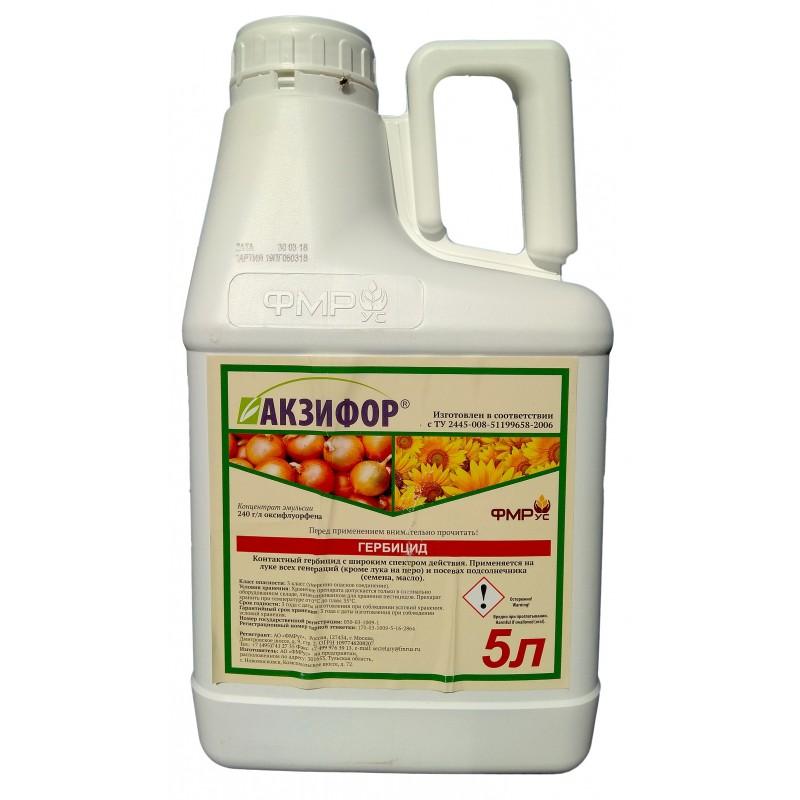
Akzifor is a selective herbicide with a single active ingredient. One liter of the chemical contains 250 grams of oxyfluorfen. The herbicide is sold as an emulsifiable concentrate packaged in 5-liter plastic canisters. It is manufactured by the Russian company FMRus.
What weeds does it work on?
Akzifor is most often used to treat onion and sunflower crops, but the instructions state that the systemic herbicide is approved for use on ornamental plants and orchards (a total of 50 plants). Thanks to its active ingredient, the chemical quickly kills perennial and some annual weeds. These include herbs such as amaranth and bedstraw, shepherd's purse and deadnettle, ragweed and goosefoot, fumitory, and chamomile.
Mechanism of action
After treatment, the herbicide's active ingredient quickly penetrates all weed tissues through the leaves and root system. This causes deformation of the weed's cells and drying of the plant tissue. Furthermore, the chemical creates a protective herbicide screen on the soil surface; upon germination, weeds are killed by the oxyfluorfen.
To avoid damaging the protective layer, weeding should be postponed for three weeks, as should loosening the soil. Akzifor works by direct contact with weeds in the growing season. Perennial grass seedlings die off almost instantly.

How long does the effect last?
The duration of the protective effect after treatment depends on how long the film remains on the soil surface. If the herbicide screen is intact and the weather is cool and cloudy, the chemical will remain on the soil longer. When exposed to sunlight and heat, it decomposes more quickly and no longer prevents new weeds from emerging.
How quickly does it work?
When an herbicide is applied to weeds during the growing season, the first signs of weed death are observed within a few hours of the substance's contact with their tissue. If a farmer uses the product as a protective screen on the soil, the results become noticeable when the plants emerge.
The death of grasses at the sprout stage occurs immediately after treatment, due to damage to the apical growth point.
Is there resistance?
When the rules and dosage of the selective herbicide were observed, no cases of resistance were recorded.
How does it affect crop rotation?
If a field or garden bed has been treated with the herbicide "Akzifor," any crops can be planted in that area the following season, as the active ingredient does not have a negative impact on the soil and quickly decomposes in the ground.
Advantages and disadvantages
Farmers and gardeners have praised the herbicide's performance after using it on their plots. They cite the following advantages of the chemical:
- A wide range of weeds against which chemical agents are effective.
- No toxic effect on crop plants.
- Economical consumption of the drug and convenient release form.
- Can be used as both pre-emergence and post-emergence herbicide.
- Increased growth of cultivated plants after using the preparation and increased germination of seed material.
- Safety for crops during crop rotation.
- Can be used with other chemicals in tank mixtures after preliminary testing.
- Speed of action on weeds.
Farmers noted the herbicide's drawbacks, including the impossibility of loosening the soil during its use, to avoid damaging the protective screen.
Calculation of drug consumption
To ensure the desired effect of Akzifor herbicide on weeds, adhere to the manufacturer's recommended application rates. Reducing the chemical concentration in the working solution will reduce its effectiveness.
Consumption rates specified in the instructions are presented in the table:
| Cultivated plant | Weed | The dosage rate of the drug | Consumption rate of the prepared working fluid |
| Onions (except for those intended for their feathers) | Annual cereal grasses | From 500 ml to 1 liter per hectare of plantings, depending on the weed infestation of the area | From is used per hectare of field 200 to 300 liters of solution, single treatment |
| Sunflower | Cereal annuals | From 800 ml to 1 liter per hectare of field | To treat 1 hectare of plantings, take 200 to 300 liters of working solution, spray once |
Preparation of the working mixture
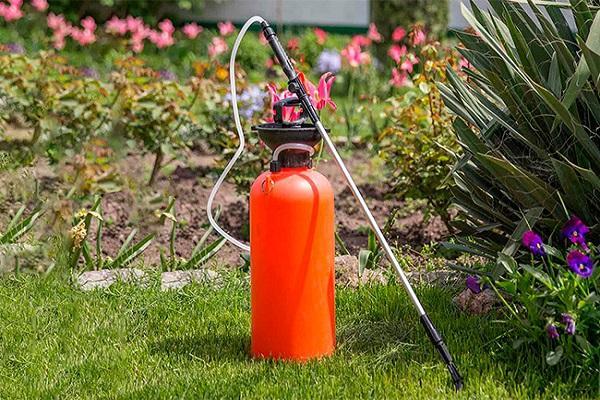
Prepare the weed treatment solution before spraying to ensure the active ingredient remains effective. Fill the sprayer with water (up to half the volume), ensuring it's not too cold. Add the prescribed amount of herbicide and turn on the mixer until the chemical is completely dissolved. Then top up the solution and stir again. Immediately begin treating the weeds.

Terms of Use
Weed spraying can begin at any stage of their growth. It's crucial that the day be clear and no rain is expected soon, as the spray needs time to penetrate the grass tissue and form a protective barrier on the soil surface. Wind speed on this day should not exceed 4 m/s.
Precautionary measures
Any chemical used to treat weeds requires safety precautions. Work should be done only while wearing protective suits and gloves to avoid skin contact. Protect your respiratory system with a mask or respirator, and wear goggles.
After finishing work, take a shower and change into clean clothes. Wash the coveralls and hang them out to air. If a chemical is accidentally swallowed, take several tablets of activated charcoal and seek medical attention, remembering to bring the label with you.

Phytotoxicity
No phytotoxicity has been observed with this product, but it's important to adhere to the recommended dosage to avoid damage to crops. Avoid spraying if corn or sunflowers are stressed. Also, avoid using the herbicide on diseased plants.
Possible compatibility
Before using Akzifor in tank mixes with other products, conduct a chemical compatibility test using a small amount of each product. If a flake-like sediment is visible, discontinue use to avoid harming the crops.
Storage rules
The shelf life of the selective herbicide, as stated in the instructions, is 3 years from the date of manufacture. However, the product must be stored in its original, sealed packaging, away from sunlight. Store in a utility room out of reach of children. The maximum permissible storage temperature is 30 degrees Celsius.
Similar means
If the store does not have the herbicide "Akzifor", it can be replaced with the following preparations:
- Goal 2E. This product is designed to kill annual weeds during both the pre- and post-emergence periods. It does not adversely affect subsequent crop rotation.
- "Galigan." It contains the same active ingredient as "Akzifor." It was developed to combat annual weeds that choke onion and sunflower crops.
Before using any analogue, carefully read the attached instructions.
Related posts:
 Hermes herbicide instructions for use, dosage, and analogues
 Luger herbicide instructions for use, dosage, and analogues
 Instructions for use and composition of the herbicide Basis, application rates and analogues
 Instructions for use and composition of the herbicide Fabian, application rates and analogues
 Instructions for use and composition of the herbicide Pivot, dosage and analogues
 Instructions for use and composition of the herbicide Callisto, dosage and analogues
 Instructions for use of the continuous herbicide Rap, its composition and dosage
 Instructions for use of the soil herbicide Merlin, dosage and analogues