
- Composition, dosage form and purpose
- Operating principle
- How quickly does it work?
- How long does the effect last?
- Pros and cons
- How much of the drug is consumed?
- How to prepare and use the working mixture
- Safety precautions
- Degree of phytotoxicity
- Is there resistance?
- Possible compatibility
- How to store it correctly and for how long
- Analogues
Farmers who plant grain crops use herbicides to protect their crops from weeds. Both domestic and imported chemicals are available in specialty stores. When choosing a product, consider the specific weeds it is effective against. Luger, a two-component herbicide, is effective against both annual and perennial dicotyledonous plants.
Composition, dosage form and purpose
The herbicide "Luger" consists of two active ingredients, which provide its high effectiveness against a range of weeds. The first active ingredient is 2,4-D (2-ethylhexyl ether), which belongs to the chemical class of aryloxyalkanecarboxylic acids; its concentration per liter is 300 grams. The second component of this selective herbicide is florasulam, a triazolopyrimidine; one liter of the product contains 6.25 grams of the substance.

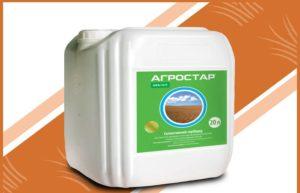
Luger is available in gardening stores as a suspension emulsion packaged in 5-liter plastic canisters. The herbicide is manufactured by the Hungarian company Peters and Burg.
A selective herbicide designed to protect cereal crops, as well as corn, from dicotyledonous annual and perennial weeds.
The list of weeds against which the chemical product is effective includes bedstraw, yellow sow thistle, field thistle, and other difficult-to-eradicate plants.
Operating principle
The powerful and rapid action of this herbicide is due to the successful combination of two active ingredients. After treatment, the chemical penetrates the weed tissue and instantly spreads throughout all its parts, both above and below ground. As a result, cell division and grass growth are halted, and after a while, the first signs of weed death appear.

How quickly does it work?
Luger, a selective herbicide, is characterized by its rapid action. Within an hour of spraying, it penetrates all weed tissue and begins its work. After 24 hours, all plant growth processes cease.
How long does the effect last?
The chemical is effective against weeds that have already sprouted at the time of application. Typically, one spraying during the growing season is sufficient.
Pros and cons
Farmers who tested the herbicide's performance on their crops identified the chemical's strengths and weaknesses.

The following points are noted among the advantages of the Luger:
- a wide range of dicotyledonous weeds against which the herbicide is effective, including those that are difficult to eradicate;
- the speed of weed destruction after treatment;
- lack of sensitivity to atmospheric precipitation that falls an hour after field treatment;
- equal effectiveness of action at both low and high air temperatures, as well as during dry periods;
- the possibility of using the preparation at different stages of weed development;
- effective against overgrown weeds;
- high European quality herbicide.
One of the disadvantages is the high toxicity of the chemical to humans, so when working with it, it is necessary to use all available protective equipment to avoid harm to health.
How much of the drug is consumed?
The manufacturer's instructions for the product specify application rates for the selective herbicide for different plants. To achieve the expected results, adhere to the recommended dosages.

The consumption rates of Luger are shown in the table:
| Cultivated plant | Type of weeds | Herbicide rate | Processing times and frequency of use |
| Winter wheat and rye. Spring barley, wheat, and rye | Annual and perennial dicotyledonous herbs | · 0.4 liters per hectare of field; · 0.6 liters per hectare of plantings. |
· the beginning of the development of weeds and the tillering period of the cultivated plant;
· the period of appearance of 2 internodes on the crop. |
| Corn | Annual and perennial dicotyledonous herbs | · 0.6 liters per hectare;
· 0.5 liters per hectare. |
· the period of formation of 3-4 leaf blades on a cultivated plant;
· the period of formation of 5-6 leaf blades on a cultivated plant. |
From 200 to 300 liters of working fluid are used per 1 hectare, depending on the degree of infestation.
How to prepare and use the working mixture
Since the herbicide belongs to toxicity class 2, the working solution is prepared in special areas that are at least 200 meters away from residential and commercial buildings, as well as sanitary zones of water bodies.
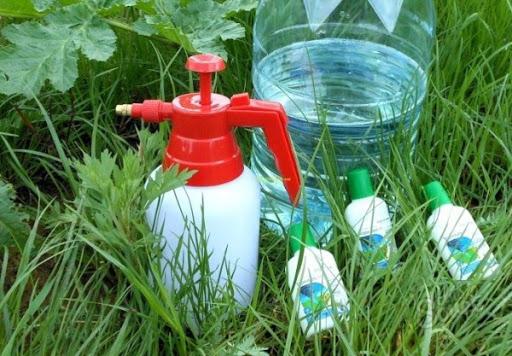
Prepare the liquid according to the following instructions:
- First, make a mother liquor by pouring water into a container with a stirrer to a quarter of the total volume.
- Add the herbicide dose indicated in the instructions and turn on the mixer.
- After the preparation has dissolved, without turning off the stirrer, add water to fill the volume.
- A third of the total volume of water is poured into the sprayer tank, the mixer is turned on and the mother solution is added.
- After mixing the solution with water, add the liquid until the solution is full, keeping the mixer running. This method of preparing the working solution prevents the active herbicide particles from settling.
Use the solution immediately after preparation. Choose a day when wind speed is minimal to prevent chemical droplets from falling onto neighboring fields. After use, dispose of any remaining product safely, and thoroughly clean the sprayer container.
Safety precautions
When working with hazardous chemicals, adhere to all safety regulations. Wear protective overalls, high-top shoes (preferably rubber boots), goggles, a respirator, and rubber gloves.

After treatment, all clothing should be washed and hung outside. The farmer who sprayed should shower with detergent. If the spray solution accidentally comes into contact with the skin or eyes, seek medical attention immediately for first aid.
Degree of phytotoxicity
When the herbicide application regulations are followed, no cases of phytotoxicity have been identified.
Is there resistance?
Due to the fact that the chemical contains two active components, the likelihood of developing resistance is relatively low.
Possible compatibility
Using Luger in tank mixes with other chemicals is permitted only after testing. The herbicide combines well with products based on dicamba, sulfonylurea, and isoproturon.

How to store it correctly and for how long
Provided the original packaging is intact and storage instructions are followed, the herbicide has a shelf life of 3 years from the date of manufacture. Store the chemical in separate utility rooms, away from residential buildings. The temperature should not exceed 35 degrees Celsius.
Analogues
If necessary, the herbicide can be replaced with preparations such as Disulam, Premiera or Florastar.
Related posts:
 Instructions for use and composition of the herbicide Aksifor, dosage and analogues
 Targa Super herbicide instructions, dosage, and analogues
 Instructions for use and composition of the herbicide Pivot, dosage and analogues
 Instructions for use and composition of the herbicide Fabian, application rates and analogues
 Typhoon herbicide instructions, dosage, and analogues
 Instructions for use and composition of the herbicide Basis, application rates and analogues
 Instructions for use and composition of the herbicide Forward, dosage and analogues
 Composition and instructions for use of the herbicide Pulsar, application rates and analogues