
To achieve high crop yields, farmers must contend not only with diseases and pests but also with weeds. If weeds aren't eliminated promptly, they will rob plants of nutrients and cause significant losses of vegetables, fruits, and grains. Forward herbicide effectively controls annual and perennial weeds without adversely affecting crops.
Composition and release form
The herbicide "Forward" has a selective and systemic effect, affecting only weeds. It contains a substance called quizalofop-P-ethyl, which is often used in the production of various chemicals designed to destroy unwanted vegetation. One liter of the product contains 60 grams of this substance. Quizalofop-P-ethyl was developed in the 1960s and has since been used by farmers worldwide.
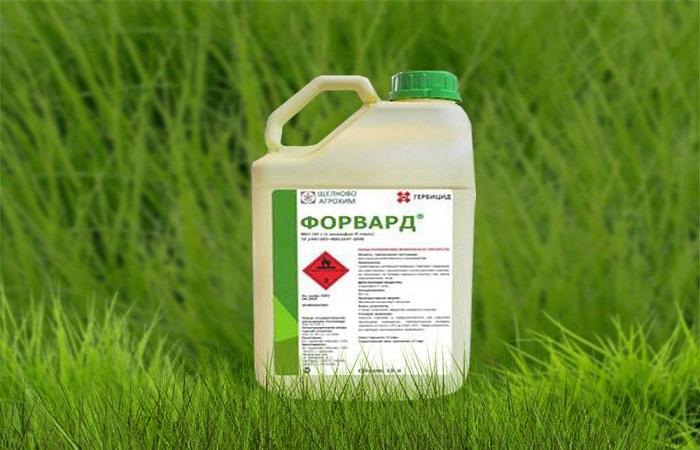
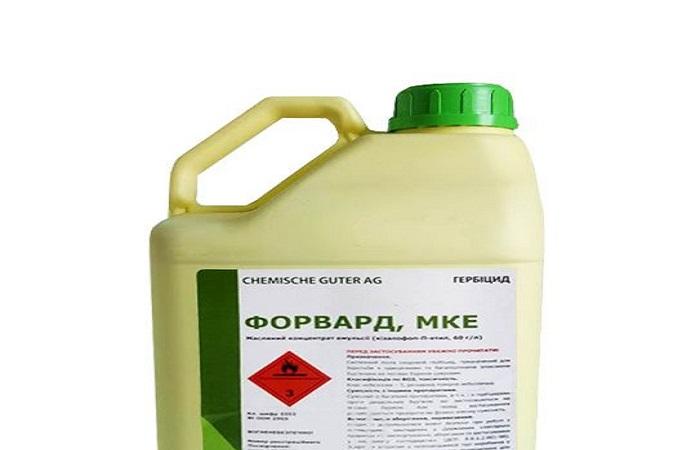
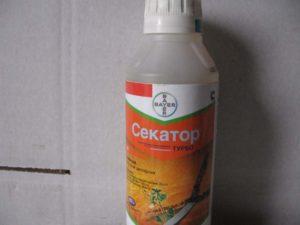
Forward is supplied to gardening stores in the form of an oil-based emulsion concentrate, packaged in plastic canisters with a capacity of 5 and 10 liters.
Mechanism of action
This selective weed control product is designed to kill annual and perennial weeds in sunflower, rapeseed, chickpea, and soybean crops, as well as sugar beet and flax. Upon contact with the weeds, the active ingredient is immediately absorbed into the tissue and begins its destructive action. Gradually, the active ingredient penetrates the growth points of the plant's stems and root system, disrupting fatty acid synthesis. As a result, the weeds stop growing and eventually die off completely.
Take a look Also
It will take a week to completely destroy annual weeds, and a little longer for perennial weeds, from 2 to 3 weeks.
Pros and cons
The domestically produced product is cheaper than its foreign counterparts, but this doesn't affect its effectiveness, making it a popular choice among farmers. After using it, farmers have identified several undeniable advantages of the herbicide.
They listed the following as advantages of the chemical agent:
- a wide range of weeds against which the herbicide works, both annual and perennial, including difficult to eradicate ones, such as pigweed, barnyard grass and creeping wheatgrass;
- the ability to destroy not only the above-ground part of weeds, but also the root system in one treatment, which prevents the likelihood of a second wave of vegetation;
- a unique formula of the drug, thanks to which the active substance quickly penetrates into the tissues of the contaminants and spreads there;
- good compatibility with other herbicides in tank mixtures;
- absence of resistance development when consumption rates are observed;
- absolute safety for cultivated plants due to the selectivity of action;
- the possibility of using the drug at any stage of crop development;
- no impact on subsequent crop rotation;
- low toxicity for humans, warm-blooded animals, aquatic life and beneficial insects;
- duration of protective action - up to 70 days;
- Resistance to atmospheric precipitation; after just one hour the preparation is completely absorbed by the weed leaves.

Calculation of consumption
The instructions for use describe how and in what quantities the herbicide should be used for it to be effective.
The table shows the consumption rates of the chemical "Forward" for different plants:
| Cultivated plant | Herbicide application rate | Consumption of working fluid per hectare of field |
| Rapeseed, sugar beet and sunflower | 0.9-1.2 liters per hectare for annual weeds and 1.2-2 liters for perennial weeds | From 200 to 300 liters of solution |
| Flax | 1.2-2 liters per hectare | From 200 to 300 liters of liquid |
| Chickpeas and peas | 0.9-1.2 liters per hectare for annual weeds and 1.2-2 liters for perennial weeds | From 200 to 300 liters |
As a rule, one treatment of plantings per season is sufficient.

How to prepare and properly use the working mixture
It's recommended to prepare the working solution immediately before treating the field; otherwise, it may lose its effectiveness. Pour clean, unadulterated water into the sprayer tank (one-third of the total volume) and add the recommended dosage of the product. Turn on the agitator and wait until the solution reaches a uniform consistency. Then, add the remaining water, but leave the agitator running.
Weeds should be treated with the herbicide "Forward" when the plants are 10 to 15 cm tall. Applying it earlier will prevent the herbicide from being absorbed, and the effect will be ineffective. The day should be clear and windless, and spraying should be done either early in the morning or in the evening, after sunset. Suitable temperatures are between 15 and 20 degrees Celsius.
Precautionary measures
When working with Forward, as with any chemical, safety precautions must be followed. Wear full-body clothing and rubber gloves. Protect your respiratory system from herbicide vapors with a respirator or mask.
After finishing the work, all clothes are washed and hung outside to air. The farmer who carried out the treatment should take a shower and wash their face with soap.

How toxic is it?
The herbicide belongs to the 3rd toxicity class and is moderately dangerous for humans and animals.
Possible compatibility
"Forward" is approved for use in tank mixtures with other herbicides to enhance the effect, after conducting a chemical compatibility test.
Expiration date and storage conditions
The chemical's shelf life is 3 years when stored properly. Store the product in a dark, dry storage area, out of reach of children and pets.
Analogues
Forward can be replaced with herbicides such as Targa Super or Miura.
Related posts:
 Types of garden fungicides and descriptions of the top 24 best, instructions for use
 Types of fungicides for cucumbers in a greenhouse and instructions for use
 Instructions for use of Fitosporin for grape diseases and dosage
 Causes and treatment of eggplant pests and diseases, how to combat them at home
 How to control carrot flies with medications and folk remedies
 Instructions for using Fitosporin for cucumbers and processing rules
 Description of varieties of sowing peas and cultivation, to which family they belong
 How to propagate and grow peas, cultivation technology, and care in open ground