
Herbicides help kill weeds that not only choke out crops but also compete with them for nutrients. Before using any chemical, it's important to read the instructions to ensure the desired results. Typhoon herbicide has a broad-spectrum action and effectively controls annual and perennial weeds of sunflowers, grain crops, and flax.
Composition, dosage form and purpose
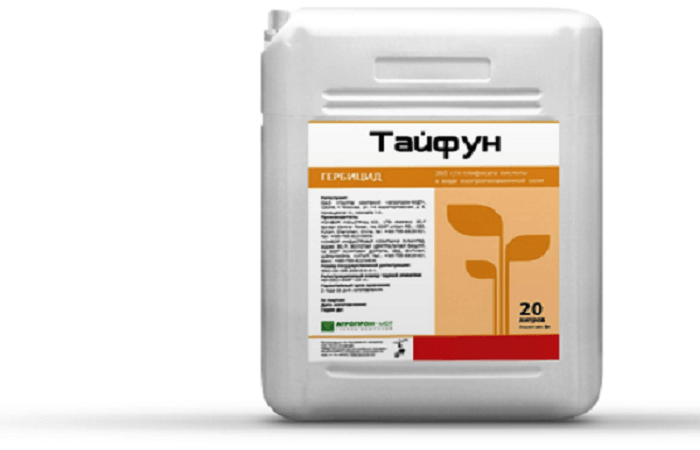
The selective, systemic herbicide "Typhoon" was developed by Russian scientists to control annual and perennial weeds on both agricultural and non-agricultural land. It destroys not only herbaceous vegetation but also shrubs and trees, making it popular among farmers.
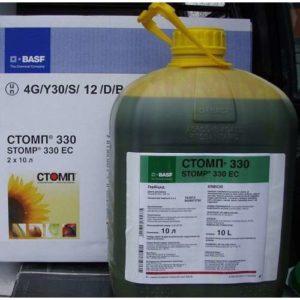
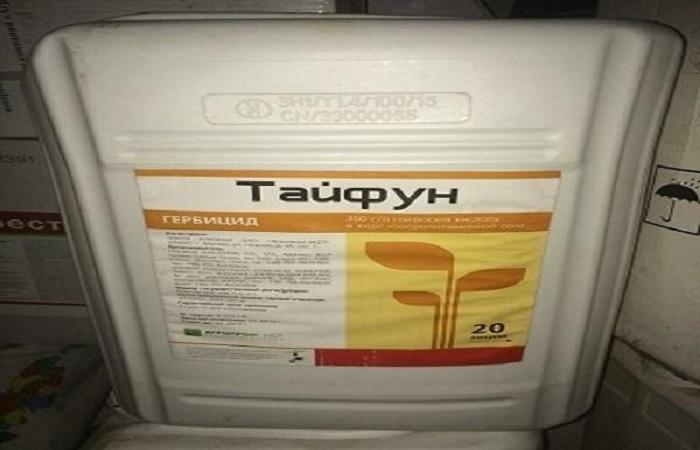
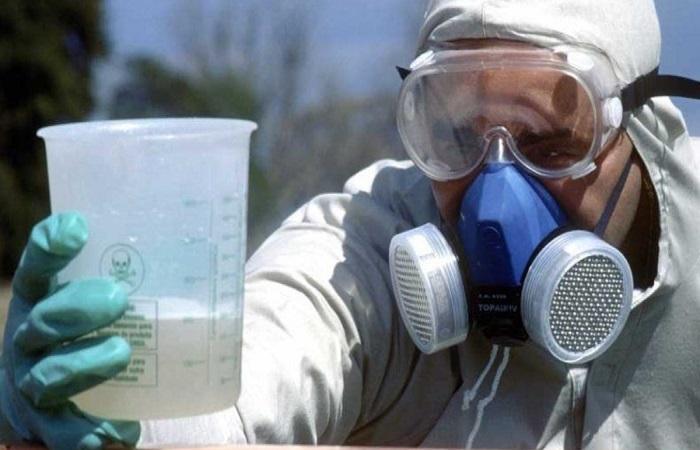
The chemical contains a single active ingredient from the glycine derivative class—glyphosate, or isopropylamine salt. One liter of the herbicide contains 360 grams of the active ingredient. It is sold as an aqueous solution packaged in 10-liter plastic canisters. Five-liter canisters are also available in stores.
Mechanism of action
The active ingredient in the herbicide "Typhoon" allows for 100% weed control, as it targets not only the above-ground parts but also the root system of the weeds. The chemical is applied before the emergence of crops.
After treating a field, the preparation penetrates the plant's root system and gradually accumulates there, spreading from there through the stems and foliage of the weeds. This disrupts lipid metabolism in the weeds, causing them to stunt their growth.
In addition, the active substance causes photosynthesis to stop, after which the stems and leaves dry out, and the weeds die completely.
Advantages of the drug
Farmers who have already purchased the Typhoon fungicide and applied it to their fields have appreciated the product's performance and highlighted several advantages of the chemical.
Farmers consider the following points to be the advantages of the Typhoon:
- highly effective in controlling annual and perennial weeds;
- destruction of the root system and above-ground parts of weeds;
- the ability to combat not only herbaceous vegetation, but also shrubby vegetation;
- no negative impact on the soil;
- resistance to precipitation and bad weather conditions;
- long period of protective action - about 50 days;
- can be used in tank mixtures with other chemicals after a compatibility test;
- not hazardous to human health if instructions for use are followed;
- the possibility of use not only in farms, but also in private plots.
Calculation of consumption
The instructions for use supplied with the herbicide by the manufacturer indicate application rates for different plants, which must be followed when using the product.
The consumption rates of Typhoon are shown in the table:
| Cultivated plant | Herbicide consumption | Working fluid rate |
| Fruit and citrus crops, as well as vineyards | For annual weeds, use 2 to 4 liters of chemical per hectare of plantings and 4-8 liters to destroy perennials. | From 100 to 200 liters |
| Potato | 2-3 liters of herbicide for annual and perennial weeds | From 100 to 200 liters |
| Corn and sugar beets | From 2 to 5 liters for annual and perennial weeds | From 100 to 200 l |
| Cabbage, sunflower and soybeans | 2-3 liters for all types of weeds | From 100 to 200 l |
| Before planting flax | 3 liters for all clogs | From 100 to 200 l |
| Alfalfa | From 500 to 600 ml of the drug | From 100 to 200 l |
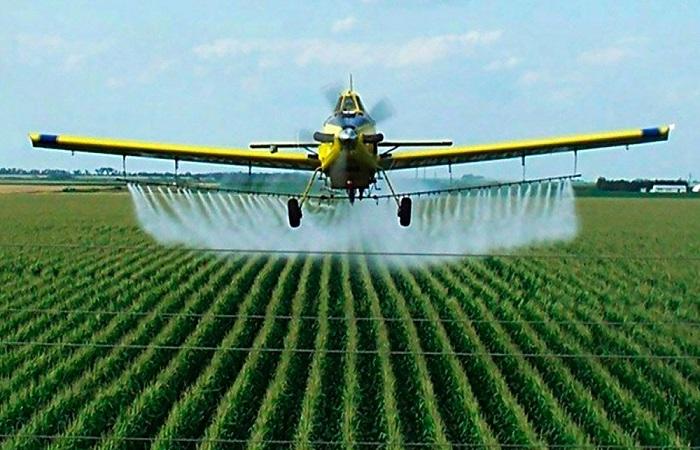
| Couples | From 2 to 8 liters, depending on the type of clogs | 50-100 liters if aerial treatment is carried out and 100-200 for ground spraying |
How to prepare and properly use the working mixture
The instructions recommend preparing the working solution several hours before use to maintain its effectiveness. Fill an empty canister or sprayer tank with half the total volume of water and add the recommended dose of herbicide. Mix thoroughly to completely dissolve the chemical, and then add the remaining clean water (it's important that it be free of chemical impurities).
Safety precautions
When working with chemicals, it is recommended to follow safety precautions to avoid harming your health. Always wear protective overalls that cover the entire body and rubber gloves to prevent the substance from coming into contact with your skin and causing irritation. A mask or respirator should also be used to prevent chemical vapors from entering the respiratory tract.
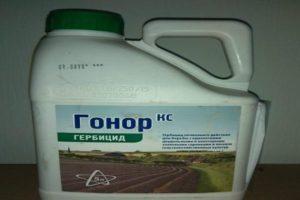

After completing all field work, the farmer must take a shower with soap and wash all clothes.
How toxic is it?
This herbicide belongs to toxicity class 3 for both humans and honeybees. To prevent harm to health, follow the instructions.
Possible compatibility
Typhoon is approved for use with a variety of chemicals in tank mixes, but a compatibility test should be performed first. If the solution becomes cloudy or flakes form, discontinue use of this combination.
Storage terms and conditions
The herbicide's shelf life is 3 years from the date of manufacture. Store in a dark, dry place, out of reach of children and pets.
Analogues
Typhoon can be replaced with chemicals such as Tara or Dual Gold.
Related posts:
 Instructions for use of the fungicide Topaz for plants, composition and analogues
 The best eggplant varieties for growing in a polycarbonate greenhouse: planting and care
 Targa Super herbicide instructions, dosage, and analogues
 Instructions for use and composition of the herbicide Puma Super 100, application rates
 The best grape varieties for growing in the Urals, planting and care rules in summer
 Instructions for the use of Sporobacterin for plants and its composition, analogues
 How to propagate and grow peas, cultivation technology, and care in open ground
 Description of varieties of sowing peas and cultivation, to which family they belong