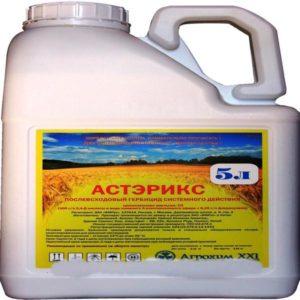
Farmers use herbicides to protect their crops from weeds. There are commercially available chemicals designed to kill a narrow range of weeds, as well as those that are equally effective against both annual and perennial weeds. The instructions for Targa Super herbicide state that it has a broad spectrum of activity and is completely safe for crops.
Composition, dosage form and purpose
The herbicide "Targa Super" is a post-emergence herbicide and is characterized by a selective action, meaning that it has a negative impact only on weeds and does not harm cultivated plants.
This chemical was developed by the Japanese company Nissan Chemical and has gained popularity among Russian farmers due to its high effectiveness. The herbicide contains one active ingredient from the aryloxyphenoxypropionate class—quizalofop-p-ethyl. One liter of the chemical contains 51.6 grams of the active ingredient.
The herbicide is available commercially as an emulsifiable concentrate packaged in 5- and 10-liter plastic canisters. It is designed to kill grass weeds, both annual and some perennial, including difficult-to-eradicate species such as foxtail, barnyard grass, and creeping wheatgrass. Targa Super can be used in fields planted with crops such as sunflowers, soybeans, rapeseed, beets, potatoes, currants, and strawberries.

Mechanism of action
The active ingredient in this herbicide destroys not only the above-ground portions of weeds but also their root systems. After treatment, it quickly penetrates the weeds' green mass and spreads from there to their underground parts. The chemical works by inhibiting the biosynthesis of plant fatty acids.

Advantages of the drug
Thanks to the undeniable advantages of this Japanese herbicide, it is often preferred by domestic farmers, despite its relatively high cost.

The advantages of chemical agents include the following:
- speed of action - just a few hours after treatment, weeds stop growing and developing;
- safety for cultivated plants due to selectivity of action;
- no soil impact, the chemical only affects those weeds that were sprayed;
- can be used for both annual and perennial weeds (the latter will take longer to completely destroy – up to 3 weeks);
- no impact on subsequent crop rotation; after treatment, any crop can be planted in the field in the following season;
- the possibility of use in tank mixtures with other herbicide preparations to enhance the effect and expand the spectrum of action;
- low toxicity for humans, warm-blooded animals and honey insects;
- rate of decomposition in soil;
- cost-effectiveness of consumption rate;
- lack of dependence on weather conditions.
Calculation of consumption
The manufacturer's instructions indicate the consumption rate of the herbicide, which must be followed to achieve the desired result.

The standards for the chemical agent are shown in the table:
| Cultivated plant | The dosage rate of the drug | Consumption of working solution |
| Beets, cabbage, carrots | 1-2 liters per hectare for annual weeds and 2-3 liters for perennials | From 200 to 300 liters |
| Rapeseed and sunflower | 0.75-1.5 liters per hectare for annual weeds and 1.5-2.5 liters for perennials | From 200 to 300 liters |
| Soybeans | 1-2 liters per hectare for annual weeds and 3-4 liters for perennials | From 200 to 300 liters |
| Melons | 2 liters per hectare | From 200 to 300 liters |
| Medicinal herbs | From 1 to 5 liters, depending on the degree of contamination | From 200 to 300 liters |
| Potato | From 2 to 3 liters, regardless of the type of clog | From 200 to 300 liters |
| Tomatoes | 1 to 2 liters per hectare to control annual weeds | From 200 to 300 liters |
How to prepare a working mixture
Prepare the spray solution on the day of application to ensure it remains effective. Fill the sprayer tank with clean water (up to half its capacity) and add the amount of herbicide specified in the instructions. Turn on the agitator and wait until the chemical is completely dissolved. Then, add the remaining water, keeping the agitator running.
Instructions for use
For field treatment, choose a clear, windless day, and work should be carried out either in the morning or evening. Weeds are sprayed when they reach 10-15 cm in height. It is important that the spray solution thoroughly covers the weed's green mass. Any remaining solution should be disposed of in accordance with safety requirements for chemicals.

What precautions should be taken?
Although the product is not classified as a particularly hazardous substance, basic safety precautions must be observed when handling it. Farmers should wear protective clothing, rubber gloves, and a respirator.
After finishing work, you need to take a shower with detergent and wash your clothes.
How toxic is it?
"Targa Super" belongs to the 3rd class of toxicity for humans, animals and insects, that is, to moderately hazardous substances.
Possible compatibility
To enhance the effect and expand the spectrum of action, Targa Super is approved for use in tank mixtures with other herbicides after testing.

How to store it correctly and for how long
The herbicide's instructions don't specify an expiration date, but chemicals of this class retain their effectiveness for three years. It is recommended to store the product in a dark storage area at a temperature no higher than 28 degrees Celsius.
Similar means
If necessary, the herbicide can be replaced with preparations such as Norvel, Queen Star Max or Haruma.
Related posts:
 Luger herbicide instructions for use, dosage, and analogues
 Typhoon herbicide instructions, dosage, and analogues
 Instructions for use and composition of the herbicide Forward, dosage and analogues
 Instructions for use and composition of the herbicide Aksifor, dosage and analogues
 Instructions for use and composition of the herbicide Pivot, dosage and analogues
 Grenader herbicide instructions for use, dosage, and analogues
 Instructions for use and composition of the herbicide Fabian, application rates and analogues
 Instructions for use and composition of the herbicide Centurion, dosage and analogues