
When fighting weeds, farmers often prefer products with selective action because they effectively kill weeds without harming crops. The instructions for the herbicide "Centurion" state that it is designed to control grass weeds in sugar beets, potatoes, and other crops. When using the chemical, it is important to adhere to the application rates.
Composition, dosage form and purpose
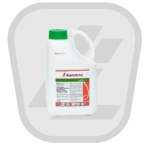
The systemic post-emergence herbicide "Centurion" contains one active ingredient, clethodim, which belongs to the cyclohexanedione class of chemicals. One liter of the chemical contains 240 grams of the active ingredient. The herbicide is available in gardening stores as an emulsifiable concentrate packaged in 5- and 1-liter plastic canisters. It comes with the adjuvant "Amigo," which improves the adhesion of the working solution to the weed surface.
This selective weed control chemical was developed by the manufacturer to kill annual and perennial grass weeds that choke out sugar beet, flax, potato, and other crops. Weeds effectively controlled by this chemical include horsetail, barnyard grass, foxtail, and others.
Operating principle
After treatment, the active ingredient of the chemical penetrates the weeds and begins to migrate through their tissues, eventually reaching their growth points, which are located both in the surface and underground organs. After some time, parts of the weeds die off, and the product prevents the regrowth of perennial weeds.
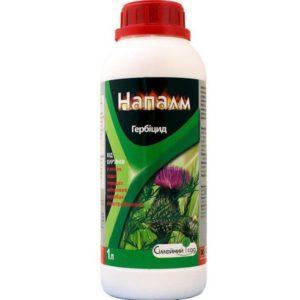
After three days, visible signs of weed infestation appear, such as discoloration of the above-ground parts. Complete weed death occurs within 2-3 weeks, depending on the plant's susceptibility to the active ingredient in the chemical.

Advantages and disadvantages
After using the herbicide on their fields, farmers were able to identify the chemical's advantages, which distinguish it from other similar products.
They listed the following as advantages of the Centurion:
- the ability to effectively destroy even overgrown weeds;
- resistance of the working fluid to the effects of atmospheric precipitation;
- low consumption rate and, as a result, cost-effectiveness in use;
- equal effectiveness in destroying both annual and perennial weeds;
- prevention of re-growth of parts of perennials after application of chemicals;
- no negative impact on the soil, which means that any crops can be planted in this area next season;
- possibility of use in tank mixtures with other chemicals;
- rate of disintegration in soil (maximum 3 days);
- the speed of penetration of weeds into tissues and spread to growth points.
Farmers consider the only drawback of the herbicide to be the need to purchase the product together with a fixative, which increases the cost.

Calculation of consumption
The manufacturer's instructions for use specify the herbicide application rates that must be followed during use to achieve the desired result and avoid harming crops.
The herbicide consumption for different crops is presented in the table:
| Cultivated plant | Norm of the drug | Working fluid consumption |
| Flax | From 200 to 400 ml plus from 600 to 1200 ml of adhesive | 200-300 liters per hectare of field |
| Soybeans and sugar beets | From 200 to 400 ml plus from 600 to 1200 ml of adhesive | 200-300 liters per hectare of field |
| Potatoes, onions and carrots | 700 to 1000 ml of herbicide plus 3000 ml of adhesive | 200-300 liters per hectare of field |

When choosing the herbicide rate, pay attention to the degree of weed infestation in the field and the predominant grasses there; if they are difficult to eradicate, adhere to the upper limit of the recommended consumption.

Preparing the working mixture and how to use it correctly
It's recommended to prepare the field treatment solution on the same day to ensure the active ingredient remains effective. Pour half the total volume of clean water into the sprayer tank and add the amount of emulsion specified in the instructions. Turn on the mixer, and once the solution has completely dissolved, add the remaining liquid and adhesive. It's important to ensure the water used for preparing the solution is free of any solids, otherwise they will clog the sprayer screen.
Precautionary measures
All handling of the chemical must be done wearing protective clothing and rubber gloves. To prevent inhalation of vapors, a respirator is recommended. After completing all work, wash clothes and shower, paying particular attention to your hands and face.

Degree of toxicity
The herbicide "Centurion" belongs to the 3rd class of toxicity, both for humans and for honey insects and warm-blooded animals.
Possible compatibility
The systemic herbicide exhibits the best compatibility with products based on desmedipham, clopyralid, ethofumesate, and phenmedipham. If the decision is made to use the chemical in tank mixtures with other substances, a preliminary test is conducted.

Expiration date and storage rules
The product's shelf life, when stored properly and in its original packaging, is 2 years. Store the chemical in a separate, dry, dark storage area, out of reach of children.
Analogues
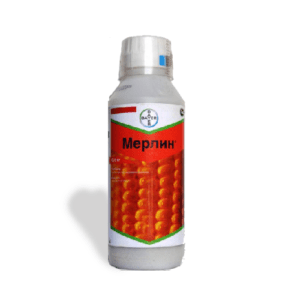
If necessary, Centurion can be replaced with herbicides such as Rondo, Chevron or Graminion.
Related posts:
 Hermes herbicide instructions for use, dosage, and analogues
 Instructions for use and composition of the herbicide Aksifor, dosage and analogues
 Instructions for use and composition of the herbicide Basis, application rates and analogues
 Luger herbicide instructions for use, dosage, and analogues
 Instructions for use and composition of the herbicide Fabian, application rates and analogues
 Instructions for use of the continuous herbicide Rap, its composition and dosage
 Instructions for use and composition of the herbicide Callisto, dosage and analogues
 Composition and instructions for use of the herbicide Pilaraund, application rates