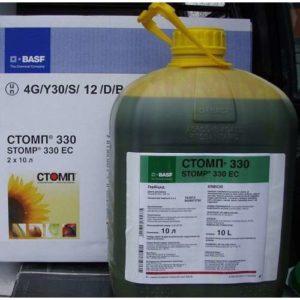
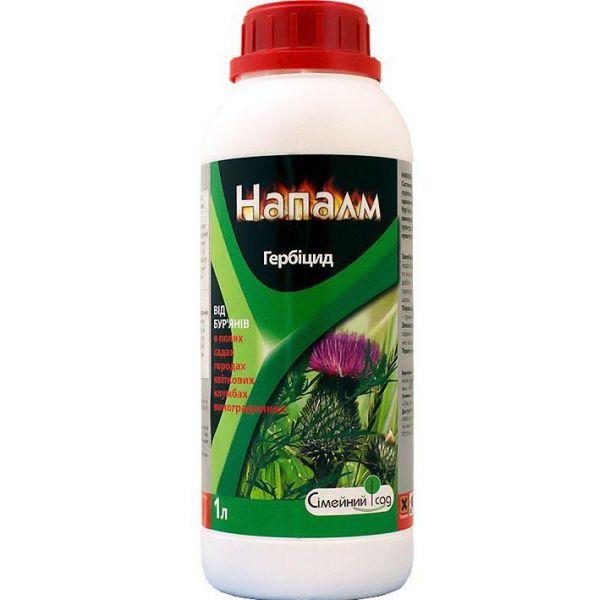
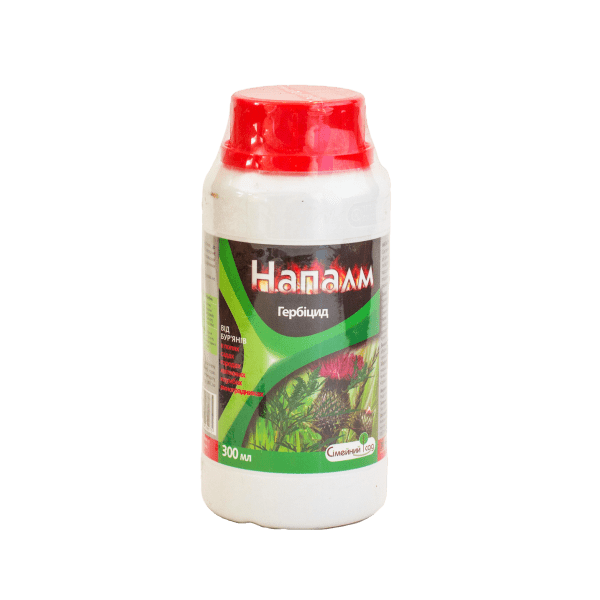
"Napalm" is a dream for any farmer whose fields are overrun by hard-to-eradicate weeds such as bindweed, couch grass, sow thistle, thistle, chickweed, ragweed, mugwort, yarrow, and any other weeds. Its powerful weed control is due to its effective delivery mechanism and lack of selectivity for any particular plant species. The instructions for using "Napalm," a non-selective herbicide, outline ways to preserve crops.
Composition, existing forms of release and purpose
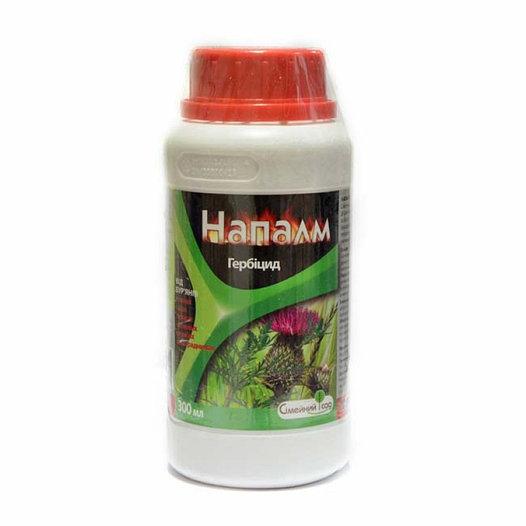
RosAgroKhim produces the herbicide "Napalm," which is based on isopropylamine salt or glyphosate (480 g/l). It is an aqueous solution packaged in 20-liter canisters. The pesticide sweeps away all types of harmful vegetation in the area where it is applied, as if scorching them with fire.
Mechanism of action
The systemic herbicide "Napalm" first penetrates the above-ground parts of the plant but also reaches the roots. The product protects fields from rhizomatous species and woody shoots, even if they originate from root suckers. By depriving the plant of the ability to synthesize amino acids, "Napalm" puts an end not only to the weed's development but also to its survival. Yellowing of the foliage 5-7 days after spraying indicates a halt in vital processes. The soft parts then wither and die. After approximately 15 days, the woody shoots also dry out.
Pros and cons
The herbicide "Napalm" differs from selective pesticides.
Calculation of consumption
To control soil-depleting pests, 200-300 liters of liquid per hectare are required. The easiest way to calculate the amount of Napalm herbicide is by the volume of the sprayer tank. After finding the application rate for a specific application in the table below, use the proportional method to calculate the numerical value for a given volume of water in the sprayer.
How to make a working mixture
When preparing a liquid containing Napalm herbicide for spraying, it's important to remember that uniform distribution of the product is crucial to the success of the application. Therefore, large volumes of the working mixture are prepared using a hydraulic mixer. If the full dosage of Napalm herbicide and water are combined in a tank, mixing is required for 8 minutes.
Directions for use and dosage
During treatment, stir the working solution periodically. Choose clear weather with wind speeds below 4 m/s. 12-25°C is the best temperature for rapid penetration of the product into plant tissue.

| The object being processed | Weeds | Rate of herbicide “Napalm”, l/ha | Spraying time |
| Fields where grain, corn, soybeans, sunflowers, sugar beets, potatoes, flax, rapeseed, clover, alfalfa, melons, and other vegetable crops have not yet sprouted. Fallow lands, areas not designated for agricultural use. | Annual cereals and dicotyledons | 2-4 | Weeds emerge 14-15 days before sowing the crop, or when it has not yet appeared on the surface of the earth. |
| Perennial cereals and dicotyledons | 4-6 | ||
| Perennials with a branched root system or coarse stems (bindweed, couch grass, finger grass, sow thistle) | 6-8 |
Safety precautions
The moderate harmfulness of Napalm herbicide should not discourage workers. Spraying should be done in:
- special waterproof suits that cover the body as much as possible;
- rubber boots;
- chemical-resistant gloves;
- protective glasses or eye mask;
- respirator.

While working with herbicide, talking and smoking are prohibited. For lunch breaks, workers are moved 200 meters away from the spraying area. After removing gloves and avoiding contact with contaminated parts, workers wash their hands and faces with soap and water before eating. The same procedure is repeated before leaving the field.
If the equipment was spilled with herbicide during spraying, it is disinfected with a caustic soda solution.
A specially equipped area with a washable floor for preparing the working solution is cleaned with cleaning agents after each use. It must be fenced off and marked with a hazard warning sign. Signs reading "Caution! Herbicides" are placed in the corners of treated areas. Used clothing is stored separately from other items and food.
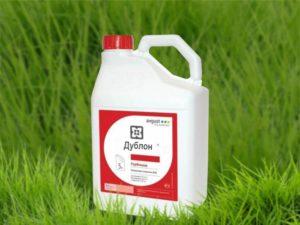
How toxic is it?
No skin irritation or allergic reactions have been observed with napalm. There have been cases of irritation of the mucous membranes of the respiratory tract. It is moderately hazardous to bees, other beneficial insects, and animals.
Possible compatibility
Napalm can be mixed in the same container with almost all pesticides and liquid fertilizers. To avoid damaging the product, it is necessary to check its compatibility with other products beforehand. The diluted liquids with chemicals are mixed in pairs in the same container, using small amounts. Leave for half an hour under a closed lid. If flakes, foam, or sediment appear, do not combine the products in the same container. Any separated liquids are shaken again. A homogeneous mixture indicates compatibility.
Storage conditions and periods
Napalm herbicide should be stored at temperatures between 0°C and 40°C in a well-ventilated area. Never store the product in an unlabeled container. The container should be sealed tightly after each use. The herbicide's shelf life from the date of production is 2 years.
Analogues
Glyphosate-based products include Dominator, Shkval, Uragan, Groza, Sprut, Tornado, and Glyphos. Due to its powerful effect, even on woody growth, resistant weeds are unlikely to emerge in areas already treated with this active ingredient. Simply follow the instructions for Napalm, not exceeding or exceeding the recommended dosage.
Related posts:
 Hermes herbicide instructions for use, dosage, and analogues
 Instructions for use and composition of the herbicide Aksifor, dosage and analogues
 Instructions for use and composition of the herbicide Basis, application rates and analogues
 Instructions for use and composition of the herbicide Zeus, dosage and analogues
 Instructions for use of the continuous herbicide Rap, its composition and dosage
 Composition and instructions for use of the herbicide Pilaraund, application rates
 Luger herbicide instructions for use, dosage, and analogues
 Instructions for use and composition of the herbicide Callisto, dosage and analogues