
- Composition, existing forms of release and purpose
- Mechanism of action
- How quickly does it work?
- How long does the effect last?
- Pros and cons
- Calculation of consumption
- Preparing the working mixture and how to use it
- Safety precautions
- How toxic is it and is compatibility possible?
- How much and how can it be stored?
- Analogues
Controlling ubiquitous weeds in industrial and farm fields has long been a necessity. Without it, a good harvest is impossible. Let's explore the capabilities of the Zeus herbicide and its instructions for use. What it's designed for, how it works, how quickly it works, and its advantages and disadvantages. How to properly prepare a solution, and how much to use depending on the crop. Compatibility with pesticides and alternatives.
Composition, existing forms of release and purpose
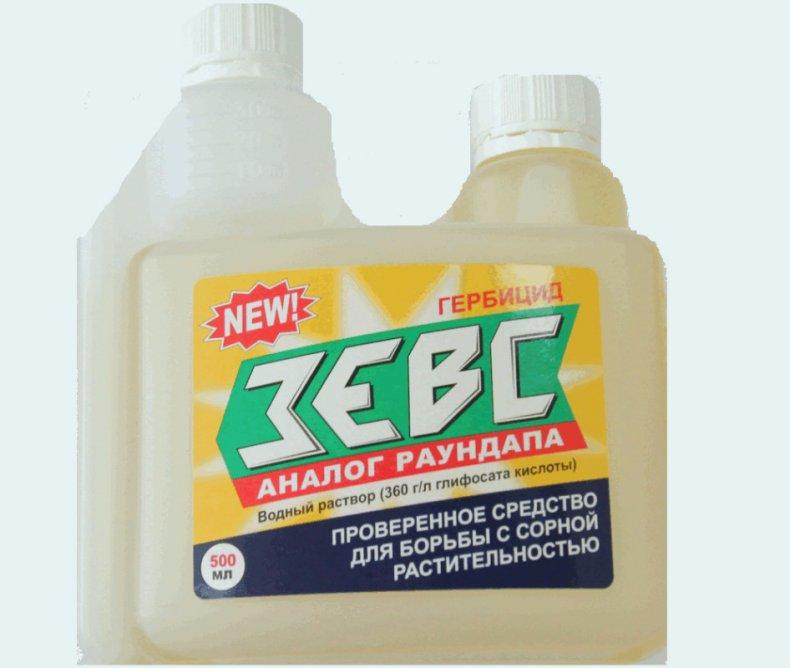
The manufacturer, Yunitkhimprom LLC, produces this product as an aqueous solution in 5-liter plastic canisters. The active ingredient in the formula is glyphosate (FOS) at a concentration of 360 g per liter. It is a contact and systemic pesticide by its method of penetration and a selective herbicide by its mode of action.
"Zeus" is used to control annual weeds and perennials, both single- and double-leafed, in fruit and citrus fields, vineyards, and beets, potatoes, sunflowers, corn, cabbage, and soybeans. It is also used in fields planted with flax, grains, vegetables, melons, oilseeds, and industrial crops, annual flowers, perennial grasses, and alfalfa. The herbicide is also used on fallow lands and non-agricultural areas.
Mechanism of action
When applied, the Zeus solution is absorbed by the shoots and leaves of weeds within 6 hours. The substance spreads throughout the plants and into the root system, and can be absorbed from the soil. Glyphosate inhibits amino acid production in cells, leading to the gradual but certain death of harmful plants.
How quickly does it work?
The first signs of herbicide damage—chlorotic discoloration of foliage—can be seen the following day. One-year-old weeds are completely killed within three days, and perennials within eight.

How long does the effect last?
The minimum protective effect of this herbicide is 1 month, but it can last longer. This effect is affected by weather and local climate conditions.
Pros and cons
Calculation of consumption
Application rates of "Zeus" for agriculture (in liters per hectare):
- fruit, grapes and citrus – 2-4 (1-year-old weeds) and 4-8 (perennials);
- potatoes, cabbage, soybeans, sunflower – 2-3;
- corn, beets – 2-5;
- fields for sowing crops and fallow land – from 2 to 8;
- alfalfa – 0.5-0.6;
- non-agricultural areas – 3-4 (1-year-old weeds) and 4-6 (perennials);
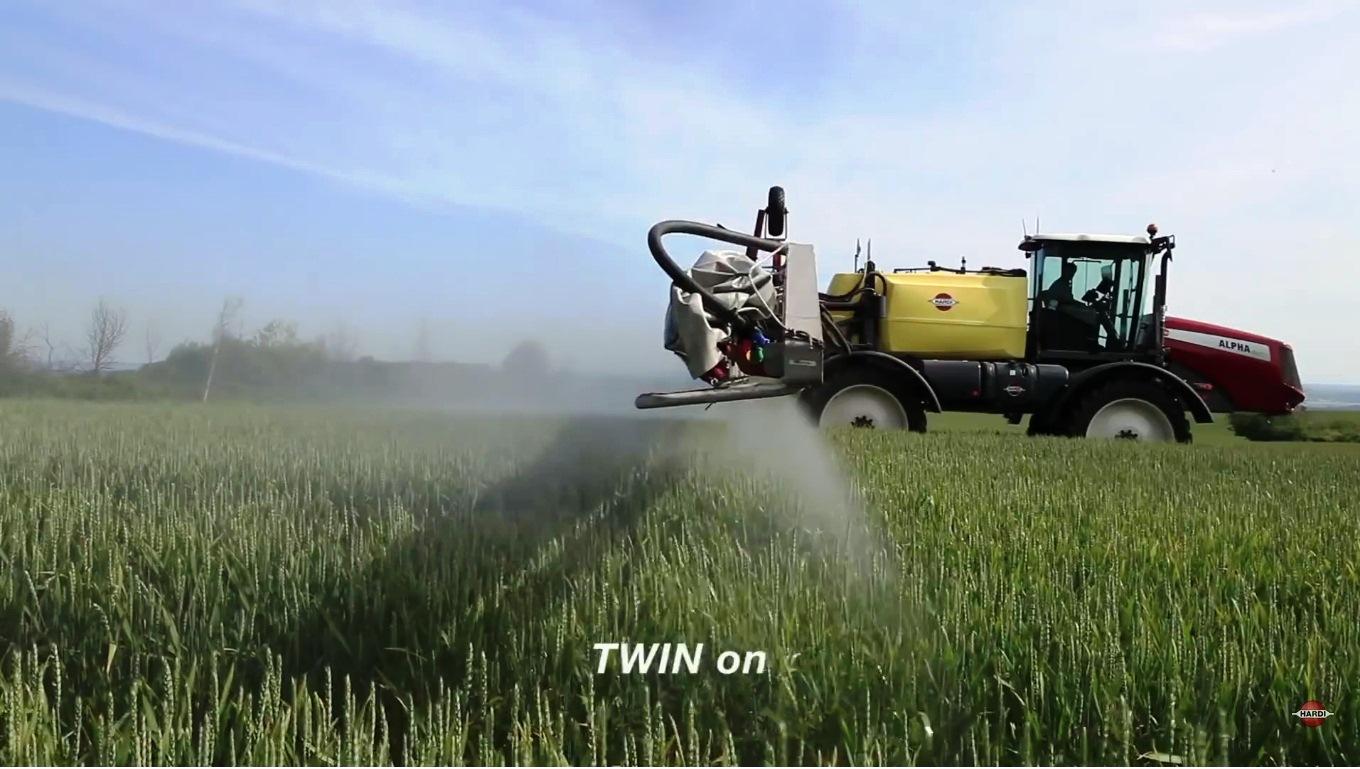
Spraying with "Zeus" is done at different times: in spring and summer on growing weeds (with crop protection), before sowing, 2-5 days before crop emergence, and in autumn – after harvesting. The solution consumption rate in all cases is 100-200 liters per hectare.
Preparing the working mixture and how to use it
The Zeus canister has a special dispenser that can be used to accurately measure the required amount of liquid. To use: remove the cap from the long neck of the canister, press the canister as many times as necessary to fill the dispenser to the desired level. Pour the product into the sprayer tank.
Safety precautions
According to the instructions, when handling Zeus, you must wear protective clothing that covers all areas of the body. A respirator, goggles, and rubber gloves are also recommended.

How toxic is it and is compatibility possible?
"Zeus" is classified as a Class 3 herbicide with toxicity to bees and humans. It is a non-selective herbicide; when applied to growing crops, plants must be protected. The herbicide can be combined with other similar herbicides, except those with an alkaline reaction.
How much and how can it be stored?
Zeus has a shelf life of 5 years when stored properly: in the original industrial canister with the lid closed. Ideally, store in a dark, dry warehouse. Store the herbicide at a temperature no higher than 25°C. Keep away from food, feed, medications, or household chemicals. Keep the storage area out of reach of children and animals. Dispose of Zeus after the expiration date. Do not store the solution for more than 24 hours.
Analogues
In terms of glyphosate, the following agrochemicals are similar to those of Zeus for agriculture: Alpha Ataman, Argument, Aristocrat, Bestseller, Vikhr, Helios, Glibel, Glytherr, Glyphid, Glyfor, Glyphos, Glyfot, Ground, Judo, Zero, Istrebtel, Cayman, Kileo, Credit Extreme, Napalm, Rangoli-Glyphosate, Rap, Roundup, Roundup Max, Roseit, Sangley, Sweep, Smerch, Sprut, Typhoon, Tornado, Total, Fighter, Fakel.
For personal farms, analogues with glyphosate: "Agrokiller", "Gaysel", "GliBest", "Glider", "Gliterr", "Glyphos", "Ground", "Liquidator", "Napalm", "Rap", "Roundup", "Typhoon", "Tornado", "Fighter", "Chistogryad".
The herbicide "Zeus" is capable of destroying many weeds that pollute fields, forests, areas near industrial facilities, power lines, highways and railways, airports, and gas and oil pipelines. It can be used as a desiccant on flax, sunflower, and grain crops. It is also suitable for private farms. A versatile and virtually indispensable herbicide for industrial and farming operations.
Related posts:
 Description of varieties of sowing peas and cultivation, to which family they belong
 How to properly plant peas in a greenhouse and open ground
 The best eggplant varieties for growing in a polycarbonate greenhouse: planting and care
 How to propagate and grow peas, cultivation technology, and care in open ground
 80 Best Eggplant Varieties for Different Regions with Descriptions and Characteristics
 The best grape varieties for growing in the Urals, planting and care rules in summer
 Description and characteristics of the best seeds of pea varieties and types
 Carrot care guidelines for outdoor cultivation to ensure a good harvest
Thank you for the interesting and useful information!
Good afternoon
Thank you, we try our best for our readers.