Weeds are a major problem for farmers planting crops in their fields. While weeds can be controlled manually on a small garden plot, chemicals are essential for larger areas. Thanks to the latest scientific advances, weed control products for all types of weeds are now available. The non-selective herbicide "Rap" has many advantages, making it a popular choice among farmers.
Composition, existing forms of release and purpose
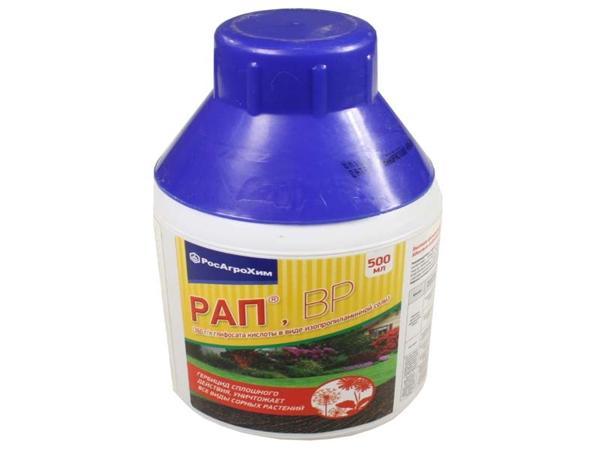
This systemic herbicide, with a broad spectrum of action, contains one active ingredient: glyphosate, or isopropylamine salt, which belongs to the chemical class of organophosphorus compounds. One liter of the product contains 360 grams of the active ingredient.
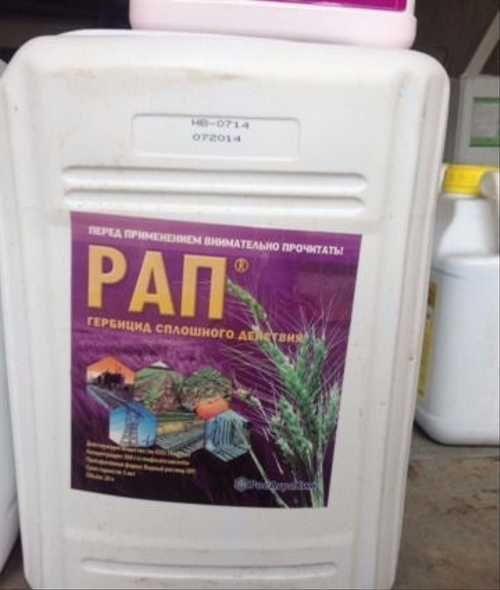
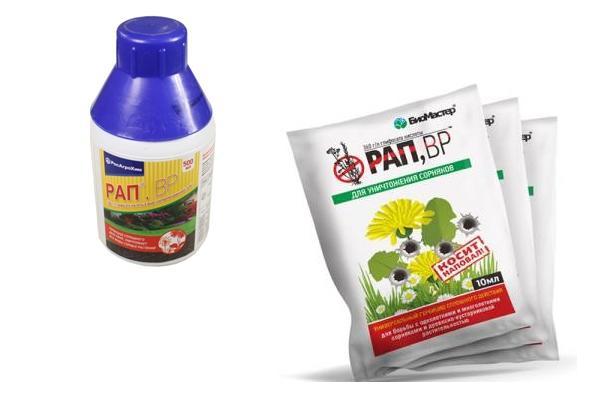
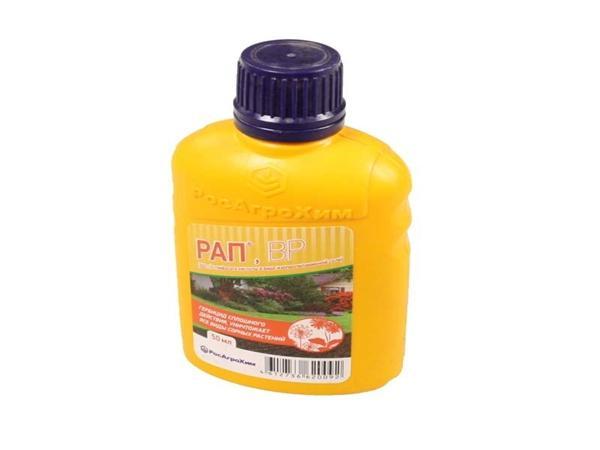
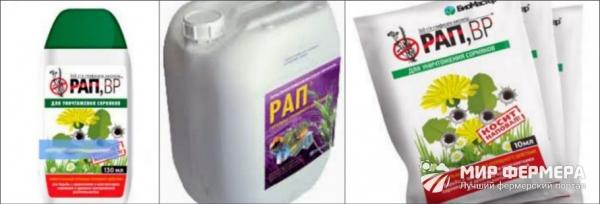
The herbicide is produced as an aqueous solution, packaged in 20-liter plastic canisters. Rapa is manufactured by the Russian company RosAgroKhim.
The instructions included with the chemical indicate that the herbicide is intended for controlling grass and broadleaf weeds, both annual and perennial. Moreover, thanks to its non-spore-forming action, the active ingredient is also effective in destroying trees and shrubs. The product is approved for use on sunflower, flax, and grain crops.
Method of influence
After spraying, the herbicide's active ingredient penetrates the green parts of the plant and spreads rapidly. Glyphosate eventually enters the root system, causing the weed to die. During exposure, the active ingredient disrupts cellular permeability, causing signs of weed death to appear, including chlorosis of leaf blades, deformation, and complete death. Glyphosate disrupts photosynthesis and tissue respiration, killing not only the aboveground parts of the weed but also its underground parts.
It takes 3 to 4 weeks from application to complete weed eradication. If spraying trees and shrubs, it will take 1 to 2 months. The herbicide's protective effect lasts up to 8 weeks from application.
Advantages of the drug
Consumers who have already purchased the herbicide "Rap" for weed control in their fields highlight several undeniable advantages of the product:
- equally effectively destroys both the above-ground and underground parts of the weed;
- permitted for use in fields sown with any cultivated plant;
- does not impose restrictions on subsequent crop rotation, as it has low soil activity;
- a wide range of weeds against which the chemical agent works, including shrubs and trees;
- permitted for use at any positive temperature;
- the possibility of using both the aviation method and in private subsidiary farms;
- economical use of herbicide.
Calculation of consumption
The effectiveness of chemical application directly depends on the correct application rate. Excessive amounts can negatively impact crops, while insufficient concentrations will not produce the desired results.
Consumption rates for each crop are presented in the table:
| Planted plant | Weed | Amount of herbicide per hectare | Number of treatments |
| Corn and sugar beets | Annual and perennial weeds | From 2 to 5 liters, depending on the degree of contamination | One time |
| Grape | Cereal and dicotyledonous perennials | No more than 4 liters | Up to 2 times per season |
| Potatoes, sunflowers and soybeans | Cereal and dicotyledonous annuals and perennials | From 2 to 3 liters | One time |
| Fruit crops | Cereals and dicotyledonous annuals | From 2 to 4 liters | One time |
Preparation of working solution and instructions for use
The method for preparing the working solution depends on where the herbicide will be used:
- For aerial spraying, fill the sprayer tank with water (up to half its capacity) and add the required amount of product. Stir until smooth and add the remaining liquid.
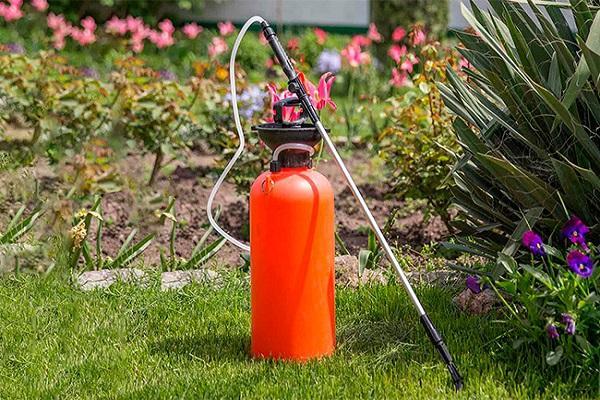
- For use in garden plots. Take a 10-liter plastic bucket and fill it halfway with clean water. Pour in 120 ml of herbicide and mix thoroughly with a wooden stick. Then add the remaining water and mix again until smooth.

The instructions for use state that the working solution should be prepared on the same day as the planned treatment. The optimal air temperature is between 10 and 25 degrees Celsius. Wind speed should not exceed 5 m/s to prevent the product from spreading onto adjacent crops. Work should be performed in the morning or evening.
Precautionary measures
When handling chemicals, care must be taken to avoid harming your health. Always wear protective clothing, gloves, and a head scarf. To prevent herbicide fumes from damaging your respiratory system, wear a respirator.
How toxic is it?
The herbicide "Rap" is classified as hazard class 3 for humans, animals, and insects. However, bee flight should be limited during treatment.
Is compatibility possible?
To reduce herbicide consumption, it is used in tank mixes with other chemicals, such as Elant. When mixing products, compatibility testing is mandatory.
How to store it correctly and for how long
Despite the herbicide's low hazard, it should be stored only in utility rooms, away from children and pets. It should be kept dark and dry, with a recommended temperature of no higher than 30 degrees Celsius. When stored properly, Rapa has a shelf life of 5 years.
Similar means
If necessary, "Rap" can be replaced with products containing the same active ingredient, such as "Aristocrat," "Glyphid," or "Tornado."
Related posts:
 Hermes herbicide instructions for use, dosage, and analogues
 Instructions for use and composition of the herbicide Aksifor, dosage and analogues
 Instructions for use and composition of the herbicide Basis, application rates and analogues
 The spectrum of action and instructions for use of the herbicide Agritox, its consumption
 Composition and instructions for use of the herbicide Pilaraund, application rates
 Luger herbicide instructions for use, dosage, and analogues
 Instructions for use of the soil herbicide Merlin, dosage and analogues
 Instructions for use and composition of the herbicide Callisto, dosage and analogues