
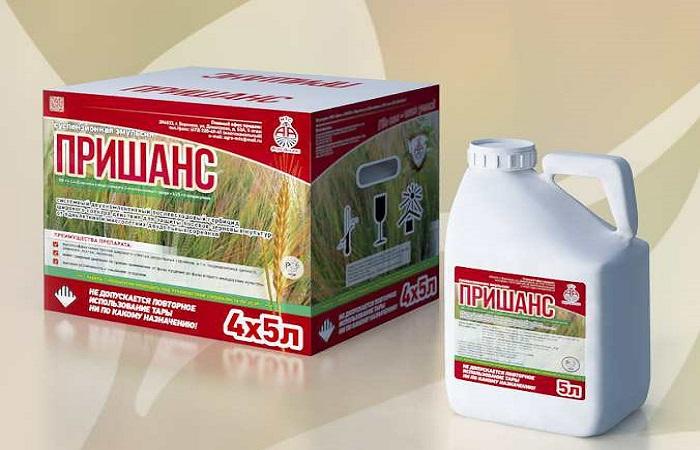
During the germination and growth stages, crops need weed protection most. "Prishance" is a popular herbicide with easy-to-understand instructions. It's a post-emergence herbicide. After application, weeds die or are weakened enough to not harm crops.
Composition, dosage form and purpose
Protecting grain crops from perennial and annual weeds is the primary purpose of "Prishance." It is available as a suspension emulsion in 5-liter plastic containers. The active ingredient, florasulam, inhibits the biosynthesis of essential amino acids in weeds, resulting in their death.
Operating principle and scope
Maximum effectiveness is observed when treating young weeds. High weed control rates are observed when treating the following plants:
- woodlouse;
- Highlander;
- creeping bitterling;
- bedstraw;
- broadleaf weeds.
After 2-4 weeks from spraying, necrosis of weed foliage begins, and the veins of the leaf blades become discolored.
Pros and cons
The drug "Prishance" is used as a post-emergence herbicide and exhibits the following positive qualities:
- the product destroys a wide range of dicotyledonous weeds, including chamomile, sow thistle, and milkweed;
- the suspension is used during a long period of weed vegetation (from the beginning of tillering to the second internode phase);
- ease of use.
It can be used during periods of precipitation, since the preparation is resistant to washing off from leaves.
Calculation of consumption for plants
When preparing the working solution, it is recommended to follow the manufacturer’s instructions:
| Name of the culture | Working fluid consumption rates, l/ha | Processing Features |
| Wheat and barley (winter and spring), winter rye | 200-300 | Spraying at the 1-2 internode stage. Winter crops are treated in the spring. |
| Corn | 200-300 | The first spraying is done at the 3-5 leaf stage of the crop. The second spraying is done at the 5-7 leaf stage. |
Preparation of the working mixture
The preparation of the working fluid is carried out according to a standard procedure, which includes several stages:
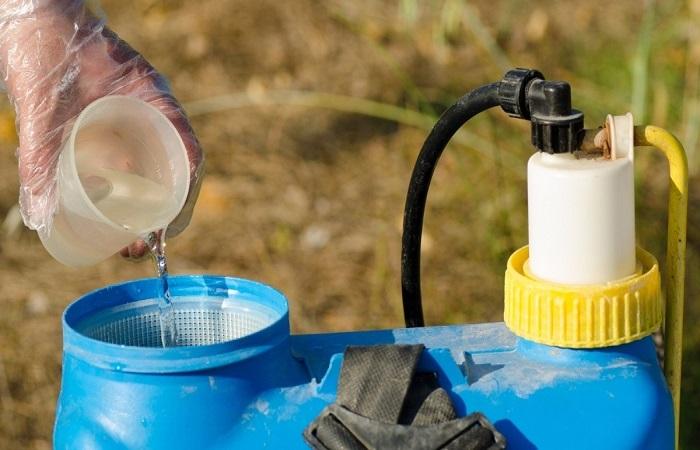
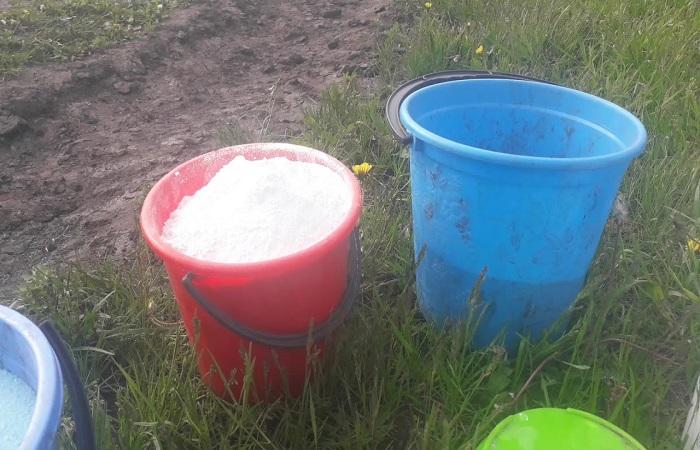
- The working tank is filled one third with water.
- In a separate small container, dilute the required amount of the preparation in water.
- The solution is poured into the tank, stirring constantly.
Fill the tank completely with water. Shake the spray fluid periodically during spraying.
Instructions for use
When using "Prishans," consider the type of crop being protected and the type of weed to be controlled. The herbicide is applied by contact. The optimal time for spraying is early morning, in calm weather, at temperatures between 8-25°C.
Safety precautions
The herbicide is a pesticide, so it's important to follow safety precautions when working with it. Preparatory procedures and spraying should be performed while wearing personal protective equipment (gloves, a respirator, and a protective suit).
Degree of toxicity
"Prishance" is classified as a Class 2 herbicide, which has limited human hazard. It is recommended to use the product under the guidance of a plant protection specialist. If ingested (through the respiratory system or skin), the suspension solution may cause acute or chronic poisoning.

Possible compatibility
The manufacturer notes the product's compatibility with other herbicides when creating tank solutions. Combining the suspension with humates is not recommended. In general, it is advisable to test the components for compatibility before mixing.
How to store it correctly and for how long
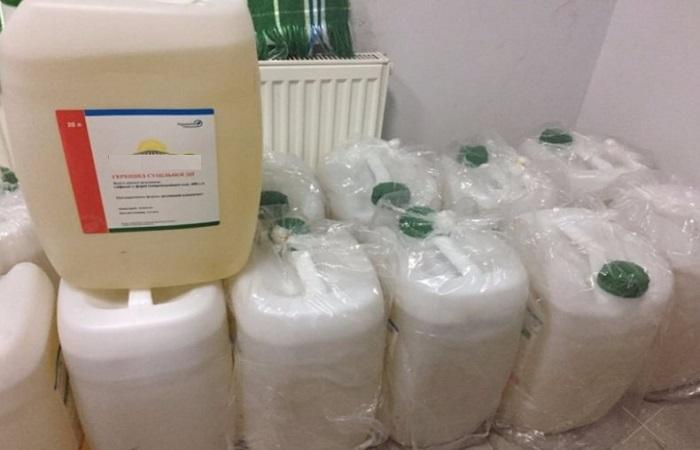
The suspension can be stored in its unopened original packaging for 3 years. Storage temperature: -10°C to +30°C. When diluting the suspension, remember to prepare it immediately before use, as the herbicide's effectiveness begins to decline after just two hours.

Analogues
When searching for herbicides, you can pay attention to products with a similar principle of action, which also contain florasulam: "Pectoral", "Disulam", "Hammer", "Prime", "Agent".
In small garden plots, weeds can be controlled manually by weeding and loosening the soil. However, weed control over larger areas is impossible without the use of specialized products. Herbicides inhibit weed growth and are non-toxic to cultivated plants.
Related posts:
 Instructions for use and composition of Glyphora for weed control, dosage, and analogues
 How to make a garden bed from scratch without grass and weeds: ideas and methods with and without weeding
 Instructions for use of Cassius and the herbicide composition, dosage, and analogues
 Mortira herbicide instructions for use, dosage, and analogues
 Composition and instructions for use of the herbicide Ballet, application rates and analogues
 How to treat grapes for mildew, the best control measures and treatment rules
 Instructions for use of the herbicide Frontier Optima, composition and dosage
 Causes and treatment of eggplant pests and diseases, how to combat them at home