
- Composition, existing forms of release and purpose
- How does it work and how quickly does it work?
- Duration of effect
- Pros and cons
- Calculation of consumption for plants
- Instructions for the preparation and use of the working mixture
- Safety precautions
- Degree of phytotoxicity
- Is there resistance?
- Possible compatibility
- Shelf life
- Similar means
Glyfor is a herbicide with a broad-spectrum action. It helps control many types of weeds, including sow thistle, dandelions, couch grass, and bindweed. It does not interfere with seed germination. After application, crops can be planted within 7-10 days. However, the instructions for using Glyfor against weeds must be strictly followed.
Composition, existing forms of release and purpose
The active ingredient is glyphosate, or isopropylamine salt. One liter of the product contains 360 grams of this substance. The product is available as an aqueous solution.
It has a broad spectrum of action and helps control various types of weeds. This substance helps kill dandelions, hogweed, and couch grass. It also successfully combats sow thistle and bindweed. It also helps remove woody plants and shrubs.
How does it work and how quickly does it work?
Glyfor is considered a universal product. It can be used to control a wide range of weeds in a garden. It is effective against grasses and annual dicotyledonous weeds. It also helps control perennials that are difficult to eradicate. The most persistent weeds include sow thistle, birch, and dandelions.
Glyphor's systemic effect helps control all harmful plants common in the area. The active ingredient migrates through the plant tissue, moving from the above-ground elements to the root system. The protective effect lasts for 50 days.

On annual weeds, signs of damage appear within 3-4 days. It takes at least 10 days for perennials to become affected. First, the leaves on the bushes wilt and turn yellow. Then, the active substance penetrates the root system, killing the weeds.
Duration of effect
On average, high concentrations of the product remain in weed tissue for almost two months—up to 50 days. During this period, the active ingredient rapidly migrates from above-ground structures to underground ones.
When weeds grow in a garden, the greatest danger comes from the deep roots. Using a herbicide can completely eliminate this problem.
Pros and cons
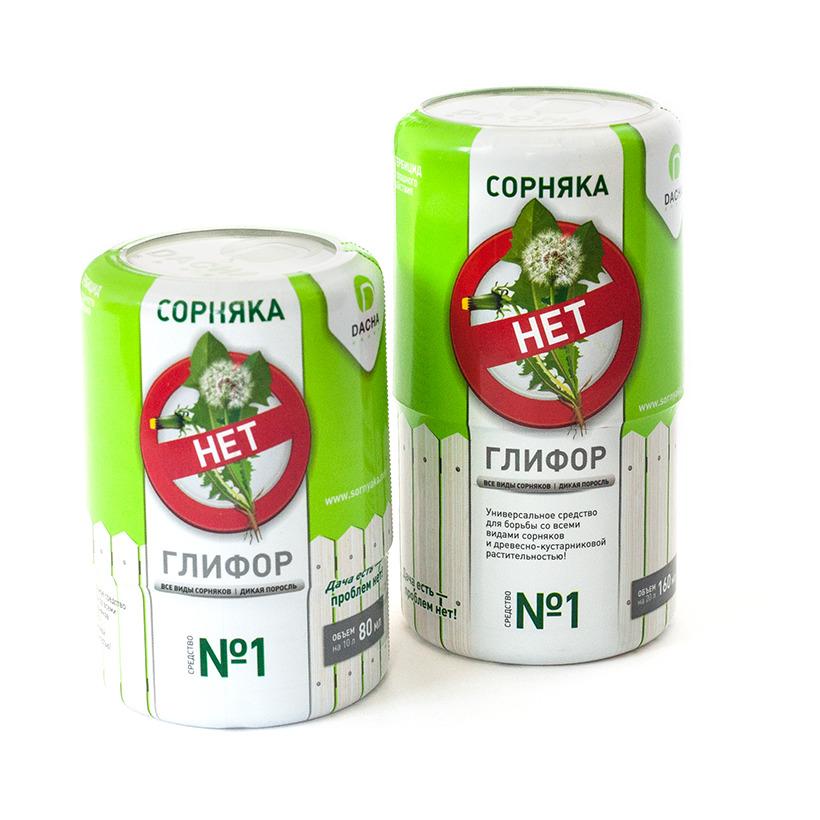
The key advantages of Glyphora include the following:
- fast and reliable action;
- destruction of almost all types of weeds;
- no wash-off even by heavy rainfall after just 2-3 hours;
- rapid decomposition in the soil structure and no impact on crops;
- the ability to plant seeds or seedlings within a week after exposure;
- ease of use;
- moderate danger to humans – the drug belongs to the third class;
- long shelf life – 5 years.
The main drawback of Glyfor is its toxic properties. This drug is dangerous to humans. Therefore, it must be used with extreme caution.
Calculation of consumption for plants
The concentration of the product depends on the plant type. For potatoes, vegetables, and spring cereals, use 80 milliliters of Glyphor to control annual weeds and 100 milliliters to control perennials. This amount of product should be mixed with 10 liters of water. It is best to apply the product to garden beds in the fall.
Fruit trees and vineyards should be treated in a similar manner. They should be sprayed in the summer. To control annual weeds, use 80 milliliters of the product, and to control perennials, use 120 milliliters. Similar measures are taken for areas planned for planting next year.

Instructions for the preparation and use of the working mixture
The working solution must be prepared before use. If there are cultivated plants nearby, they should be covered with plastic wrap.
To destroy weeds, it is recommended to take into account the following features:
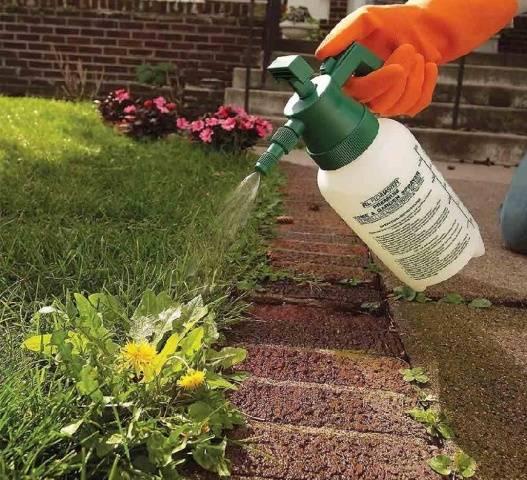
- Herbicide should only be sprayed on the foliage of weeds. Watering them at the roots is prohibited. This does not produce the desired results.
- When spraying grass, use a fresh solution. It will lose its effectiveness within 24 hours.
- If rain is expected within the next 6-7 hours, the procedure should be postponed.
- Spraying should be done when the air humidity is moderate. The average temperature should be between 16 and 22 degrees Celsius.
- To prevent the product from being blown away by the wind, avoid spraying crops in windy conditions. Wind speed should not exceed 5 meters per second during application.

Safety precautions
Glyfor belongs to hazard class 3, meaning it is not highly toxic. However, it is important to use personal protective equipment when handling weeds. If the substance is ingested, induce vomiting and seek medical attention immediately.
Degree of phytotoxicity
The product does not have a significant toxic effect on garden plants, vegetables, or grains. However, experts advise avoiding contact with the fruit, leaves, or stems of cultivated plants. Treatment should only be applied to the foliage of weeds.
Is there resistance?
A key advantage of this product is its lack of resistance and tolerance. Glyfor is suitable for repeated weed treatments.

Possible compatibility
This product works well with 2,4-dichlorophenoxyacetic acid. However, it should not be combined with highly alkaline substances. It is important to assess the compatibility of the products before using them together.
Shelf life
The composition should be stored in a dry, dark place. Its shelf life is 5 years.
Similar means
The following are analogs of the product:
- "Glider";
- Glyphid;
- Glyphos.
Glyfor is an effective weed control product. To achieve the desired effect, it's important to follow the instructions carefully.
Related posts:
 The best eggplant varieties for growing in a polycarbonate greenhouse: planting and care
 How to make a garden bed from scratch without grass and weeds: ideas and methods with and without weeding
 Nitrophoska composition and instructions for use of fertilizer, errors
 A description of the top 10 herbicides for raspberry weeds and which one is best
 Methods for planting and propagating cherries at home
 Instructions for using green soap against plant pests and its composition
 Description of acaricides, their mode of action on plants and the best remedies
 Is it possible to soak treated cucumber seeds before planting and how to do it correctly?