
- Composition, purpose and existing forms of release
- How does herbicide work?
- Pros and cons
- Calculation of consumption for different crops
- How to prepare a working solution
- Instructions for use
- Safety precautions at work
- The degree of toxicity of the drug
- Possible compatibility with other products
- Storage rules and shelf life
- Analogues
Herbicides are a collective term for a group of chemicals used to eliminate weeds. These compounds are particularly useful in large cultivated areas where manual weeding is typically futile and uneconomical. Agritox is a systemic herbicide with selective action. It ensures complete weed control and subsequent protection of cultivated areas.
Composition, purpose and existing forms of release
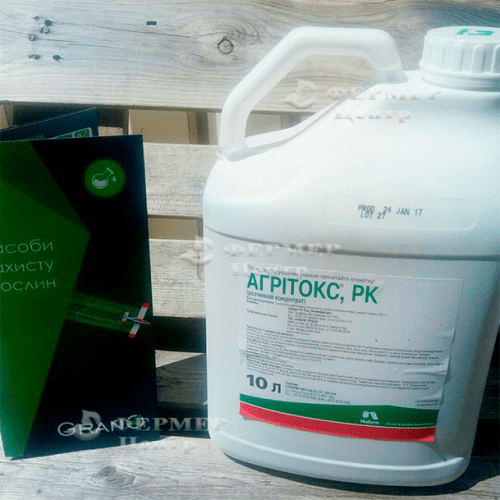
Agritox is used to control broadleaf weeds in agricultural crops such as grain, peas, flax, and similar crops. Its active ingredient is MCPA, a compound of dimethylamine, potassium, and sodium salts. Agritox belongs to the chemical class of aryloxyalkanecarboxylic acids.
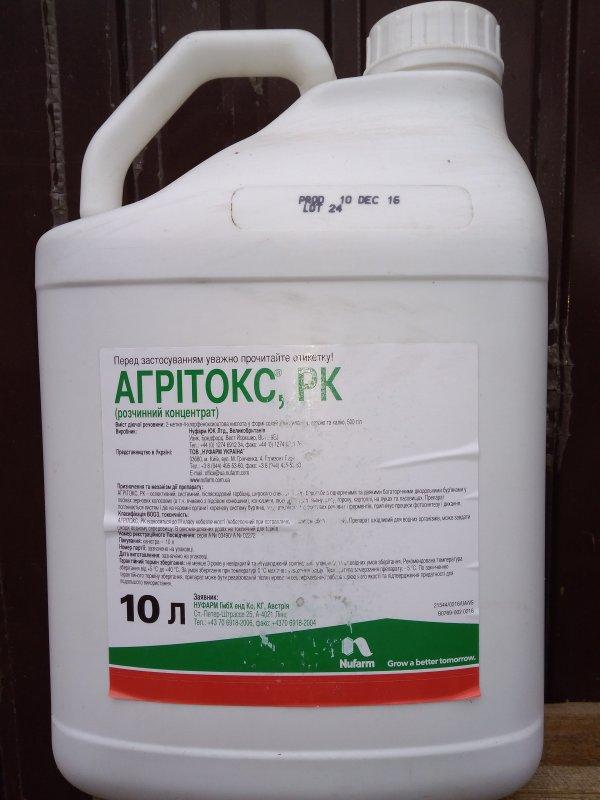
Agritox is produced as a water-soluble concentrate. It is packaged in plastic canisters, each containing 10 liters. Its action is selective.
How does herbicide work?
The Agritox solution penetrates the leaves and then spreads via plant sap throughout the entire above-ground and underground parts of the weed. The compounds in the solution inhibit the synthesis of enzymes and growth factors, suppressing respiration and photosynthesis. Plant growth is completely halted. The first signs are noticeable 3-5 days after treatment: yellowing and wilting of the green parts. Complete rhizome death occurs within 2-3 weeks.
The spectrum of action of the herbicide "Agritox":
- Ambrosia.
- Field bindweed (birch)
- Garden quinoa.
- Common dandelion.
- Wormwood is a herb.
Stinging nettle, field mustard, ragwort, white goosefoot, amaranth, field mustard, shepherd's purse, and other dicotyledonous weeds are also sensitive to the herbicide. Slightly sensitive species include sow thistle, knotweed, fumitory, and field thistle. Agritox is completely safe for useful crops. The herbicide's selective action allows it to "kill" only the parasitic weeds in the area.
Pros and cons
The herbicide "Agritox" is popular among both amateur gardeners and professional farmers. It is environmentally friendly, and its chemicals do not accumulate in the soil. "Agritox" helps effectively clear plots of even the most persistent weeds. Its advantages include rapid action and time savings.

Calculation of consumption for different crops
The recommended dosage of Agritox herbicide varies for each crop. To determine the application rate, use an average application rate of 200-300 liters per hectare of cultivated area. Examples of application volumes for various crops:
- Winter wheat – 1-1.5 liters.
- Spring wheat – 0.7-1.
- Peas – 0.5-0.8.
- Fiber flax – 0.8-1.
- Millet – 0.7-1.2.
- Mid-season and late-season potatoes – 1.2.
How to prepare a working solution
The solution should be prepared immediately before use. Spray weeds only with a freshly prepared solution. Fill the tank halfway with clean water. Prepare the herbicide separately: dilute the required amount for the specific crop in 5 liters of water. Mix thoroughly and pour into the spray tank.
Instructions for use
Choosing the right time for treatment is crucial for effective treatment. The procedure is performed in the morning or evening. The optimal air temperature is 15 to 25 degrees Celsius. The forecast should avoid rain or high humidity (to prevent the solution from being washed off the leaves of parasitic plants). Special instructions before treatment:
- Cereals – tillering stage before tube formation.
- The size of potato tops is 10-15 centimeters.
- Pea stems have 3-5 leaves.
- The stem of flax is 3-10 centimeters, the development phase is “herringbone”.
Safety precautions at work
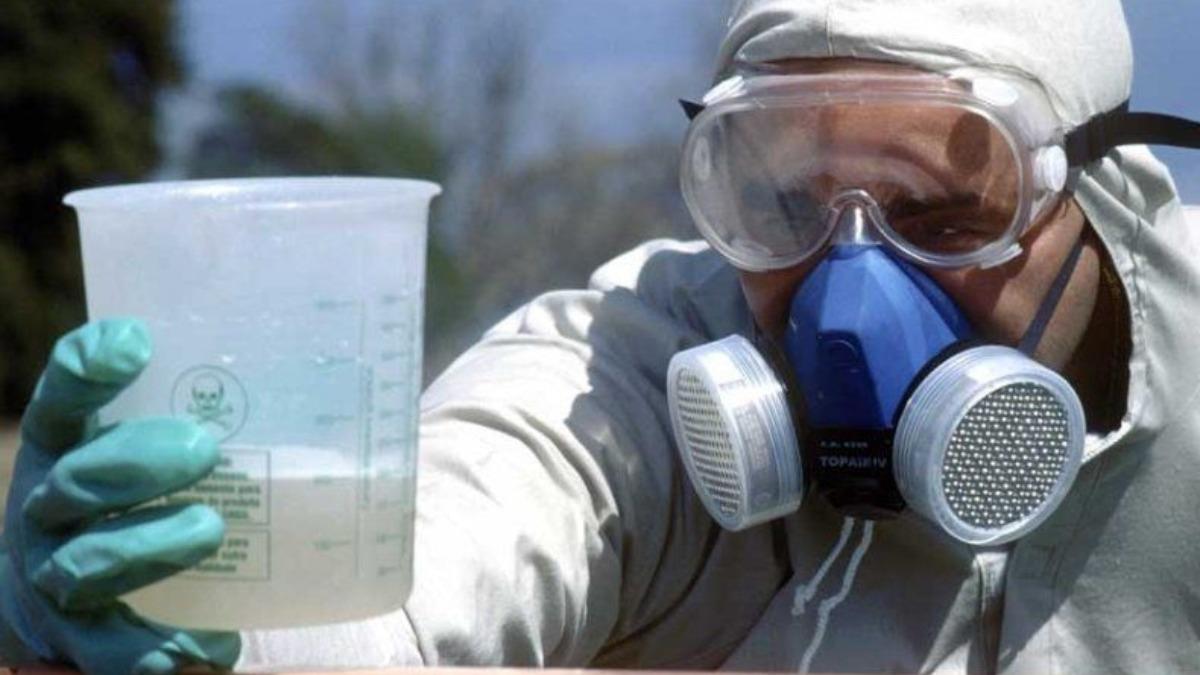
There are a number of restrictions and recommendations. The procedure must be performed while wearing personal protective equipment (a respirator, goggles, and a change of clothes). Pregnant or breastfeeding women should not handle the composition. When treating pastures or meadows, animals should be released after 45-50 days.
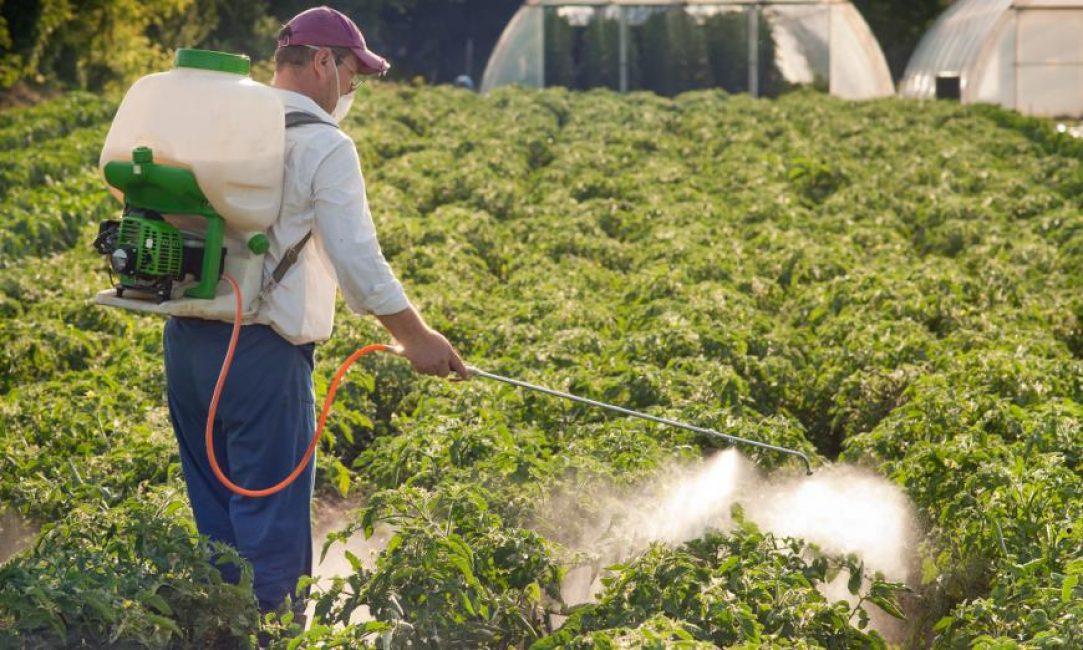
Other rules for working with the herbicide "Agritox":
- After the procedure, wash your hands thoroughly, then rinse your body under running shower water.
- If the solution comes into contact with your skin, carefully remove it. Do not rub or smear.
- Do not spray herbicide near water bodies or fish ponds.
- It is prohibited to pour herbicide residues into water bodies.
The degree of toxicity of the drug
Agritox is safe for agricultural plants when used according to dosage and instructions. Sunflowers, grapes, and beets are somewhat sensitive to the herbicide's composition.
Possible compatibility with other products
To enhance its effectiveness, Agritox can be combined with other products. It can be combined with bromoxynil and sulfonylureas, such as Secator Turbo and Secator. It can also be combined with fungicides, insecticides, and fertilizers, but only if they are applied at the same time. Testing is recommended before using any combination. Agritox is incompatible with alkaline compounds.
Storage rules and shelf life
Agritox herbicide should be stored in a designated area. It should be dark and out of reach of children and animals. Suitable temperatures are -10°C (14°F) in winter and +25°C (77°F) in summer.
Store the herbicide in sealed plastic containers. The expiration date is 2 years from the date of manufacture.
Analogues
Analogs of the herbicide "Agritox" are products containing MCPA. These include "Gerbitox," "Gertsog," "Dikoherb Super," and others. These products are designed to kill parasitic dicotyledonous plants. They are selective, clearing crop areas of weeds.

Agritox is a popular weed killer. It is a selective systemic herbicide. It is used to eliminate broadleaf weeds in cereal and grain crops, peas, and potatoes. It also helps control dandelions, ragweed, orach, and rhizomes.
Related posts:
 Hermes herbicide instructions for use, dosage, and analogues
 Composition and instructions for use of the herbicide Ballet, application rates and analogues
 Instructions for use and composition of the herbicide Basis, application rates and analogues
 Instructions for use and composition of the herbicide Aksifor, dosage and analogues
 Instructions for use of the soil herbicide Merlin, dosage and analogues
 Instructions for use and composition of the herbicide Callisto, dosage and analogues
 Instructions for use and composition of the herbicide Esteron, dosage and analogues
 Instructions for use and composition of the herbicide Fabian, application rates and analogues