Weeds are considered one of the most serious problems facing all farmers, as they choke out crops and rob them of nutrients. Weeds reduce not only the yield but also the quality of the harvest. Large farms are forced to resort to chemicals. The herbicide "Pulsar" effectively controls annual weeds and does not require repeated applications.
Composition and existing forms of release
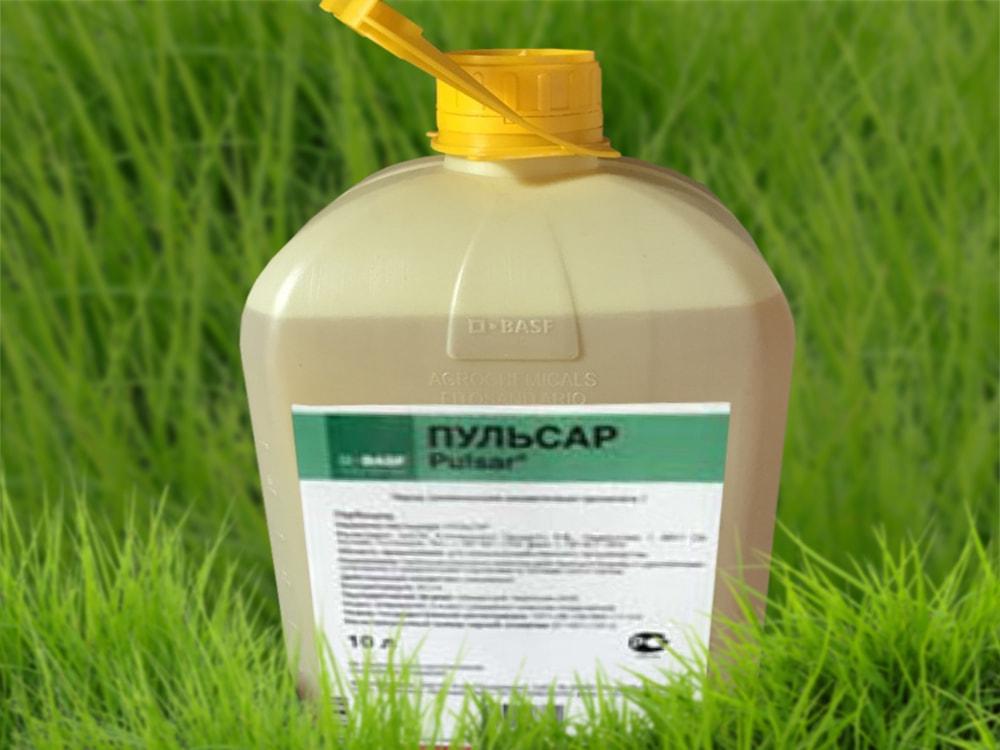
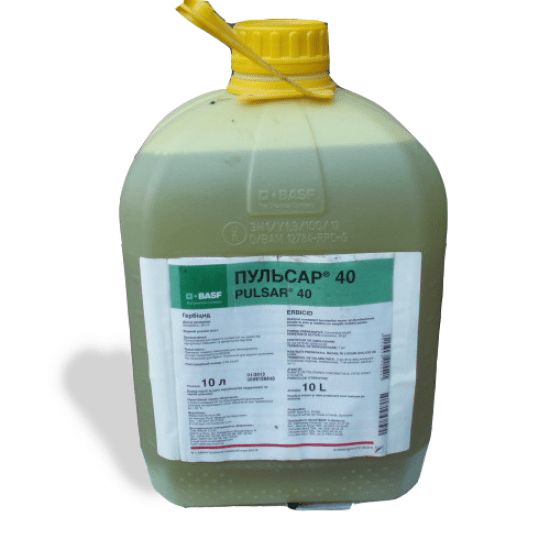
The only active ingredient responsible for the effectiveness of this new-generation herbicide is imazomox. One liter of Pulsar contains 40 grams of it. This imidazolinone herbicide is available as an aqueous solution. It is packaged in 10-liter plastic canisters at gardening stores.
Pros and cons
Although this herbicide has only recently appeared on the market, farmers and owners of large agricultural enterprises have identified the advantages and disadvantages of Pulsar in the fight against weeds.
The advantages of using it include:
- Effectively destroys most annual weeds in one treatment.
- After its use, a new wave of weeds does not appear, since it affects the soil.
- Economical in use.
Among the disadvantages, farmers note the impossibility of using Pulsar in tank mixtures with other herbicidal preparations.
Mode of action
The herbicide's main component blocks protein substances in the tissues of weedy plants, resulting in chlorosis of young leaves, stunted plant development, and the death of their growing points. All these processes lead to the weeds becoming stunted and eventually dying.
This effect of Pulsar allows us to get rid of weeds in soybean and pea plantations.
Calculation of consumption
To ensure the herbicide successfully solves the problem, it is necessary to correctly calculate the consumption of Pulsar.

On soybeans
To control annual dicotyledonous and grass weeds, apply 750 ml to 1 liter of Pulsar per hectare of crops. Any crops can be planted in these fields the following season, with the exception of sugar beets, which should not be planted earlier than 16 months later.
On peas
The amount of the preparation consumed depends on the degree of weed infestation in the area and, as in soybean plantations, ranges from 750 ml to 1 liter per hectare of plantings.
Preparation of the working mixture
Prepare the working solution in a special container. Fill it with half the volume of water (slightly warm) and add the required amount of herbicide. Mix thoroughly until completely dissolved, then top up to the full volume. The prepared solution must be used immediately, as it loses its effectiveness over time. After treating the plants, rinse the container with clean water and store it in a utility room. It is not recommended to use this container for other purposes.

Instructions for use
Soybean and pea fields should be treated in clear weather with minimal wind speed to prevent the herbicide from accidentally spilling onto adjacent crops. The maximum air temperature at which spraying is permitted is 30 degrees Celsius.
After treatment, it is not recommended to loosen the space between rows for four weeks to avoid disturbing the herbicide layer on the soil. One treatment per season is sufficient to eliminate weeds. In case of severe drought, repeat treatments are permitted.
When is the best time to treat plants?
The instructions for the Pulsar herbicide recommend starting treatment when peas have 3-5 leaves and soybeans have 2-3. The product stops weed growth within a few hours of application, and complete weed death occurs several weeks after spraying. The exact timing depends on the severity of the weed infestation and the type of weed.

Safety precautions
When working with any herbicide, it's essential to observe safety precautions and ensure the working solution doesn't come into contact with skin or mucous membranes. Before starting work, put on overalls and cover your head with a scarf or cap. Gloves are essential. After spraying, wash all clothing and take a shower.
Degree of toxicity
The herbicide is classified as toxicity level 3, so its use is not permitted near fisheries and apiaries.
Possible compatibility
A drawback of the Pulsar herbicide is that it cannot be combined with other chemicals or used in tank mixes. The only herbicide that can be used with Pulsar is Bazargan. This combination effectively controls dioecious weeds. For one hectare of planting, you will need 1.5 liters of Bazargan and 600 ml of Pulsar.
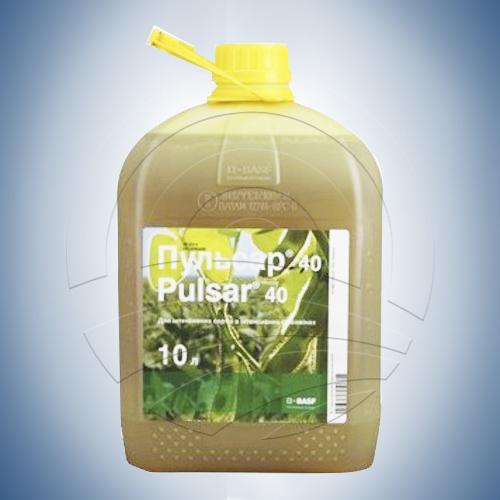
Storage rules
The shelf life of the herbicide "Pulsar" is 24 months from the date of manufacture, provided the original packaging is intact. If the plastic container has been opened, the weed killer must be used within one month; after that, it loses its effectiveness.
The outbuilding where the chemical will be stored should be located away from the residential building to prevent access by small children. Another requirement for the storage location is protection from direct sunlight and low humidity.
Analogues
If you can't find the Pulsar herbicide, you can substitute it with a similar product with a similar effect and the same active ingredient. Herbicides such as MaxiMox, Motor, Paradox August, Cleanefect, and Imivit are effective at killing weeds.
Related posts:
 Composition and instructions for use of the herbicide Ballet, application rates and analogues
 Luger herbicide instructions for use, dosage, and analogues
 Instructions for use and composition of the herbicide Puma Super 100, application rates
 Instructions for use and composition of the herbicide Galigan, dosage and analogues
 Instructions for use and composition of the herbicide Basis, application rates and analogues
 Composition and instructions for use of the herbicide Panther, application rates
 Instructions for use and composition of the herbicide Lornet, application rates and analogues
 Instructions for use of Zenkor Ultra weed control for potatoes