
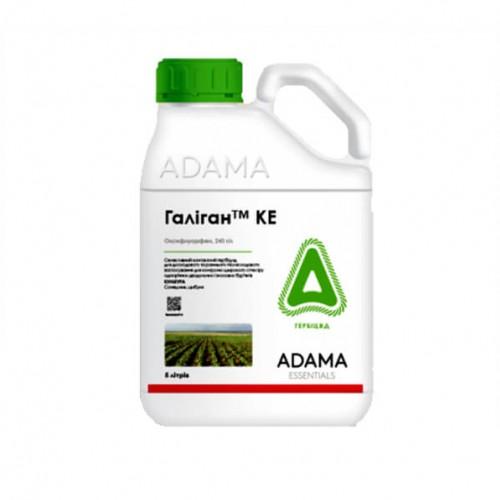
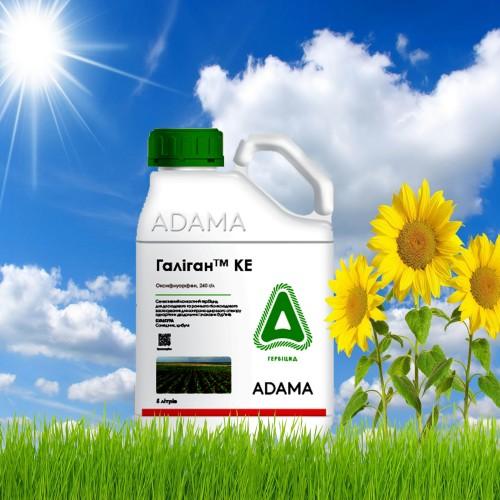
Herbicides are often used even in private farms, and they have long been indispensable on larger plots. The percentage of crops preserved by the use of chemicals, calculated by scientists, is staggering. Galigan, a contact and soil-applied herbicide with clear instructions for use from the Israeli brand ADAMA, has already won the favor of many farmers.
Composition and dosage form, purpose
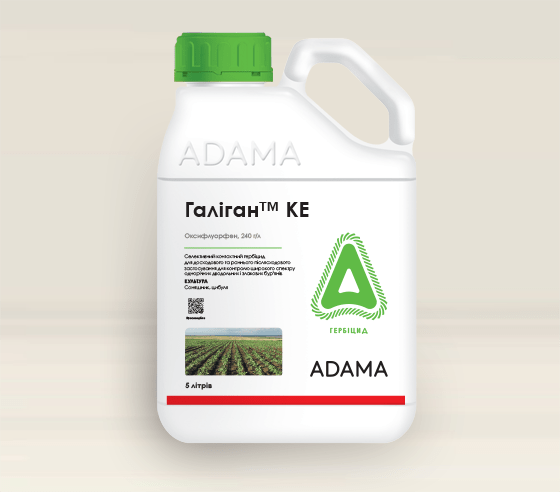
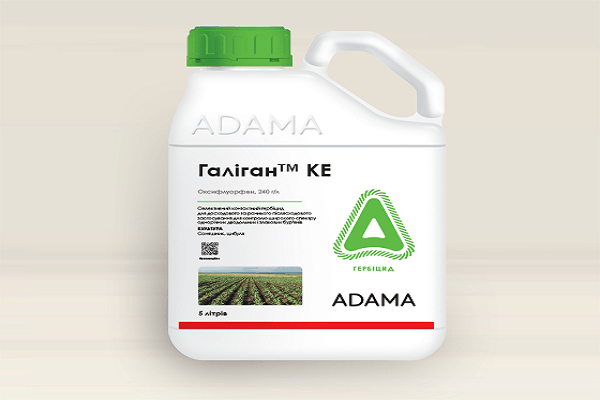
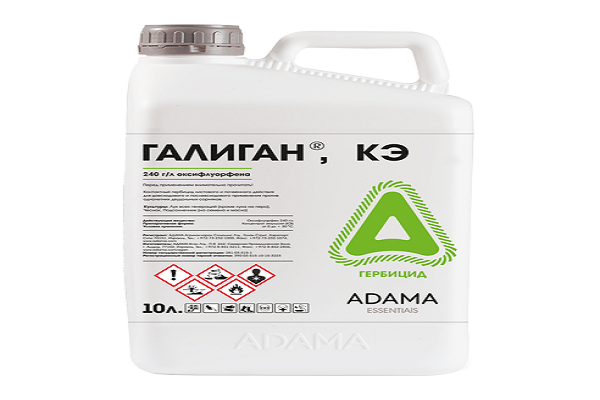
The herbicide "Galigan" is produced as an emulsifiable concentrate. Its active ingredient is oxyfluorfen (240 g/l). "Galigan" is packaged in 5- and 10-liter plastic canisters and 1-liter bottles. It is applied to annual broadleaf weeds before emergence, as well as during the early stages of their vegetative development. The herbicide is harmless to garlic, onions, and sunflowers.
Mechanism of operation
Oxyfluorfen inhibits the synthesis of complex proteins and chlorophyll in weeds, discoloring the plant. Intracellular membranes are altered, and the plant dies very quickly (the results are visible as early as the second day). In the presence of light, the weed's destruction process accelerates, as additional destructive mechanisms are activated.
Pros of the product
Like any product offered to the public, the herbicide "Galigan" has its appeal. These include:
- Sprayed before sowing crops, especially with such delicate sprouts as onions and garlic, it allows the main plant to get stronger without being subjected to unequal competition from powerful weeds.
- It acts quickly (within 3-4 hours) and during post-emergence treatment.
- The activity of the preparation in the soil remains for 4 weeks.
- Does not require embedding in the ground.
- It also has a negative impact on the development of annual cereal weeds.
- When sowing other crops in a place treated with Galigan, no negative effects are observed.
- Destroys climbing plants, manual weeding of which leads to damage to the crop.
Calculation of consumption for different plants
To spray germinated or emerging weeds, 200-300 liters of working solution per hectare is sufficient. The concentration of Galigan herbicide in the solution varies depending on the crop being treated, soil quality, and the weed's development stage.
| Culture | Spraying time | Application rate, l/ha |
| Sunflower | After sowing the crop until emergence. | 0.8-1 |
| Onions and garlic (not green) | At the stage of 1-2 leaves of the crop. | 0.2 |
| 3-4 sheets | 0.3 | |
| 5-7 sheets | 0.5 |
If the area is heavily infested with weeds, the consumption of the preparation for onions can be increased, but the total amount during 3 applications should not exceed 1.5 l/ha.
Preparation of working solution
Before applying the herbicide "Galigan" to a field intended for vegetable or industrial crops, prepare a finely dispersed mixture of water and the herbicide at the recommended doses. The step-by-step process is as follows:
- 1/3 of the required amount of water is poured into the tank.
- Turn on the hydraulic mixer and introduce the required amount of concentrated herbicide.
- Knead for 7-8 minutes.
- Add the rest of the calculated amount of water.
- Continue stirring for another 5 minutes.
The working solution is used immediately.
Rules for using the drug
The herbicide is applied when there is no wind or the wind is blowing in a steady direction and its speed does not exceed 4 m/s. The air temperature at the time of application should be between +10°C and +25°C. It is recommended that the field be:
- Cultivate well. If the surface layer contains less than 30% 2cm clumps and 10% larger clumps, herbicide use will be saved and the quality of treatment will improve by 40%.
- Clear away plant debris.
- Choose a site free of perennial weeds. These must be eradicated from the previous, coarser crop.
It should be taken into account that clayey and silty soils require a higher consumption of the preparation.
Disturbance of the protective layer on the soil, formed after application of the preparation by passing machinery or cultivating the spaces between rows, significantly reduces its effectiveness and duration of action.

Precautionary measures
Personnel working with the herbicide "Galigan" must undergo a medical examination and receive training in safety precautions and first aid. Workers must be 18 years of age or older and women over 35. Pregnant women are not allowed to handle the chemical. Workers spraying and preparing the solution must wear the following equipment:
- special clothing;
- chemical-resistant gloves;
- rubber boots;
- protective glasses;
- respirator.
Before eating during lunch, workers must move 400 m away from the herbicide and wash their hands and face with soap.
How toxic is it?
The herbicide "Galigan" is classified as hazard class 2 (highly hazardous). It is not intended for use in private households. It is moderately hazardous to bees and highly toxic to aquatic organisms. If handled improperly, acute poisoning may occur, with the following symptoms:
- irritation of the skin, mucous membranes of the eyes and nasopharynx;
- profuse salivation.
When spraying the herbicide "Galigan", the possibility of it getting onto other crops is controlled.
Possible compatibility
In tank mixes, "Galigan" combines well with products from the same manufacturer, ADAMA, if they are designed for the same crops and have the same application periods. Compatibility with other products should be tested by mixing small quantities of the components to be combined.
Storage conditions
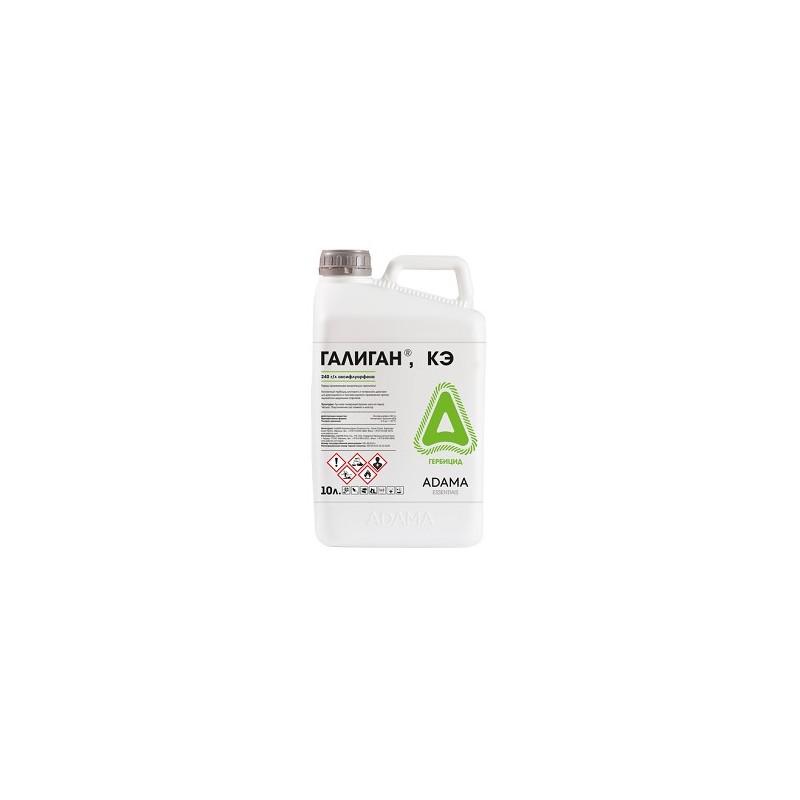
The herbicide "Galigan" is usable for three years from the date of production. Store it in its original container with the lid tightly closed in a ventilated area, inaccessible to unauthorized persons. Store at a temperature between +5°C and +30°C.
Analogues
The herbicide "Galigan" has analogues in terms of its functional effect on the same crops and similar weeds.
| Preparation | Cultures | Pests | Time of application |
| Gaitan | Onions, sunflowers, carrots, cabbage. | Annual cereals and dicotyledons. | Before the emergence of crop shoots. |
| Stomp Professional | Onions, carrots, white cabbage. | Immediately after sowing and before the loop stage. | |
| "Cobra" | Sunflower, onion (not green), garlic. | Before emergence. | |
| "Print" | Onions (not green), garlic, sunflower. | Before emergence. |
Related posts:
 Composition and instructions for use of the herbicide Ballet, application rates and analogues
 Instructions for use and composition of the herbicide Axial, dosage and analogues
 Top 10 Systemic Herbicides and How to Choose the Right One
 Instructions for use and composition of the herbicide Helios, dosage and analogues
 Instructions for use and composition of the herbicide Corsar, dosage and analogues
 Instructions for use of Cassius and the herbicide composition, dosage, and analogues
 Instructions for use and composition of the herbicide Miura, application rates and analogues
 Instructions for use and composition of the herbicide Goal, dosage and analogues