
Weeds plague all crops. They outgrow even the most cold-hardy crops in the spring. Growing onions from seed over large areas is simply impossible without herbicides. The fine hairs of this crop are difficult to spot among other vegetation in the first few days after emergence. Goal, a soil- and contact-applied herbicide, saves not only bulbous plants but also sunflowers and tree seedlings in the early stages of development.
Composition, existing forms of release and purpose
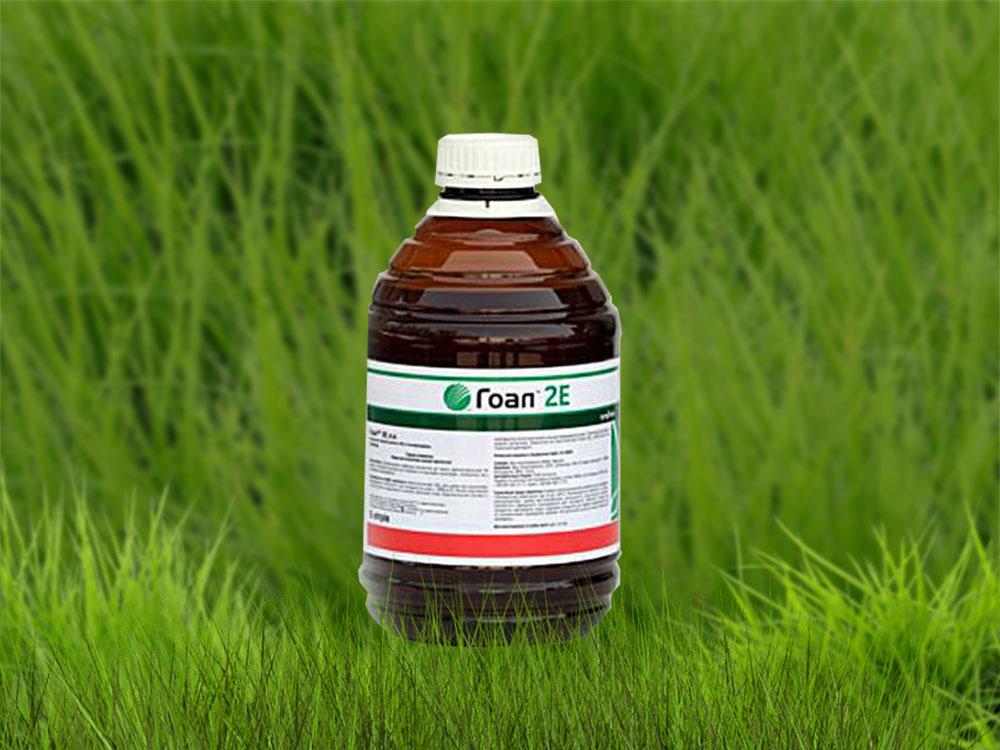
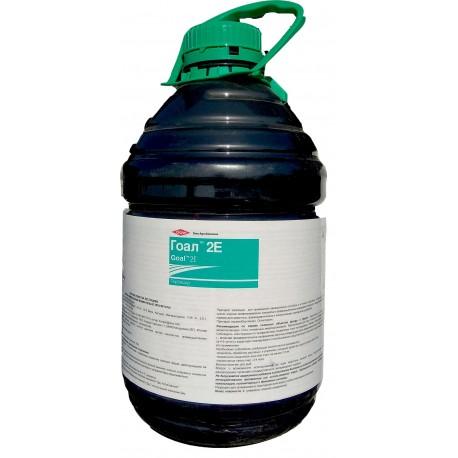
The herbicide "Goal" is produced using the active ingredient oxyfluorfen (240 g/l). The product is available as an emulsifiable concentrate packaged in 5-liter plastic canisters.
Mode of action
Goal is a contact herbicide. Once deposited on the soil, particles of the substance retain their weed-fighting activity. By enveloping the harmful plant, Goal destroys the environmentally resistant layer of outer tissue, inhibiting photosynthesis. Deprived of protection and a vital source of nutrition, the weed loses its natural color and becomes covered with necrotic spots. The effects of phytotoxicity are visible within a few hours.
Annuals are unable to recover after their above-ground parts die. Perennials retain sufficient reserves in their root systems to continue functioning. However, the loss of a large percentage of vegetative mass significantly slows their development. Furthermore, the herbicide's effect on the soil damages the outer coverings of perennial roots and rhizomes. Germinating weeds that pass through the chemical layer in the soil die either in the soil or immediately after emerging from the soil.
Advantages and disadvantages
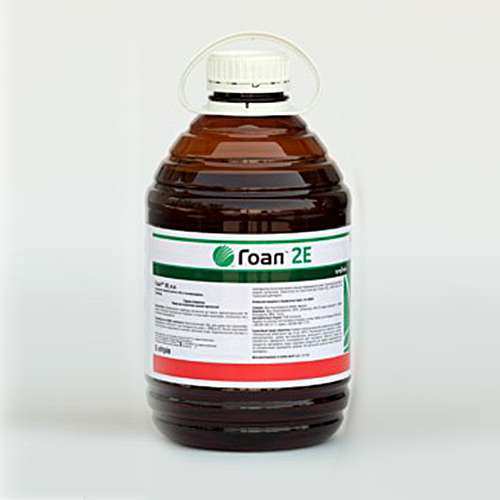
The herbicide "Goal" is competitive in the context of the growing popularity of systemic herbicides.
No drug can be ideal.
Calculation of consumption
Since it's important to cover the weed on all sides with the Goal herbicide, 300 liters per hectare is the minimum amount. Depending on the size of the weeds and the experience of the people performing the treatment, the volume of the mixture can be increased. For home gardening, dilute 8 g of Goal in 10 liters of water and spray when the onion has two leaves. The onion leaves are not suitable for human consumption.
| Number of treatments. Notes | The object being processed | Weeds | Herbicide rate, l/ha | Spraying timing |
| 2. | Onion of the second year of life | Annual dicotyledons | 0.5-1 | 3-5 days after planting the sets |
| Onions, garlic | 0.5-1 | 1-2 leaves of the crop, weeds have sprouted. | ||
| 3. The total amount of the preparation should not exceed 1.5 l/ha per season. | Onions, garlic | 0.2 | 1-2 leaves of the crop, weeds in the cotyledon leaf phase. | |
| 0.3 | In 1-1.5 weeks. | |||
| 0.5 | In 7-10 days. | |||
| 1. | Sunflower | 0.8-1 | After sowing the crop, until it sprouts | |
| 1. | Apple | 4-5 | In spring, during the period of active weed growth, avoid getting liquid on the tree. | |
| Nurseries, forestry | 2-4 | Before the emergence of crop seedlings or in the fall, after the seedlings have finished growing | ||
| 6-8 | In spring, before growth begins, or in autumn, after the seedlings have stopped growing |
Preparation of working solution
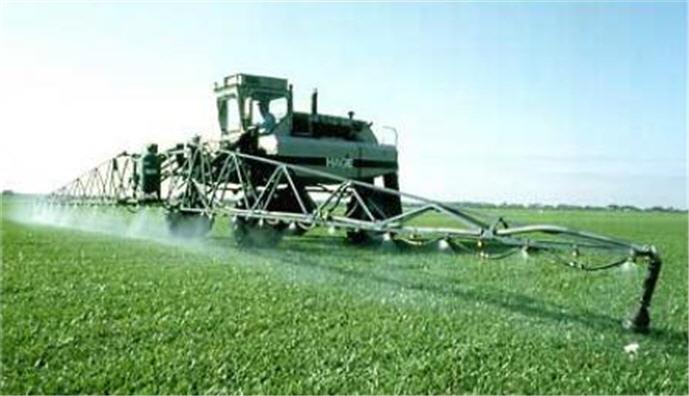
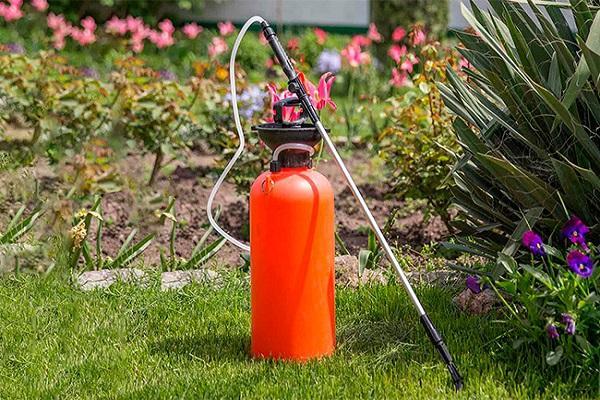
To treat gardens and fields, dilute Goal herbicide with water. Follow these steps:
- Fill the sprayer tank 1/3 full with water.
- Pour in the amount of pesticide calculated based on the tank volume.
- Turn on the mixer and mix for 8-10 minutes.
- Add the remaining water to the tank.
- Knead for another 5 minutes.
Instructions for using the mixture
Spray only with freshly prepared dispersion, as the liquid tends to separate. Therefore, stir it constantly during application. Spray at wind speeds below 4 m/s. The mixture is most effective at temperatures between +5°C and +25°C. It is best to spray on a day when precipitation is not expected. If absolutely necessary, allow at least two hours before the onset of rain.
Take a look Also

Precautionary measures
Since Goal herbicide is moderately hazardous to humans, bees, and animals, it's important to know how to handle it safely. When preparing the working solution, people involved should wear the following:
- special suits;
- rubber boots;
- chemical-resistant gloves;
- protective glasses or masks.
Breathing should be done either through a filtering mask or a respirator, while keeping your mouth closed.
Beekeepers are notified five days before spraying begins. Signs reading "Danger! Herbicides" are placed in the corners of treated areas.

How toxic is it?
The herbicide "Goal" can cause an allergic reaction, manifested by skin redness and mild swelling of the nasopharynx. It is highly toxic to aquatic organisms. Do not allow the product to enter water bodies or groundwater.
Is compatibility possible?
To ensure the herbicide screen remains in the topsoil for as long as possible, it's recommended to combine Goal spraying with fungicides, insecticides, liquid fertilizers, and other planned applications. It doesn't react with dilute acids or alkalis mixed with water.
Storage terms and conditions
Goal herbicide has a shelf life of two years from the date of production. It is stored in a designated chemical storage area with ventilation and fire extinguishing equipment. Storage temperature is 5-40°C. Access to the pesticide is controlled by a responsible person. The warehouse is located 400 meters away from residential buildings and areas where animals are kept.
Analogues
Too small doses of Goal herbicide or its continuous application in one area can lead to the development of resistant weed populations. To avoid this, follow the instructions for use and alternate Goal with other pesticides.
| Culture | Weeds | Preparation |
| Onions, sunflowers, carrots, beans, garlic | Annual dicotyledons and cereals | "Stomp" |
| Onions, sunflowers, carrots | Gaitan | |
| Onions, white cabbage, sunflower, garlic | "Cobra", "Penitran" | |
| Green onions, white cabbage, carrots | Stomp Professional | |
| Onions (not green onions), sunflower | "Print" | |
| Garden plants | Annual dicotyledons, especially broadleaf ones | Amine salt 2,4-D |
Related posts:
 When to harvest leeks from the garden for storage, ripening times
 50 types and varieties of perennial onions with descriptions, cultivation, and care
 Description of the Exhibition onion variety, growing from seedlings, planting and care
 The beneficial properties of white onions, description of varieties, cultivation and care
 How and when to plant onions to get large bulbs
 Description of purple onion varieties, their beneficial properties, storage methods, and harvesting times
 Description of varieties and cultivars of wild onions, the subtleties of cultivation
 Description of the best varieties of onions, planting and care in open ground