
- Composition and existing forms of release
- What plants does it affect and what weeds does it destroy?
- Mechanism of action
- Advantages of the drug
- Preparation of the working mixture
- How to use correctly and consumption rates
- Precautionary measures
- How toxic is it and is compatibility possible?
- How and how long can it be stored?
- Analogues
Sometimes, certain weeds fail to be eradicated, either due to poor herbicide selection or missed application deadlines. The field becomes a kind of nursery or sanctuary for the most ardent weed-killers, to the detriment of crops. Helios herbicide will sweep away even the tallest, most vigorous weeds indiscriminately, as long as the application rates are as specified in the instructions.
Composition and existing forms of release
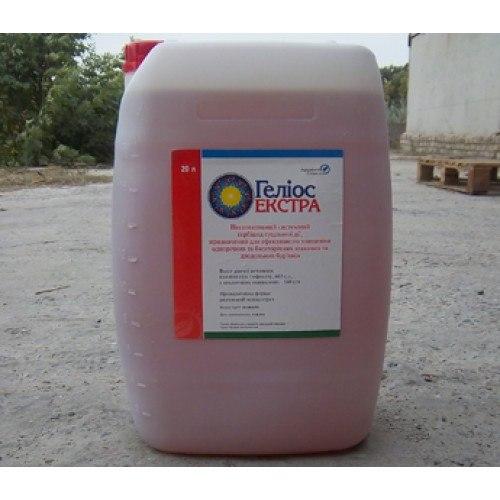
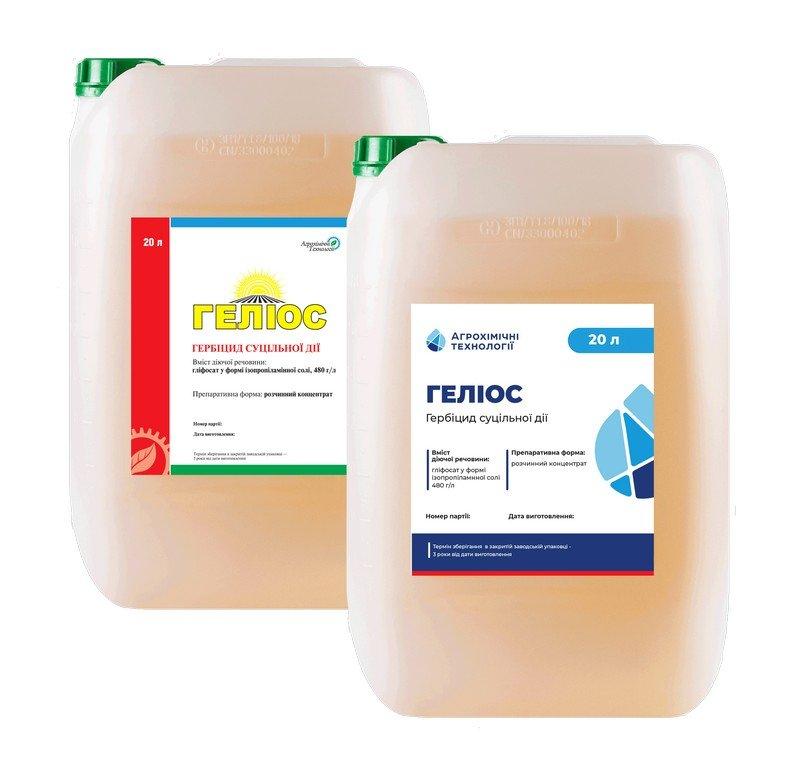
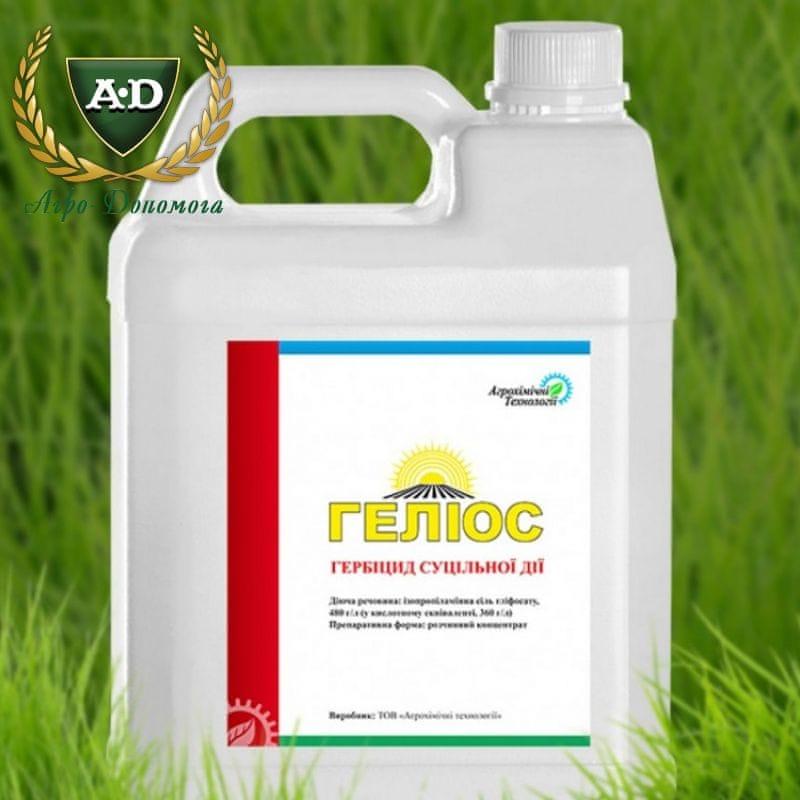
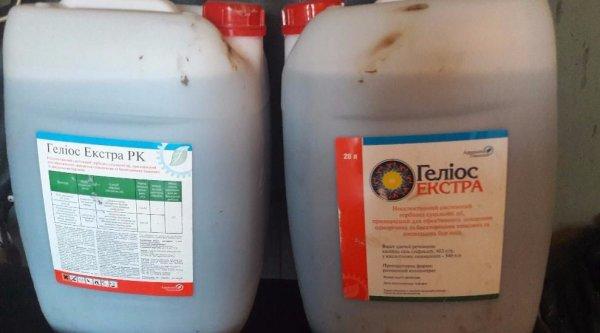
The herbicide "Helios" from Agrochemical Technologies contains the organophosphorus compound glyphosate (360 g/l) as the active ingredient. It is available as an aqueous solution and packaged in 20-liter canisters.
What plants does it affect and what weeds does it destroy?
The herbicide "Helios" controls a wide range of annual and perennial weeds in fields. Two weeks after application, the soil surface is completely clear of weeds. The pesticide also has a widespread toxic effect on crops. The exception is glyphosate-resistant varieties specially bred by breeders. Most garden crops must be protected from exposure to the herbicide "Helios." In the field, spraying is carried out either before sowing or planting the crop, or during its ripening period.
Mechanism of action
The herbicide "Helios" disperses throughout the plant. By inhibiting the production of enzymes involved in amino acid synthesis, it disrupts the weed's well-established mechanism for growth, cell division, and the formation of new organs. Three to four hours are usually sufficient for "Helios" to penetrate the pest's tissue. A delay may be caused by a waxy coating on the leaves or the plant's pubescence. Brownish spots appear on the weed as early as three to four days later. By the end of the first week, annuals die. By the second week, the process of complete death of perennials, including underground shoots, is complete.

Advantages of the drug
Glyphosate is the most widely used pesticide worldwide. Its popularity stems from the following properties:
- eradicates all types of weeds growing in the cultivated area;
- acts as a desiccant on crops, allowing harvesting to be adjusted to the required time;
- Under the influence of new highly effective surfactants, it penetrates the weed's body faster, beginning to hasten its death.
Preparation of the working mixture
The solution for treating a field or garden is mixed in a sprayer tank. Preparation instructions:
- To reduce the stirring time, half the amount of water is poured into the container.
- The entire dose of the herbicide "Helios" is administered.
- Stir for 5 minutes with a water mixer.
- Add the rest of the water.
- Knead for another 3 minutes.
The concentration of the preparation is selected after determining the type and stage of development of the weeds growing in the area planned for treatment.
How to use correctly and consumption rates
To ensure more uniform coverage of competing crops with the Helios herbicide solution, select suitable weather conditions. Its physical characteristics include:
- air temperature – from +13 °C to +25 °C;
- wind speed – less than 4 m/s.
Spraying is best done 2 hours before sunrise or in the evening, as the sun begins to set. The table shows the concentrations of Helios in the working mixture for specific situations:
| The object being processed | Weeds | Herbicide rate, l/ha | Time and purpose of spraying |
| Non-agricultural lands | Cereals and dicotyledons | 4-8 | Phase of active weed development. |
| Couples | Annuals | 2-4 | |
| Perennials | 4-6 | ||
| Perennials with a branched root system (field bindweed) or a powerful above-ground structure (common thistle) | 6-8 | ||
| Fields allocated for spring sowing of grain, legumes, oilseeds, industrial, forage, melons, ornamental, and vegetable crops | Annuals | 2-4 | After harvesting the crop in late summer or autumn. |
| Perennials | 4-6 | ||
| Pernicious perennials (pig grass, couch grass, sow thistle, thistle) | 6-8 | ||
| Orchards and vineyards | Annuals | 2-4 | Period of active vegetation of weeds |
| Perennials | 4-8 | ||
| Legume forage grasses | Types of dodder | 0.5-0.6 | 7-10 days after mowing. |
| Fiber flax for seeds | 2-3 | 28 days before early yellow ripeness to dry out the crop and destroy weeds. | |
| Flax for fiber | 2-3 | 10 days after the end of flowering against annual weeds. | |
| Cereals | 3 | 2 weeks before harvesting grain to dry it and affect weeds. | |
| Sunflower | 2-3 | ||
| Soybeans | 2.5-3 | ||
| Rape | 2.5-3 | Desiccation when 70% of the pods have turned brown. | |
| Corn | 2.5-3 | Grain moisture content – 33-36%. When black spots appear in the grain. | |
| Peas | 2-3 | Full ripening of 20% of fruits. |

The working fluid consumption rate is 80-200 l/ha. Aerial treatment requires 50-100 l/ha of solution.
Precautionary measures
The herbicide "Helios" is moderately hazardous to humans, birds, and beneficial insects. Workers should be equipped with:
- special clothing;
- eye mask;
- impermeable gloves;
- airway filter;
- Rubber boots – will allow you to spray without risk to your health.
The spray jet should not fall on people, equipment, or nearby crops.
Meals are served 200 meters from the treatment area. Hands and faces are washed thoroughly before meals and before leaving the field. No talking, smoking, licking lips, or touching eyes is permitted in the work area.
Clothing used during spraying is stored in a designated area, separated from other items and food. Contaminated dishes are washed with a caustic soda solution. Containers and soil collected from Helios spill sites are disposed of at designated disposal centers.
How toxic is it and is compatibility possible?
The herbicide is equally dangerous to both harmful and cultivated plants. The exception is transgenic varieties, the range of which is expanding year after year. There are particularly many resistant varieties of soybeans, corn, rapeseed, and cotton. Vegetables resistant to Helios have also been bred. Microorganisms in the soil quickly neutralize the product, allowing crops to be planted two weeks after spraying. Toxicity only occurs when it comes into contact with plant organs. A waxy coating on the leaves and a rough outer layer, similar to that of oak, significantly increases the resistance of trees and herbaceous species to the herbicidal properties of glyphosate.

In tank mixes, it is compatible with Dicamba, 2,4-D, atrazine, simazine, and metribuzin. In cases not specified, testing of the substances' behavior in the same vessel is necessary.
How and how long can it be stored?
In its original packaging, Helios herbicide retains all its original properties for three years from the date of production. For safe storage, store the chemical in a ventilated area:
- without access to sunlight;
- without heat sources;
- with proper electrical wiring;
- with a temperature of 5-35 °C;
- with fire extinguishing equipment.
Analogues
From time to time, it is recommended to replace the Helios herbicide with another product. The following products have a powerful effect on the most persistent field pests:
| The object being processed | Weeds | Name of the herbicide |
| Non-agricultural lands, fallow lands, resistant varieties of grains, legumes and others. | Annual and perennial dicotyledons (Artemisia artemisia, Heracleum sosnowskyi and others) | Gorgon |
| Hayfields and pastures, fallow lands, industrial areas, corn for any use, wheat, rye, barley, oats | Annual and malignant perennial dicotyledons | Deimos |
| Cereals | Dicotyledons | "Caliber" |
| Crops of industrial and forage crops, vegetables | Annual and perennial cereals | "Panther" |
Related posts:
 Description of the Helios grape variety, growing and care rules
 Composition and instructions for use of the herbicide Ballet, application rates and analogues
 Luger herbicide instructions for use, dosage, and analogues
 Instructions for use and composition of the herbicide Galigan, dosage and analogues
 Composition and instructions for use of the herbicide Aristocrat, dosage and analogues
 Instructions for use and composition of the herbicide Axial, dosage and analogues
 Instructions for use and composition of the herbicide Aksifor, dosage and analogues
 Instructions for use of Zenkor Ultra weed control for potatoes