
- Description and Features
- History of selection
- Main characteristics
- Description of the bush
- Description of bunches and berries
- Productivity
- Transportability
- Frost and drought resistance
- Disease resistance
- Taste qualities
- Applications of berries
- Pros and cons of the variety
- How to plant correctly
- Recommendations for choosing deadlines
- How to choose and prepare a site
- How to select and prepare planting material
- Planting diagram
- Care instructions
- Watering mode
- Top dressing
- Trimming
- Mulching
- Preventive spraying
- Protection from birds and pests
- Preparing for winter
- Standardization
- Methods of reproduction
- Diseases and pests
- Harvesting and storage
- Tips from experienced gardeners
The Helios grape variety, registered in state registries in 2015, has already won the hearts of millions of gardeners. This new hybrid grape variety has been selectively bred to possess the best properties and characteristics inherent to this fruit crop. Thanks to its natural resistance to frost, disease, and pests, Helios is recommended for cultivation in virtually all climate zones.
Description and Features
The dessert grape variety Helios is characterized by rapid ripening and high yields. From the beginning of the growing season to technical ripeness, the fruit takes 110 to 120 days, allowing the grapes to ripen even in northern regions.
History of selection
The Helios variety was developed and authored by renowned Russian amateur breeder V. Kraynov, who has already created over 40 hybrid grape varieties recognized as unique.
For the selection, the folk experimenter used the well-known Arcadia and his own hybrid grape variety, Kishmish Nakhodka.
Many gardeners believe that the new Helios grape variety is a variation of the Arcadia grape, but its berries are pink.
Main characteristics
Today, Helios grapes are considered one of the best early-ripening varieties. The fruit is capable of self-pollination, which significantly simplifies fruiting and plant care.
Important! The main advantage of this variety is the rapid and complete ripening of the fruiting vines.
Description of the bush
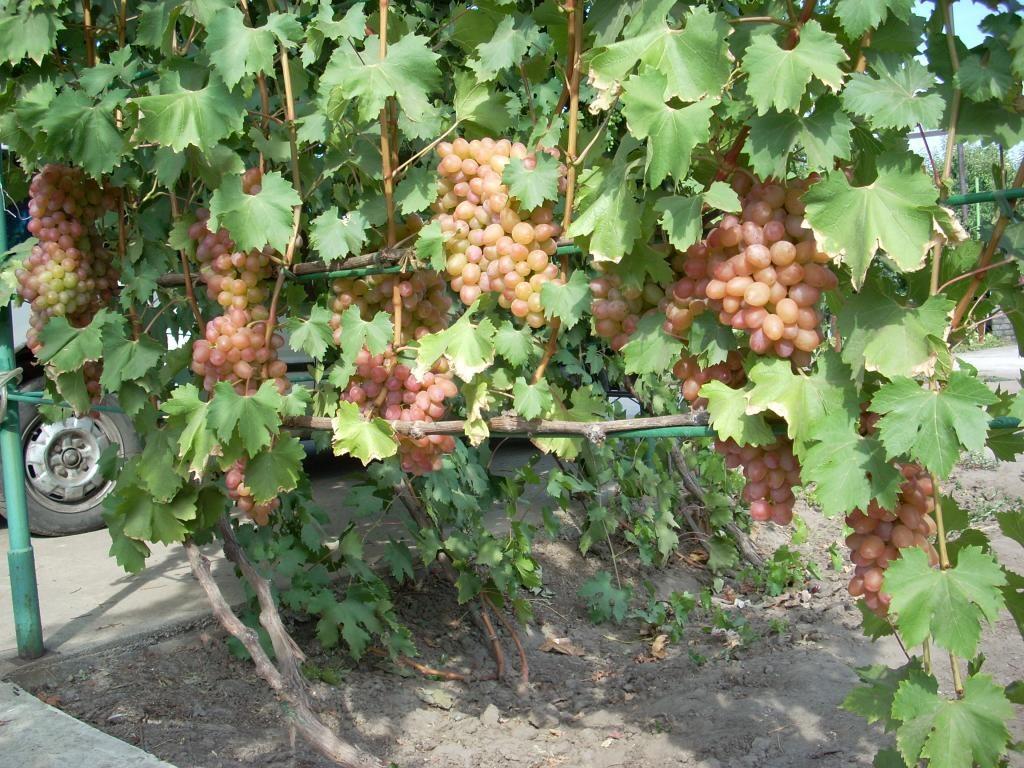
Mature bushes are tall, with numerous branches and fruiting shoots of a brownish color with a golden hue. The leaves are large, smooth-surfaced, and slightly fuzzy on the underside, with dark green hues.
Description of bunches and berries
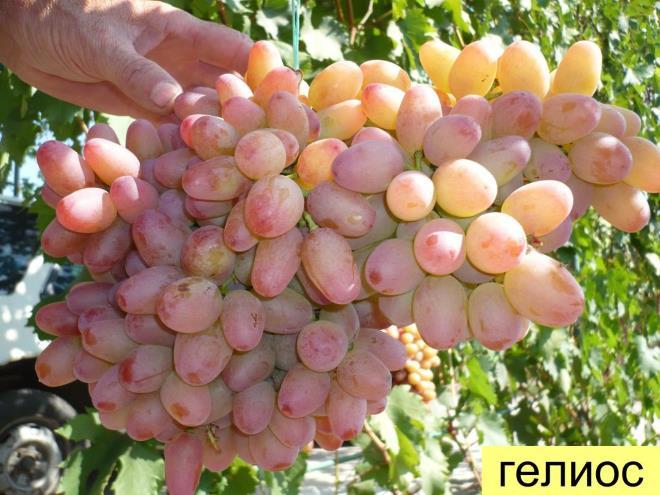
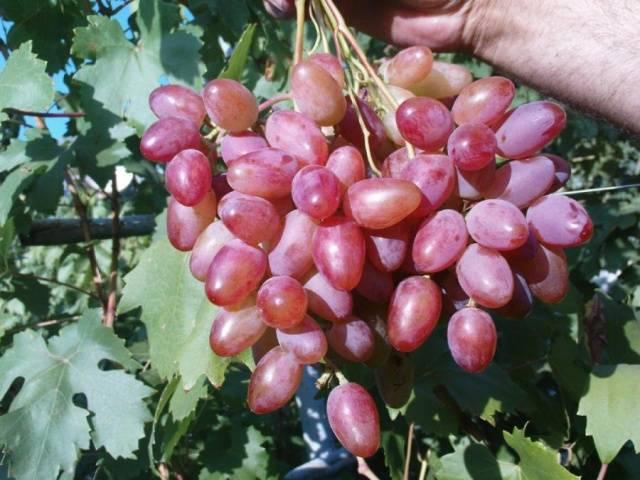
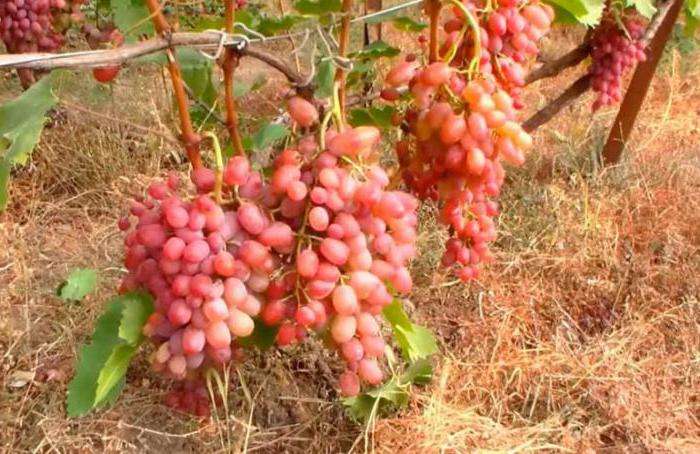
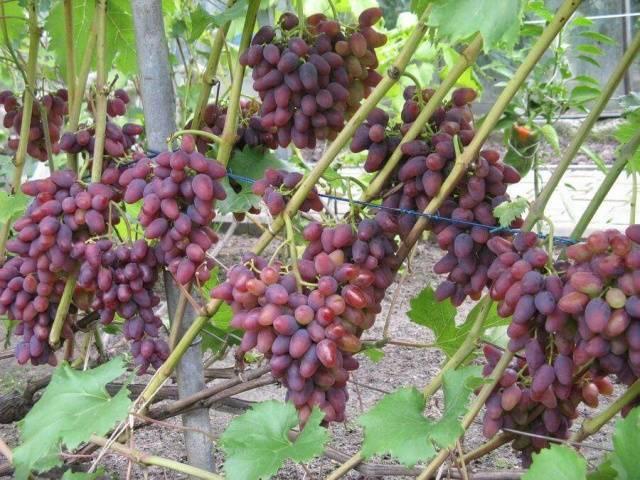
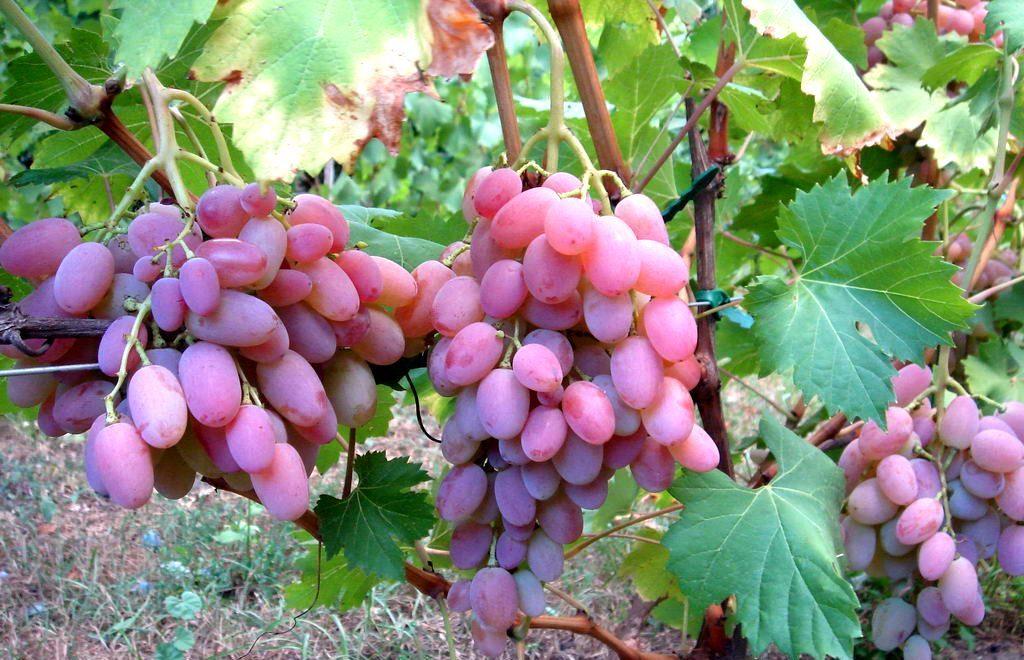
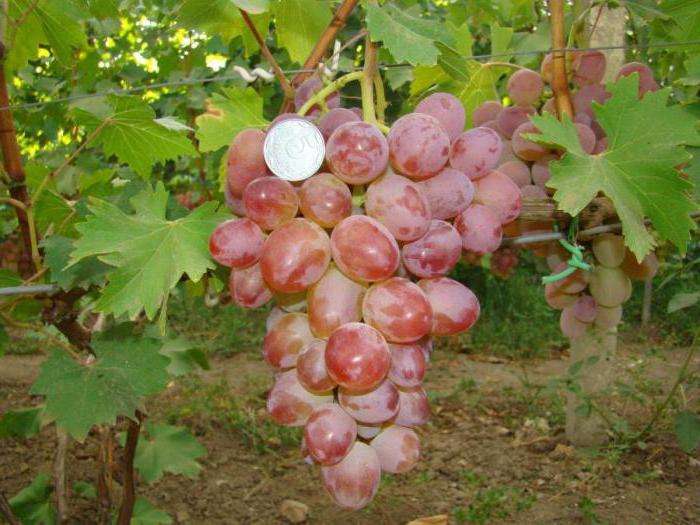
The grape clusters are voluminous, weighing from 700 g to 2 kg, and beautifully cylindrical or conical in shape. The berries are densely packed within the bunch, but do not touch each other, allowing for air circulation and uniform ripening.
The berries are elongated, weighing up to 15 g, up to 3.5-4 cm in size, with a dense but thin skin of a beautiful raspberry color and a protective coating.
Note: Under unfavorable weather conditions, grapes don't have time to reach their full sweetness during the growing season.
Productivity
Helios grapes begin bearing fruit in the third or fourth year of growth. Depending on the growing region's climate, the berries ripen 110-115 days after bud break. In the south, the harvest is in mid-August.
In temperate climates, the berries are ready for consumption in September.
With proper agricultural practices and environmental factors, a single vine can yield between 7 kg and 20 kg of ripe grape clusters. The maximum yield is obtained in the southern regions, where the second grape harvest ripens by the end of September. In industrial production, up to 13 tons of fruit are harvested per hectare of land.
Transportability
After harvesting, the berries retain their flavor and appearance for a long time, making them easy to transport over long distances.
Frost and drought resistance
The Helios grape variety easily tolerates spring temperature fluctuations and frosts down to -23 degrees Celsius. In northern regions, the vines are always insulated before winter sets in. Young seedlings also require additional cover.
Fruit crops tolerate short-term drought and heat well. Short periods of lack of watering and precipitation do not negatively impact plant health or yield.
Disease resistance
Based on the results of varietal testing, the Helios grape variety demonstrated excellent natural immunity to diseases and pests typical of berry crops.
Advice! To avoid weakening the immune system, grapevines require proper and timely agricultural practices.
Taste qualities
The berries are firm, with a meaty, juicy pulp that's sweet to the taste and has a subtle Muscat aroma. In state trials, experts rated the Helios grape variety a 9 out of 10 for its flavor.
The juice is colorless, with a sugar content of up to 16 g per 100 ml and an acid content of up to 6 g/l. The pulp contains 1-3 small seeds that do not spoil the flavor of the fruit. The skin of the berries, although thick, does not cause any difficulty in eating the grapes.
After full ripening, the grape clusters are often left on the bushes, resulting in more aromatic and sweeter berries.
Applications of berries
This dessert variety of fruit is primarily intended for fresh consumption. The berries are also used to make delicious juices and nectars, jams, sauces, and marmalades. In cooking, grapes are used to make desserts. Experienced home cooks dry and preserve grapes, and use the fruit to make homemade wines and liqueurs.
Important! Due to their high sugar content, grapes are not recommended for people with high sugar levels or allergies.

Pros and cons of the variety
Any fruit crop has both undeniable advantages and disadvantages.
Advantages:
- Natural immunity to various lesions.
- High yield rates.
- Stability of fruiting.
- Relative resistance to low temperatures.
- Excellent taste characteristics.
- Possibility of universal use of fruits.
Ripe grape clusters are able to maintain their marketable appearance for a long time and withstand long-distance transportation well.
Disadvantages include increased requirements for soil composition and the need for additional shelter for bushes in regions with cold winters.
How to plant correctly
Each grape variety has its own specific requirements for both soil composition and care requirements.
Recommendations for choosing deadlines
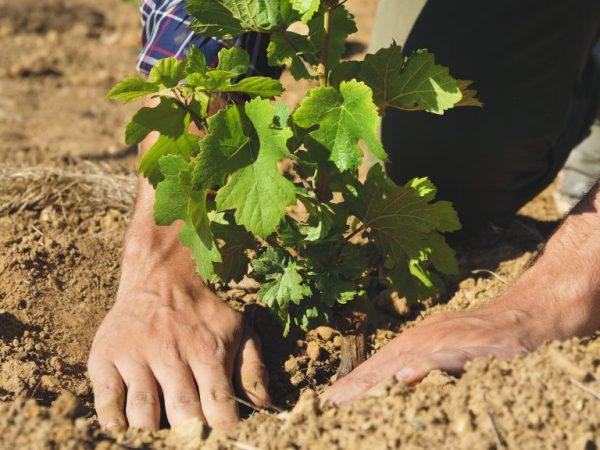
Regardless of the growing region, it is recommended to plant Helios grapes in the spring. Over the summer, the seedlings have time to establish themselves, grow, and acquire the nutrients they need for winter. Fall planting is only permitted in southern regions with a dry climate.
How to choose and prepare a site
For planting seedlings, choose flat, sunny areas on the south or southwest side, well protected from drafts and gusty winds.
Lowlands, areas with groundwater levels above 3 m and marshy areas are not suitable for growing grapes.
Helios prefers light, loose soil rich in nutrients. Acidic, clayey, and sandy soils should be adjusted to the required levels in advance.

Soil preparation:
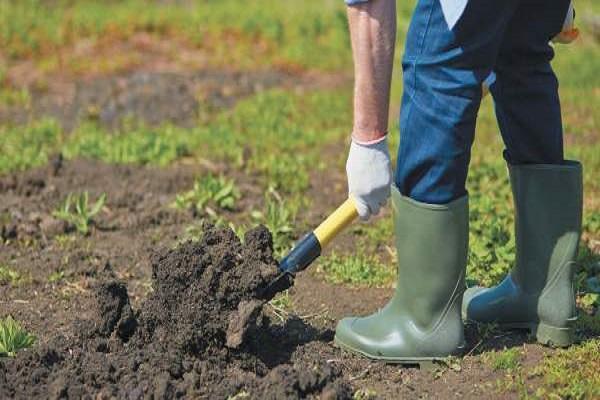
- The area is dug to a depth of 30-50 cm, weeds are removed, and the soil is loosened.
- The soil is mixed with humus, organic and mineral fertilizers.
- Planting holes are dug 4-6 weeks before planting the seedlings.
- The depth and width of the holes is 60-80 cm, the distance between plants is 4 to 5 m, between the ridges up to 6 m.
- Fine gravel is placed into the holes and covered with fertile soil.
- A support peg is driven into the hole and filled with water.
Important! Grape vines grow tall and voluminous, with long, fruit-bearing shoots that require additional support and support.
How to select and prepare planting material
Hybrid fruit crop seedlings are purchased from specially equipped garden centers or reputable nurseries.
Plants are inspected for damage and disease. The trunk should be smooth and elastic, with light, fresh cut surfaces, buds, or leaves. Rhizomes should be developed, moist, and free of broken or diseased parts.
Before planting, the plants are placed in a container with warm, settled water, and afterward, the roots are treated with an antibacterial solution.
Planting diagram
On the day of planting, the rhizomes of the seedlings are trimmed, leaving only long branches.
Landing:
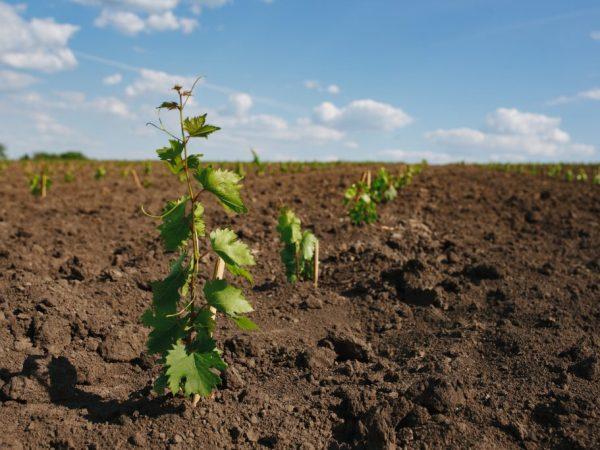
- The plants are placed in the center of the hole, the roots are straightened and sprinkled with fertile mixture.
- The soil under the bush is compacted and thoroughly watered.
- The seedling is tied to a support, the trunk circle is loosened and mulched with dry grass.
Important! When planting in the fall, young plants must be covered with special materials.
Care instructions
Growing Helios grapes requires strict adherence to care and agricultural practices; otherwise, the fruit crop's yield will decrease.
Watering mode
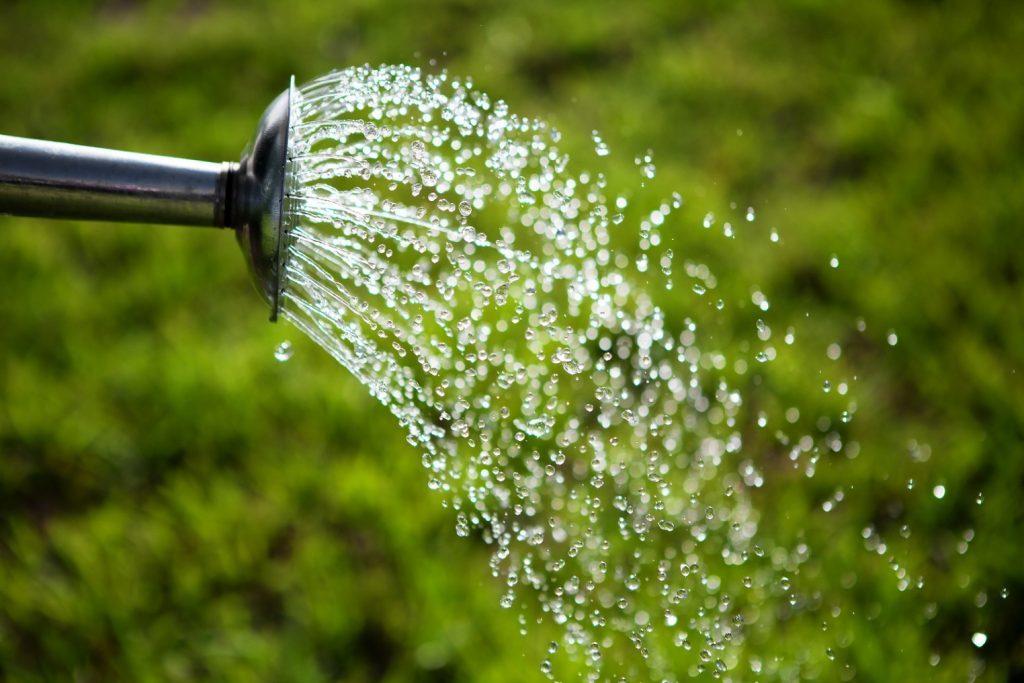
Young plants are watered 2-3 times per month, while mature bushes are watered 3-4 times throughout the growing season. The first watering is done in early spring, before bud break. Irrigation is especially important before flowering and during berry formation. Before winter dormancy, 50 to 70 liters of water are poured under each bush.
Important! Stop watering completely 10-14 days before the berries are fully ripe.
Top dressing
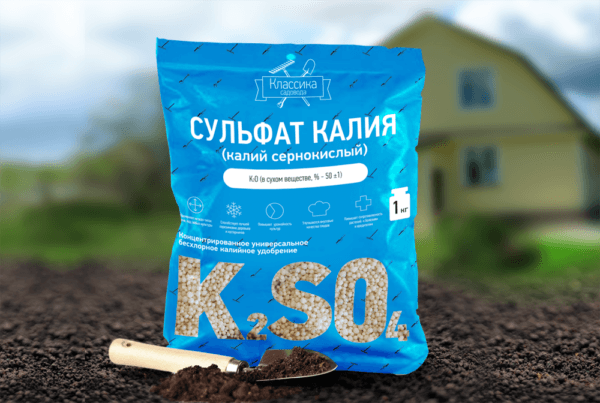
Rapidly growing berry bushes require additional fertilizers and supplemental feeding. In early spring, grapes are fertilized with organic matter. Before flowering and during fruit formation, the plant requires phosphorus and potassium. After harvest, organic matter, humus, and a balanced mineral complex are added to the soil.
Trimming
Formative pruning of Helios grapes is carried out in early spring, before bud break. Six to eight buds are left on each fruiting shoot. In the fall, the vines undergo sanitary pruning, completely removing all broken, damaged, diseased, and old branches and shoots, and removing excessive suckers.
Mulching
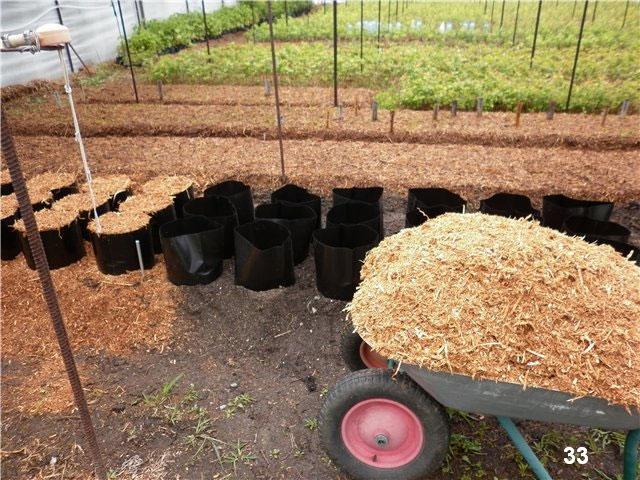
Mulching the tree trunk area is combined with loosening the soil, weeding, watering, and fertilizing. After these steps, the tree trunk area is mulched with organic materials. Humus, dry grass, or peat mixed with damp sawdust are the most suitable mulches.
Preventive spraying
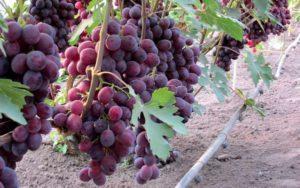
Preventative treatments for berry bushes are carried out in early spring and late fall. Chemical or biological pesticides are used for spraying. Many gardeners recommend using traditional remedies that do not contain harmful or hazardous ingredients.
Protection from birds and pests
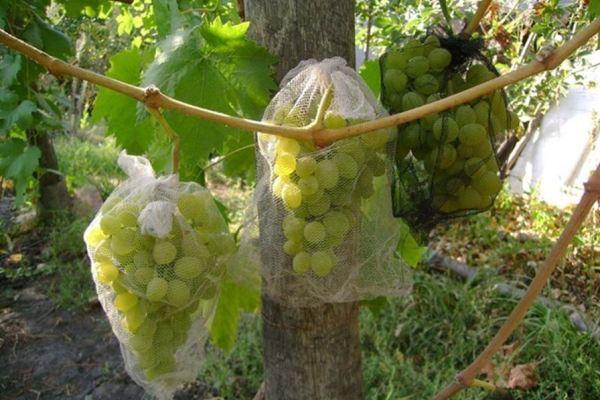
Birds and wasps dislike Helios grapes for their thick skin, but they are still interested in overripe berries. To preserve the harvest, special fine-mesh nets are stretched over the bunches. Professional fungicides or traditional methods are used to control pests.
Preparing for winter
After harvesting, the grape vines are pruned, the area around the trunks is mulched with compost, and insulated with spruce branches. The shoots are removed from their supports and laid on dry foliage. The vines are covered with plastic film or agrofibre. With the arrival of spring, the insulation is removed.
Standardization
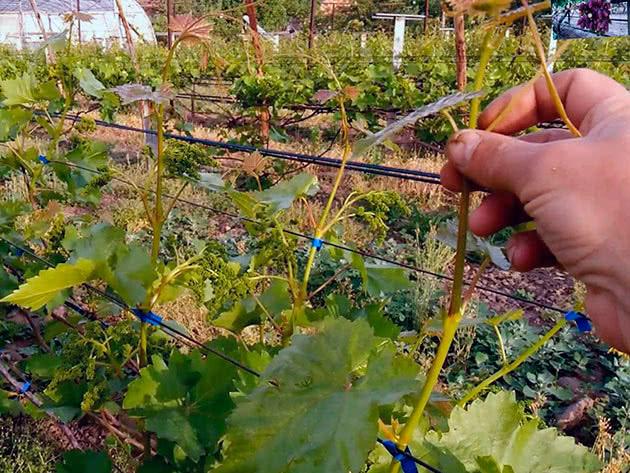
Tall, strong bushes can support up to 35-40 buds. Each shoot should bear 1 to 3 clusters.
Important! As the load on the bush increases, the berries decrease in size and ripening time increases.
Methods of reproduction
To increase the number of grape bushes in a garden plot, vegetative methods of propagation of hybrid crops are used.
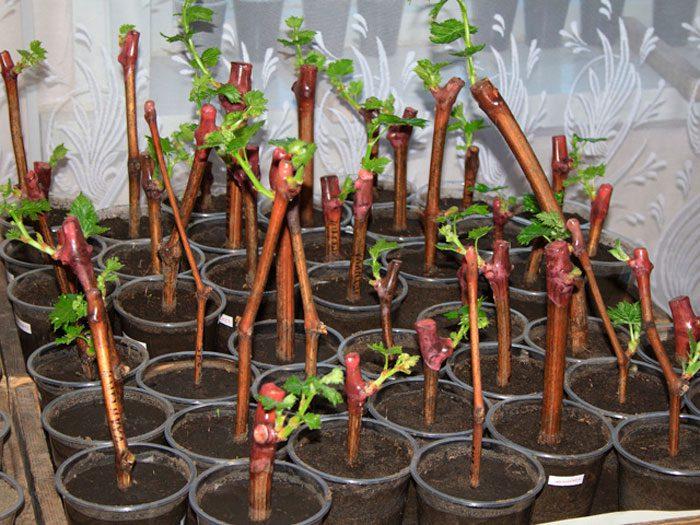
Cuttings are taken in late spring or early summer. Propagation by layering is also carried out in the early summer, and in the fall, the finished seedling is transferred to a separate hole.
The method of grafting a cutting onto an old rootstock is recommended to be carried out before the onset of the growing season. In this case, the cuttings are prepared in the fall and stored in a cool, dark place in a container with damp sand.
Diseases and pests
Although Helios grapes are naturally immune to many diseases and pests, under adverse weather conditions and poor care, the plants are often susceptible to fungal, viral, bacterial, and pest attacks. Chemical and biological pesticides and treatments are used for control and prevention.
Harvesting and storage
The timing of the grape harvest depends on the climate and weather conditions. In the south, harvesting begins in early August, while in temperate and colder climates, grapes ripen in September.
After harvesting, the grape clusters are placed in a refrigerator or special chambers, where they can be stored for up to 2-3 months without losing their taste or appearance.
Tips from experienced gardeners
According to professional gardeners and vegetable growers, the Helios grape variety thrives only in fertile, loose soil and does not tolerate excessive moisture. Otherwise, this fruit crop is no different from other grape varieties and is accessible even to beginners.
Related posts:
 Description of 30 grape varieties for Siberia, planting and care for beginners
 The ripening time of grape vines by variety, how to speed up the process, and what to treat the plant with
 How to grow grapes in the Moscow region in open ground without a greenhouse
 Description of the Julian grape variety, planting and care instructions
 Description of 30 varieties and types of Muscat grapes, planting, cultivation and care
 Beginner's Guide to Growing Grapes in Open Ground in Central Russia
 Description of the Krasotka grape variety, planting and care technology
 Description and characteristics of the Syrah grape variety, where it grows